Featured Industrial Storage & Racking Systems
High-load capacity structural racking, selective shelving, and automated runner systems built to global standards including ANSI MH16.1, FEM 10.2.02, and ISO 9001.
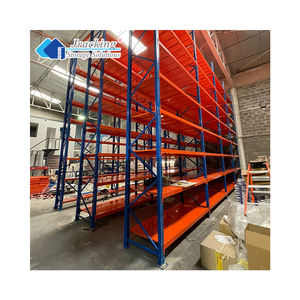
Jracking Dexion Style Warehouse Shelving Heavy Duty Pallet Rack
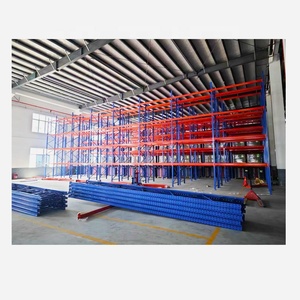
Warehouse Racks Double Deep Adjustable Pallet Storage Rack Beam Shelving
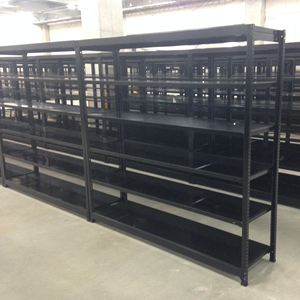
Factory Price Customized Medium-Duty Rack Warehouse Steel Metal Rack Shelf
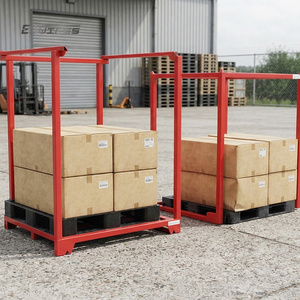
Powder Coating Nestable Warehouse Detachable Steel Welded Stacker Rack
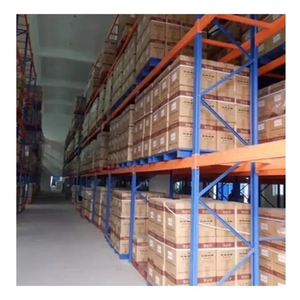
Industrial Shelving Medium Duty Steel Rack Storage Equipment Metal Racks
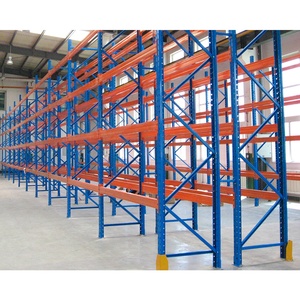
Customized Pallet Rack for Warehouse with Integrated Rack Safety
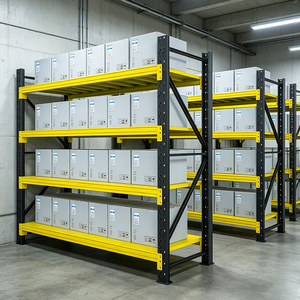
Warehouse Racking Pallet Rack Small Parts Shelves Tires Stacking Racks
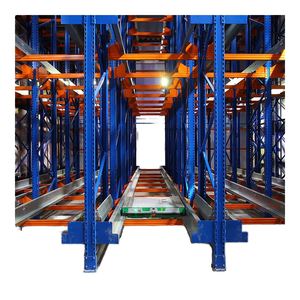
Automated Warehouse Storage System Pallet Runner Cold Storage Racking
Global Industrial Shelving & Racking Ecosystem (2025–2030)
The global industrial shelving and material handling infrastructure market is undergoing a seismic structural transition. Accelerated by post-pandemic supply chain realignments, regional nearshoring booms across North America and Europe, and the aggressive integration of Automated Storage and Retrieval Systems (ASRS), industrial buyers no longer evaluate racking systems purely as static steel commodities. Industrial storage systems are now calculated as foundational physical assets that directly govern spatial throughput efficiency, structural safety, compliance risk management, and operational automation readiness.
Procurement teams, plant managers, and supply chain directors navigating international tender processes face severe information asymmetry. Variations in structural steel grade (e.g., Q235B vs. Q355B high-yield strength cold-rolled steel), certified surface passivation treatments (electrostatic powder coating vs. hot-dip galvanizing per ISO 1461), and seismic zone load-bearing engineering differentiate top-tier global exporters from low-cost regional fabricators. Miscalculations in frame deflection tolerances or dynamic seismic sway factors can result in catastrophic structural rack collapses, regulatory shutdown fines, or total incompatibility with modern narrow-aisle (VNA) and automated shuttle systems.
Top 10 Global Industrial Shelving Manufacturers & Exporters Benchmarked
Our engineering and growth team evaluated over 45 international steel rack fabricators across North America, Europe, Asia-Pacific, and Latin America. The benchmark is derived from five standardized operational criteria: Structural Engineering Rigor (compliance with ANSI MH16.1, FEM 10.2.02, and EN 15512), Manufacturing & Roll-Forming Capacity, Surface Treatment Durability, Custom OEM Engineering Capability, and Global Logistics Support.
| Manufacturer / Brand | HQ Location | Primary Specialties | Engineering Standards | Export Reach |
|---|---|---|---|---|
| SSI SCHAEFER | Germany | Automated High-Bay Racking, Heavy Duty Pallet Shelving | FEM 10.2.02, EN 15512, ISO 9001 | Global (100+ Countries) |
| Mecalux | Spain | Selective Pallet Racking, Shuttle Systems, Warehousing Software | RMI, ANSI MH16.1, FEM, CE | Americas, Europe |
| AztecRack / Jracking Group | China / Mexico | Dexion Style, Teardrop, Heavy Duty Seismic Rack, Nearshoring OEM | ANSI MH16.1, RMI, AS4084, ISO 9001 | Global (North/South America, EU) |
| Daifuku Co., Ltd. | Japan | Automated Material Handling, High-Density Storage Units | JIS Standard, ISO 14001, CE | Worldwide Automation Hubs |
| Jungheinrich AG | Germany | Drive-In Racking, Cantilever Systems, Automated Storage | FEM, EN Standards, ISO 9001 | EMEA, Asia, Americas |
| Stow Group | Belgium | Heavy-Duty Silo Racking, Mezzanines, Pallet Racks | FEM 10.2.02, EN 15512 | Europe, North America |
| Unarco Material Handling | USA | T-Bolt, Interchangeable Teardrop Racking, Structural Racks | RMI, ANSI MH16.1 | North America |
| Ridg-U-Rak | USA | Column Slotted Racks, Cantilever Racks, High-Seismic Baseplates | RMI Certified, ANSI MH16.1 | North America, LATAM |
| Heda Storage Solutions | China | Automated Pallet Runner Systems, Cold Storage Racking | CE, ISO 9001, SGS Certified | Southeast Asia, Middle East, LATAM |
| Kardex Group | Switzerland | Automated Vertical Lift Modules (VLM), Small Part Shelving | ISO 9001, ISO 14001, CE | Global Industrial Enterprise |
When selecting among these top 10 exporters, procurement executives must balance upfront unit cost against total cost of ownership (TCO). While European legacy tier-1 integrators offer robust end-to-end automation software ecosystems, established Asian-multinational manufacturing groups like Jracking / AztecRack provide identical high-tensile cold-rolled steel structural integrity, ANSI/RMI certified compliance, and fully customized rack geometry at a 25% to 40% capital expense optimization.
Critical Procurement & Engineering Trends (2025–2030)
The industrial shelving industry is departing from static, standalone structural designs toward intelligent, modular, and environment-resilient storage systems. Sourcing teams must evaluate four macro trends when drafting technical RFQs:
1. Automated Pallet Runner Integration
Traditional Drive-In racking is rapidly being superseded by semi-automated pallet runners (radio shuttles). These systems increase pallet density by up to 70% while reducing forklift aisle collision risks and speeding up pallet cycle times in cold storage and high-turnover logistics centers.
2. Seismic Resilience & Dynamic Baseplates
Global building codes (such as Mexico's CFE manual, US IBC, and European Eurocode 8) mandate rigorous seismic structural modeling. Modern racking exporters incorporate oversized heavy-gauge baseplates, thick dynamic anchor bolts, and specialized frame bracing to withstand zone 4 ground acceleration.
3. Nearshoring & Local Supply Chains
With manufacturing expanding rapidly in regions like Mexico (Monterrey, Bajío), Eastern Europe, and Southeast Asia, procurement managers favor exporters capable of localized drop-shipping, rapid CAD layout iterations, and bilingual site installation engineering support.
Material Science & Structural Manufacturing Standards
High-performance industrial shelving relies on rigorous cold-roll forming processes and specific metallurgical chemistry. B2B procurement specifications must specify steel grade, yield strength, deflection standards, and anti-corrosion surface treatments.
Cold-Rolled Steel Metallurgy
Standard duty shelves typically employ Q235B steel (yield strength ~235 MPa). However, heavy-duty industrial pallet racking systems handling pallet loads over 2,000 kg per beam level mandate high-strength cold-rolled structural steel, such as Q355B or SS400, offering yield strengths above 355 MPa to prevent long-term plastic deformation.
Deflection Limits (L/180 Rule)
Under maximum uniformly distributed load (UDL), structural racking beams must adhere to strict deflection standards. The maximum permissible deflection is calculated as L/180 (where L is the beam clear span length). Exceeding this limit compromises safety pins, beam connector teeth engagement, and automated shuttle operation.
Coating & Surface Passivation
Indoor dry storage utilizes thermosetting epoxy-polyester powder coating applied at 60–80 microns after multi-stage chemical degreasing and phosphatizing. For cold storage (-30°C) or outdoor environments, hot-dip galvanizing per ISO 1461 (delivering a zinc thickness of 65–85 microns) is critical to prevent severe oxidation.
Why Global Logistics Leaders Partner with Our Export Infrastructure
As a premier designer, manufacturer, and exporter of heavy-duty warehouse storage solutions, our integrated manufacturing plants operate over 50 automated cold-roll forming lines, robotic welding workcells, and multi-stage powder coating chambers. We bridge the gap between high-end structural engineering and cost-optimized global delivery.
Industrial Shelving & Racking Procurement FAQs
Direct answers to critical technical and logistical questions asked by warehouse directors, procurement officers, and structural engineers during vendor selection.
How do I calculate required beam capacity for heavy pallet racking?
Beam capacity is calculated based on Uniformly Distributed Load (UDL). Multiply the maximum weight of a single pallet (including goods and pallet tare weight) by the number of pallets per bay level (typically 2 or 3). Ensure the total does not exceed the manufacturer's certified beam pair load rating at L/180 max deflection limits under ANSI MH16.1 or FEM 10.2.02 standards.
What is the difference between teardrop racking and Dexion-style racking?
Teardrop racking features punch-hole patterns shaped like inverted teardrops and is the dominant standard across North America. Dexion-style racking utilizes diamond or keyhole punch profiles and is widely implemented across Europe, Australia, and parts of Asia. Both offer teardrop/hook connector locking pins, but component interchangeability depends on specific upright profile geometry.
Are imported racking units compliant with seismic zone requirements?
Yes, provided the manufacturer performs location-specific seismic structural modeling. Engineers analyze ground acceleration coefficients (such as CFE manual data or USGS seismic maps), column buckling limits, baseplate surface contact area, and floor slab concrete compression strength. Custom-engineered thick baseplates and heavy anchor bolts are supplied for seismic zone compliance.
When should cantilever rack be specified over pallet rack?
Cantilever racking is designed specifically for long, continuous, or irregular loads that cannot be blocked by front upright columns—such as steel pipes, aluminum extrusions, timber packs, PVC conduits, and sheet metal. Standard selective pallet racking is optimized for uniform palletized unit loads.
What documentation should be required prior to releasing final factory payment?
Procurement contracts should require: 1) Raw material steel Mill Test Certificates (MTC) proving yield strength, 2) Powder coating film thickness test reports (or hot-dip galvanizing certification), 3) Final dimensional inspection records, and 4) Complete CAD installation drawings alongside certified safe load plaques.