Engineering Portfolio & Standard Racking Systems
Precision-engineered cold-rolled steel storage systems designed for high-bay logistics, cold chain operations, and heavy industrial warehousing.
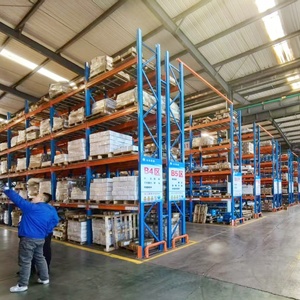
Pitch: 50mm / 75mm Adjustable
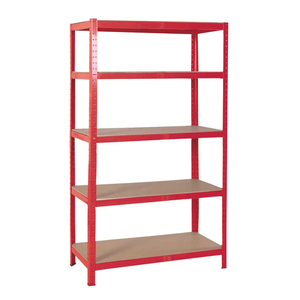
Structure: Boltless Interlocking
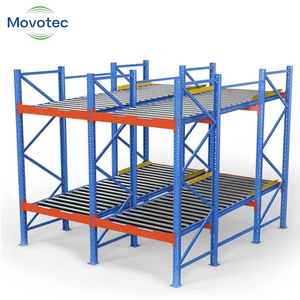
Roller Bed: Heavy Duty Steel Track
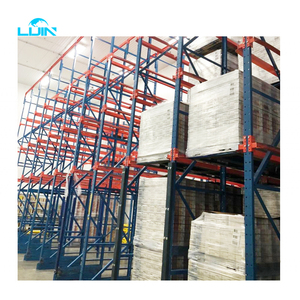
Logic: LIFO Bulk Staging
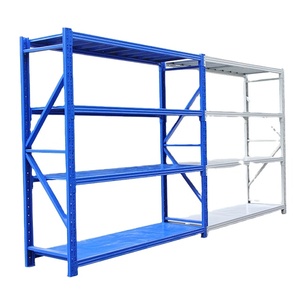
Load: 100 - 300 kg / Tier
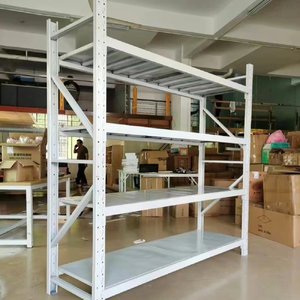
Steel Grade: Q235B Cold-Rolled Steel
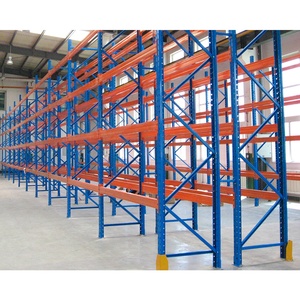
Certification: ISO9001 / CE Verified

Flexibility: Modular Expansion Ready
Structural Engineering Superiority & Chinese Racking Manufacturing Ecosystem
As modern logistics networks expand across global supply chains, selecting an qualified warehouse rack manufacturer requires rigorous technical evaluation beyond nominal price per unit. China has solidified its global position as the premier manufacturing hub for heavy-duty storage equipment, accounting for over 45% of global industrial steel racking output. This dominant market presence is driven by deep raw material integration, advanced continuous roll-forming robotics, and automated electrostatic powder coating technologies.
At our state-of-the-art 50,000-square-meter manufacturing facility, structural reliability begins at the metallurgical level. We utilize high-yield strength structural carbon steel (primarily Q235B and Q355B grades), cold-formed into precise multi-fold beam and upright profiles. Compared to basic hot-rolled structural shapes, cold-formed structural profiles yield a substantially higher strength-to-weight ratio, allowing facility managers to maximize vertical storage space up to 12 meters in clear height while satisfying strict deflection thresholds (commonly engineered to L/200 structural limits under full uniformly distributed loads).
Industrial Storage System Technical Comparison Matrix
Selecting the optimal structural layout depends on inventory turnover methodology (FIFO vs. LIFO), floor slab loading limits, available overhead clearance, and overall SKU diversity.
| Racking Architecture | Load Capacity (per level) | Floor Space Efficiency | Pallet Selectivity | Inventory Flow Logic | Ideal B2B Application |
|---|---|---|---|---|---|
| Selective Pallet Racking | 800 kg – 3,500 kg | 40% – 50% | 100% Direct Access | FIFO (First-In, First-Out) | High-SKU 3PL & FMCG Warehouses |
| Drive-In / Drive-Thru | 1,000 kg – 2,000 kg | 75% – 85% | 20% – 30% Limited | LIFO / FIFO Bulk | Cold Storage & Homogeneous Batch Goods |
| Gravity Roller Flow Rack | 500 kg – 1,500 kg | 70% – 80% | High per Lane | Strict Automatic FIFO | Perishable Goods, Food & Pharma Distribution |
| Cantilever Heavy Racks | 500 kg – 5,000 kg/Arm | 60% – 70% | 100% Unobstructed | Direct Crane / Forklift Access | Steel Pipe, Aluminum Extrusion & Lumber Yards |
| ASRS Automated Racking | 500 kg – 2,000 kg | 85% – 95% Vertical | 100% Automated | Software Managed (WMS) | Smart Logistics Parks & High-Speed Fulfillment |
Next-Generation Warehouse Racking Procurement Trends (2025–2030)
The global warehousing landscape is undergoing a structural paradigm shift. Supply chain directors are moving away from traditional static floor storage toward fully integrated, automated, and green-certified storage infrastructure. As a leading manufacturer in China, we track and engineer solutions around four core industry megatrends:
1. Seamless ASRS Integration & Narrow Aisle Precision
Modern facilities demand tight manufacturing tolerances. Upright vertical straightness tolerances must be controlled within 1/1000 of total frame height to allow autonomous stacker cranes and AMR shuttles to operate without mechanical interference.
2. Sustainable Green Steel & Low-VOC Powder Coating
Global B2B procurement policies demand reduced embodied carbon. Our factory utilizes closed-loop water recycled pre-treatment lines and solvent-free AkzoNobel epoxy-polyester powder coatings that comply with EU RoHS and REACH environmental guidelines.
3. Modular Boltless Architecture & Nearshoring Agility
Fast-growing logistics hubs in North America, Europe, and Southeast Asia require modular racking components that can be reconfigured or expanded in 50mm increments without structural welding or facility downtime.
Why Global Enterprise Buyers Partner with Our Factory
Navigating international B2B equipment sourcing requires absolute clarity regarding quality control, production capacity, and shipping optimization. Over two decades of dedicated storage system manufacturing, our engineering hub has refined a fully integrated OEM/ODM client engagement workflow:
- Custom CAD & 3D BIM Layout Consultation: Free preliminary layout engineering within 24–48 hours based on your facility building DWG drawings, slab load capacity, forklift turning radius, and clear height clearance.
- Automated Robotic Cold-Forming Lines: Over 16 continuous cold-rolling production lines guarantee high profile uniformity across column profiles (80mm to 140mm width) and beam step sections (80mm to 160mm depth).
- 100% Traceable Metallurgical Quality Control: Every batch of coil steel undergoes tension testing, yield point verification, and thickness gauge inspections. Raw mill test certificates (MTC) are attached to all production lots.
- Containerized Export Packaging Optimization: Specialized steel frame bundling and protective plastic wrapping prevent transit scratches and maximize 40ft HQ container cubic capacity utilization by up to 98%.
Technical Procurement FAQ: Warehouse Storage Racks
Comprehensive answers to common technical queries from warehouse operations managers, industrial architects, and procurement teams.
How do I calculate the required beam load capacity for heavy-duty selective pallet racks?
What concrete floor slab specifications are required for anchoring heavy-duty pallet racking?
What surface coating options are best for cold storage or outdoor marine logistics environments?
Can your factory produce customized OEM rack dimensions to match existing European or American systems?
What is the typical production lead time and export delivery process for standard FCL orders?
How do safety accessories such as wire mesh decks, frame protectors, and row spacers impact overall rack safety?
Optimize Your Warehouse Capacity & Structural Safety Today
Contact our senior engineering team for custom CAD layout drawings, structural finite element calculations, and factory-direct wholesale pricing for your logistics facility.