Engineered Storage & Pallet Racking Systems
Direct factory solutions complying with ANSI MH16.1, FEM 10.2.02, and CE Structural Steel Safety Certification Standards.
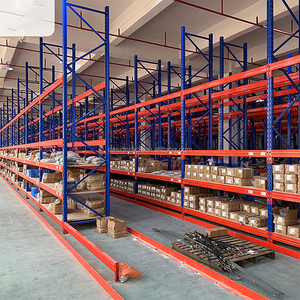
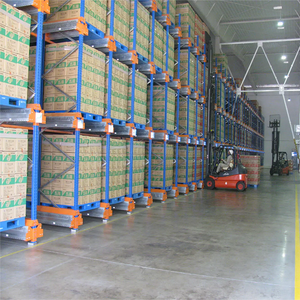
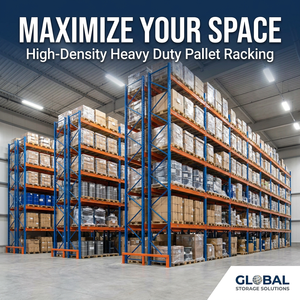
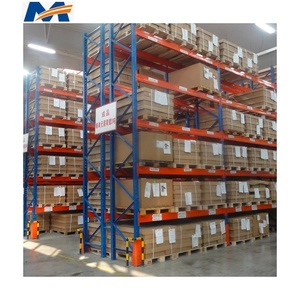
Engineering Excellence in Heavy-Duty Pallet Racking Manufacturing
Modern global logistics networks, third-party logistics (3PL) hubs, fulfillment centers, and manufacturing plants require storage infrastructure engineered to withstand structural fatigue, intense forklift operation cycles, and geographic seismic hazards. As a leading manufacturer of warehouse pallet shelving systems based in China, we integrate high-grade certified cold-rolled coil steel with automated continuous roll-forming systems to deliver high-bay storage solutions optimized for spatial volumetric efficiency.
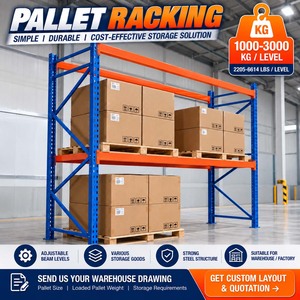
Structural integrity begins with raw material selection. Utilizing SS400, Q235B, and Q355B structural steel grades, our engineering framework applies structural finite element analysis (FEA) to simulate complex stress distribution, buckling failure modes, and dynamic load scenarios under extreme occupancy conditions. Our heavy-duty racking systems achieve uniform load capacities exceeding 3,000 kg per beam level and frame load metrics up to 24,000 kg per bay while strictly observing local deflections below structural thresholds (L/180 or L/200).
Advanced FEA Structural Analysis
Every frame assembly and beam connector configuration undergoes simulated static stress, torsion, dynamic impact testing, and 3D frame-knuckle analysis before continuous production.
Multi-Stage Surface Treatment
Automatic 9-stage chemical pretreatment, acid cleaning, phosphating, electrostatic epoxy-polyester powder coating (60–80 microns), and high-temperature curing ensure anti-corrosion longevity.
Seismic & Fire Safety Compliance
Engineered base plates, anchoring systems, and frame bracing designed to absorb ground motion accelerations aligned with CFE, IBC, and EN 1998-1 seismic design mandates.
Technical Matrix: Racking Systems Architectural Specifications
| Storage System Type | Material Standard | Max Load per Level / Arm | Maximum Bay Height | Handling Machinery Compatibility | Pallet Selectivity Ratio |
|---|---|---|---|---|---|
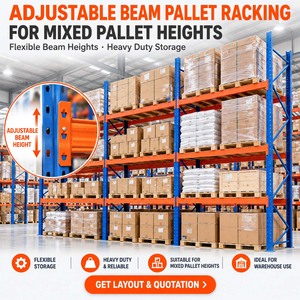
| Selective Pallet Racking | Q235B / Q355B Steel | 1,000 kg – 4,500 kg | Up to 15.5 Meters | Counterbalance, Reach Trucks, VNA | 100% Direct Access |
| Radio Shuttle System | Structural Cold-Rolled Steel | 1,000 kg – 1,800 kg | Up to 24.0 Meters | Shuttle Carts & standard forklifts | High Density / Deep Lane LIFO/FIFO |
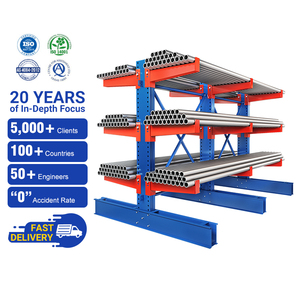
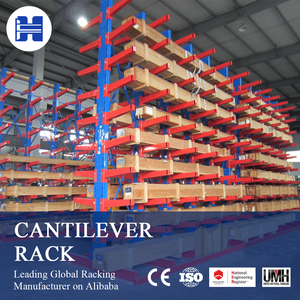
| Heavy Duty Cantilever | Hot-Rolled Structural H-Beam | 500 kg – 2,500 kg / arm | Up to 12.0 Meters | Side Loaders, Overhead Cranes | Ideal for long/bulky loads |
| Drive-In / Drive-Thru | Cold-Rolled Spec Steel | 1,000 kg – 2,000 kg | Up to 12.0 Meters | Counterbalance & Reach Trucks | Bulk LIFO (Low SKU density) |
| Push-Back Racking | Structural Steel & Nesting Carts | 1,000 kg – 1,500 kg | Up to 9.0 Meters | Standard Reach Forklifts | 2 to 6 Pallets Deep (LIFO) |
Future Trends in Global Industrial Warehouse Racking Procurement
As global supply chains pivot toward nearshoring, automated fulfillment, and rapid order processing, structural storage procurement strategies are undergoing fundamental shifts. Logistics directors and global procurement managers must evaluate several macroeconomic and technological trends when sourcing pallet shelving systems from Chinese manufacturing hubs:
1. Automated Storage & Retrieval System (ASRS) & AMR Integration Readiness
The traditional distinction between static racking and automated hardware is disappearing. Future-ready procurement demands that pallet rack structural tolerances align perfectly with Automated Guided Vehicles (AGV), Autonomous Mobile Robots (AMR), and vertical crane systems. Deflection limits under dynamic automated loading must be tightened from standard industrial tolerances down to millimeter-precise tolerances. Rack manufacturing processes in China now increasingly feature high-precision CNC punching lines to ensure pitch accuracy across high-bay frames scaling over 30 meters high.
2. Carbon-Neutral Steel Processing & Circular Manufacturing
Scope 3 emission audits by Western enterprises are driving demand for sustainable industrial equipment. Leading factories in China are incorporating recycled structural steel scraps, solar-powered powder-coating facilities, and VOC-free water-based or solvent-free electrostatic coatings. Procurement teams prioritize vendors capable of providing verified Environmental Product Declarations (EPD) alongside ISO 14001 environmental management credentials.
3. Modular Reconfigurability & Hybrid Density Layouts
Supply chain volatility requires physical infrastructure that can evolve alongside changing SKU profiles. Modern pallet racking engineering emphasizes modular drop-in beam connectors, universal teardrop configurations compatible with standard frame profiles, and boltless structural designs. Hybrid systems—combining high-density Radio Shuttle lanes on lower levels with manual case-picking shelves on upper levels—are fast becoming the standard for modern e-commerce warehousing.
4. Resilience Engineering: Cold-Chain (-30°C) & Anti-Corrosive Hot-Dip Galvanizing
The global expansion of cold-chain logistics for pharmaceuticals, bio-products, and frozen food demands storage systems capable of maintaining structural ductility at sub-zero temperatures without brittle transition risks. Chinese manufacturers are expanding output of specialized alloy structural steels paired with continuous Hot-Dip Galvanizing (HDG) per ISO 1461, ensuring zinc coating thicknesses (>65–85 µm) that resist harsh chemical, high-moisture, and refrigerated condensation environments.
Enterprise Strengths of China's Premier Racking Manufacturer
Combining world-class metallurgy, automated robotics production, and end-to-end engineering assistance to secure your operational ROI.
Fully Automated Robotic Production
Our production facilities utilize continuous cold-roll forming lines, automated laser-cutting stations, and ABB robotic welding cells to guarantee dimensional tolerances within ±0.5mm across all components.
Turnkey Engineering & CAD/BIM Layouts
Our structural engineers deliver 2D CAD floor plan layouts, 3D Building Information Modeling (BIM) structural integration, dynamic load capacity calculations, and seismic anchoring assessments free of charge.
Rigorous Material Traceability
Every steel coil batch comes with raw material Mill Test Certificates (MTC) verifying yield strength, tensile limits, and chemical composition. Fully compliant with ISO 9001, CE, and RMI standard audits.
Frequently Asked Questions in Industrial Racking Procurement
Addressing common technical, safety, shipping, and architectural questions from procurement teams worldwide.
How do I determine whether my warehouse requires Q235B or Q355B steel grade racking?
The choice between Q235B (yield strength ~235 MPa) and Q355B (yield strength ~355 MPa) depends on upright load demands, bay height, and clear span requirements. Q235B is ideal for standard selective pallet racks up to 8 meters with loads around 1,000–2,000 kg per level. For extra-heavy loads (>3,000 kg/level), high-bay installations exceeding 10 meters, or automated VNA configurations, Q355B offers superior load-to-weight ratios, reducing structural deadweight while preventing frame buckling.
What certifications should I require when importing industrial pallet racking from factories in China?
Global buyers should verify compliance with internationally recognized structural standards: EN 15512 or FEM 10.2.02 (European racking specifications), ANSI MH16.1 / RMI (North American standard), AS4084 (Australian steel storage racking standard), along with ISO 9001 quality management and CE marking (EN 1090-1 for structural steel). Request certified Mill Test Certificates (MTC) and independent third-party lab testing reports for raw material strength and powder coat corrosion resistance (salt spray testing).
How does seismic coefficient engineering affect pallet racking layout and component selection?
In seismically active regions, racking cannot be designed as static structures alone. Seismic engineering adjusts the thickness and surface area of footplates, increases the size and embedment depth of anchor bolts, and integrates diagonal vertical and horizontal frame bracing. Advanced finite element modeling ensures the racking structure absorbs horizontal spectral acceleration forces without collapsing or letting pallets shed from beam levels.
What surface finish option is optimal for chemical storage or cold storage facilities?
For standard dry ambient warehouses, electrostatic powder coating (60–80 µm) provides excellent scratch resistance and visual color-coding. However, for cold storage rooms with high humidity condensation or facilities handling corrosive chemicals, Hot-Dip Galvanizing (HDG) per ISO 1461 is essential. In HDG treatment, steel components are immersed in molten zinc at ~450°C, forming a metallurgically bonded zinc-iron alloy layer that provides decades of cathodic corrosion protection.
How are pallet racking shipping volumes calculated to optimize ocean freight containers?
Upright frames and beams are shipped in knocked-down (KD) condition to maximize container volumetric efficiency. Beams are bundled with protective strapping, while upright frames are packed nested or disassembled into posts and bracing sets. A standard 40ft High Cube (40HQ) container holds roughly 20 to 24 metric tons of industrial cold-rolled steel racking. Our packaging engineers design custom loading schedules to prevent transit friction damage while optimizing container fill rates.
Transform Your Warehouse Volumetric Efficiency Today
Connect directly with our structural engineering team to receive custom 2D/3D CAD layouts, structural calculations, and factory-direct pricing for your warehouse expansion project.
Get a Quote