Engineering & Heavy-Duty Warehouse Racking Catalogue
Direct-from-factory industrial storage solutions tailored for high-density logistics hubs, manufacturing plants, and regional distribution centers.
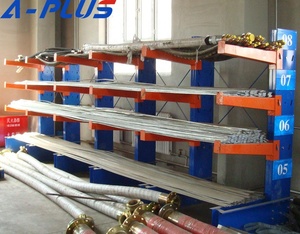
Industrial Shelving Warehouse Steel Pipe Storage Rack Heavy Duty Cantilever Racking
View Details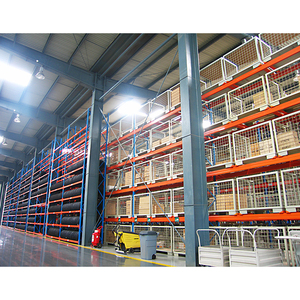
Ce Certificate Heavy Duty Racking System Warehouse Storage Industrial Selective Racks
View Details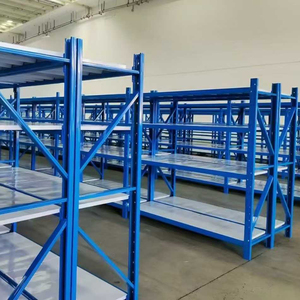
Manufacture Factory 4 Layers Metal Materials Light Duty Racks Warehouse Storage Racks
View Details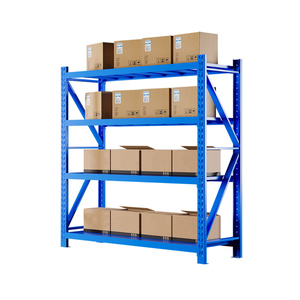
Industrial Warehouse Storage 5-Layer Pallet Racking System with Tire Rack Slotted Angle Rack
View Details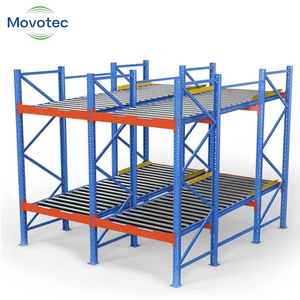
Warehouse Storage Racks Shelving Systems Pallet Rack Gravity Roller Flow Racking Movotec MTG100
View Details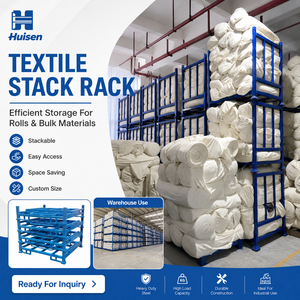
Heavy Duty Stackable Steel Stacking Rack for Warehouse Pallet Storage
View Details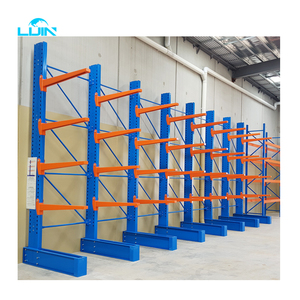
Factory Price Cantilever Rack Heavy Duty Industrial Cantilever Racks Steel Storage
View Details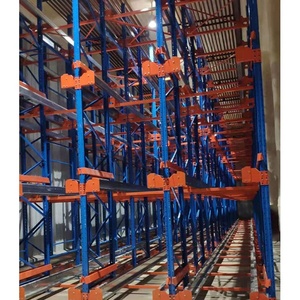
Customized Steel Pallet Rack Stacking Racks Warehouse Storage Heavy Duty Shuttle Racking
View Details1. Executive Summary: The Structural Mechanics & Strategic Value of Push-Back Racking Systems
In modern industrial warehousing, managing real estate expenditure while maximizing cube utilization remains the primary operational challenge for supply chain directors. Push-back pallet racking systems (commonly designated as Push Racks) represent the pinnacle of dynamic, high-density storage technology. By integrating nested wheeled carts riding on inclined structural rails, push racks allow warehouses to store pallets from 2 to 6 deep while retaining immediate accessibility to individual storage lanes.
Unlike standard selective pallet racking—which requires extensive forklift aisles that consume over 60% of floor space—push racking consolidates storage footprint. It operates on a Last-In, First-Out (LIFO) inventory management logic. When a forklift loads a pallet into a lane, it physically pushes the previously stored pallet backward on its nested cart. Upon retrieval, gravity smoothly glides the remaining pallets forward to the front aisle edge, eliminating the need for forklift operators to enter the rack structure itself.
Sourcing push racks from certified manufacturers in China offers global distributors, 3PL logistics facilities, and manufacturing plants an exceptional balance of structural engineering compliance (FEM 10.2.02, ANSI MH16.1, RMI) and cost efficiency. As a premier original equipment manufacturer (OEM) and wholesale partner, Chinese racking producers deliver custom-engineered systems designed to withstand demanding seismic conditions, heavy load capacities, and aggressive throughput requirements.
High-Density Footprint
Increases pallet storage capacity by 75% over traditional selective racking by converting wasted aisle space into revenue-generating storage lanes.
Rapid Handling Throughput
Forklifts stay within the main aisle. Single-aisle loading and unloading significantly reduces cycle times and operational vehicle fuel/battery consumption.
Structural Protection
Eliminating forklift entry inside the rack channels prevents catastrophic column impacts, drastically cutting structural maintenance and repair downtime.
2. Engineering Specifications & Materials Science: Chinese Push Rack Standards
High-performance push rack manufacturing demands rigorous metallurgical control, precision roll-forming, and advanced mechanical engineering. As top-tier wholesale manufacturers in China, our production lines utilize continuous cold-roll forming processes and heavy-gauge structural steel to ensure zero binding of nested carts under maximum deflection limits (L/200 standard).
A. Metallurgical Integrity & Steel Grade Specifications
Structural upright frames and load beams are roll-formed from premium grade Q235B and Q355B structural steel (equivalent to ASTM A36 and ASTM A572 Grade 50). Q355B steel provides a minimum yield strength of 355 MPa, enabling slimmer structural profiles without sacrificing structural stability or overall dynamic payload capacity.
B. Nestable Cart Mechanism & Rail Inclination
The core technology of push racks relies on the carriage and rail assembly. The structural channels are set at an engineered pitch of 1.5° to 3° (approx. 5/8" slope per foot). Low-profile nested steel carts operate on precision-machined, sealed bearing steel wheels. The nesting arrangement allows 2, 3, 4, 5, or 6 deep configurations while consuming minimal vertical clearance—preserving valuable warehouse clear height.
| Engineering Parameter | Standard Technical Specification | High-Capacity Option |
|---|---|---|
| System Depth Capacity | 2, 3, 4 Deep Pallets | 5, 6 Deep Heavy-Duty Lanes |
| Steel Standard Compliance | SS400 / Q235B Cold-Rolled Coil | Q355B High-Tensile Structural Steel |
| Payload Rating per Position | 500 kg – 1,500 kg (1,100 – 3,300 lbs) | Up to 2,500 kg (5,500 lbs) per pallet |
| Rail Slope Inclination | 1.5° to 2.5° Controlled Gravity Pitch | Custom Pitch for Cold Storage Viscosity |
| Bearing Wheel Design | Heavy-Duty Steel / Machined Rollers | Polyurethane Coated Low-Noise Bearings |
| Surface Finishing | Epoxy Electrostatic Powder Coating (60-80µ) | Hot-Dip Galvanized (HDG) to ISO 1461 |
| Structural Standards | FEM 10.2.02, RMI MH16.1, CE Marked | Seismic Zone 4 Reinforced Anchoring |
3. Enterprise Manufacturing Advantages: Why Sourcing Push Racks from China Yields ROI
When selecting a global supply partner for industrial storage systems, enterprise buyers look beyond basic hardware costs. They demand structural certification, robust OEM/ODM customization capability, repeatable quality control, and dependable shipping timelines. Leading Chinese push rack wholesalers offer distinct structural and economic advantages:
1. Automated Robotic Welding & Precision Punching
Modern Chinese rack factories employ fully automated robotic welding arms and continuous CNC beam-punching lines. This guarantees tight engineering tolerances (+/- 0.5mm), flawless weld bead consistency, and zero thermal stress distortion across upright frame connectors and cart chassis assemblies.
2. Complete Customization & OEM/ODM Engineering Support
Every facility possesses unique structural constraints, floor slab ratings, and pallet profile variations (GMA, Euro, CHEP, plastic, or custom steel skids). China’s top racking engineers utilize advanced CAD and finite element analysis (FEA) software to model stress nodes, dynamic load shifts, and localized slab pressure distributions prior to manufacturing.
3. Rigorous Quality Assurance & International Audit Compliance
Leading China manufacturers hold ISO 9001, ISO 14001, ISO 45001, and CE certifications. All heavy-duty racking systems undergo stringent factory destructive testing, yield point verification, and salt-spray corrosion resistance tests (exceeding 500 hours for powder coatings and 1000 hours for galvanized steel components).
4. Integrated Manufacturing Supply Chain & Raw Material Economies
Direct proximity to premier state-owned steel mills (such as Baosteel and Ansteel) enables Chinese manufacturers to secure high-purity steel coils at stable, wholesale prices. These cost efficiencies are directly passed on to overseas B2B buyers and storage system integrators, yielding 25% to 40% capital cost reductions compared to Western European or North American domestic rack manufacturers.
4. Future Procurement & Industry Development Trends in Push-Back Racking (2025–2030)
Driven by global supply chain restructurings, nearshoring industrial booms, and the expansion of automated logistics networks, the global market for high-density storage racking is evolving rapidly. Supply chain executives must align their procurement strategies with several major technological and market developments:
Hybrid Automated Push-Back Systems
Integration of push-back cart mechanics with automated guided vehicles (AGVs) and Autonomous Mobile Robots (AMRs) for touchless LIFO pallet loading and retrieval.
Cold Chain Logistics Optimization
Surging demand for temperature-controlled storage in food and pharma sectors makes push racks ideal for freezers, where cubic air refrigeration costs demand absolute density.
Modular Nearshoring Deployment
Standardized, pre-engineered push rack components designed for rapid containerized export, simplifying installation in fast-growing manufacturing corridors worldwide.
A. Shift Toward Ultra-Durable Hot-Dip Galvanized Finishes
While electrostatic powder coating remains the industry standard for dry ambient warehouses, international procurement teams are increasingly specifying Hot-Dip Galvanized (HDG) surface treatments for push-back systems installed in high-humidity regions, chemical facilities, and sub-zero blast freezers (-30°C). HDG steel creates a metallurgically bonded zinc barrier that resists mechanical abrasion from continuous cart rolling and prevents inner-tube structural rust.
B. Smart Sensor & IoT Friction Monitoring Integration
Next-generation push rack systems manufactured in China are beginning to incorporate embedded vibration and tilt sensors within the track channels. These low-power IoT sensors monitor carriage movement velocity and track alignment, sending predictive maintenance alerts to facility managers if a cart experiences resistance or if structural slab settling alters the engineered pitch angle.
5. Strategic Racking Comparison: Push Racks vs. Alternative High-Density Systems
To assist procurement managers and warehouse engineers in selecting the optimal storage architecture, the table below provides a comprehensive comparison of Push-Back Racks against Selective, Drive-In, Gravity Flow, and Radio Shuttle Racking systems.
| Racking Technology | Storage Density | SKU Selectivity | Access Logic | Forklift Entry Required? | Relative Capital Cost per Pallet |
|---|---|---|---|---|---|
| Push-Back Racking | High (70-75%) | Medium (1 SKU per lane) | LIFO | No (Aisle Loading) | Moderate ($$) |
| Selective Racking | Low (35-40%) | High (100% Selectivity) | FIFO / LIFO | No (Aisle Loading) | Low ($) |
| Drive-In Racking | Very High (80-85%) | Very Low (1 SKU per bay) | LIFO | Yes (Forklift enters structure) | Low-Moderate ($$) |
| Gravity Pallet Flow | Very High (85-90%) | Medium (1 SKU per lane) | FIFO | No (Dual Aisle FIFO) | High ($$$) |
| Radio Shuttle Rack | Maximum (90%+) | Medium-Low | FIFO / LIFO | No (Robotic Shuttle) | Very High ($$$$) |
Conclusion: Push-back racking strikes the ideal commercial balance between high square-footage density and swift handling speed without requiring complex electronic robotics or specialized dual-aisle layout configurations.
Push Racks Procurement & Engineering FAQ
Technical guidance for B2B buyers, facility engineers, and wholesale importers.
What is the minimum building height required for installing push-back racking?
Push-back racking systems are highly versatile and can be installed in facilities with clear heights as low as 4.5 meters (15 feet) up to vertical heights exceeding 12 meters (40 feet). Because nested carts add only a few inches of height per level compared to standard beam levels, vertical space utilization remains optimized.
Are Chinese manufactured push racks compliant with ANSI MH16.1 and European FEM standards?
Yes. Leading Chinese racking manufacturers engineer structural components strictly according to ANSI MH16.1 (Specification for the Design, Testing and Utilization of Industrial Steel Storage Racks), RMI guidelines, and European FEM 10.2.02 standards. Certified mill test report sheets (MTRS) and structural calculations are supplied with export orders.
Can push-back racking systems accommodate non-standard or damaged wooden pallets?
Because pallets rest securely on rigid steel nested carts rather than riding directly on open rollers (as in gravity flow systems), push racks are significantly more forgiving of damaged bottom boards or non-standard pallet dimensions. However, cart dimensions should be designed around your dominant pallet footprint during the engineering phase.
How does push racking perform in cold storage and freezing environments?
Push racks perform exceptionally well in sub-zero cold storage facilities down to -30°C. Chinese manufacturers use specialized low-temperature synthetic lubricants inside the sealed stainless-steel wheel bearings to prevent freezing, lockup, or moisture condensation corrosion.
What is the typical production lead time and shipping container capacity for wholesale orders?
Standard manufacturing lead times range from 15 to 25 days depending on project order volume. A standard 40-foot High Cube (40HQ) shipping container can transport approximately 18,000 kg to 22,000 kg of knocked-down structural rack frames, beams, nested carts, and assembly hardware.
How are push racks maintained and inspected for operational safety?
Push racks require minimal maintenance compared to motorized storage systems. Periodic safety inspections should verify anchor torque, check wheel bearing smooth movement, clean debris from rail channels, and inspect upright frame column guards for forklift impact marks per EN 15635 guidelines.
Transform Your Warehouse Storage Efficiency Today
Request a custom CAD warehouse layout design, structural engineering assessment, and wholesale pricing quote directly from China's premier push-back racking manufacturers.
Get a Quote