Featured High-Density Racking & Storage Equipment
Explore our certified warehouse racking platforms engineered for seamless integration with semi-automated radio shuttle cars, heavy industrial loading, and fast-moving nearshoring supply chains.
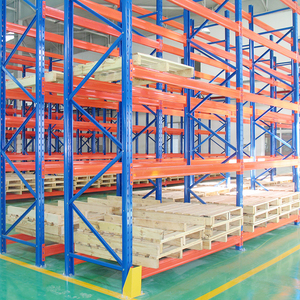
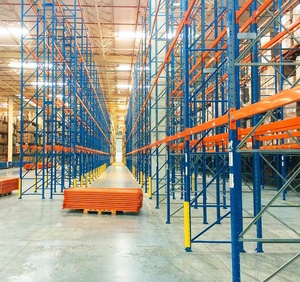
Navigating High-Density Automation: Radio Shuttle Racking in Monterrey
As the industrial capital of Nuevo León, Monterrey has emerged as the epicentre of North American nearshoring manufacturing and logistics expansion. Driven by massive capital inflows into industrial corridors such as Apodaca, Santa Catarina, Cienega de Flores, Escobedo, and Pesquería, the demand for Class-A industrial logistics space has surged to historic highs. With land costs escalating and warehouse clear heights extending up to 14 meters, traditional selective racking systems no longer deliver the volumetric financial ROI required by modern enterprises.
Radio Shuttle Racking Systems (also known as Pallet Runner or Shuttle Cart systems) represent the ultimate evolution in semi-automated high-density pallet storage. By deploying self-propelled robotic shuttle cars inside specialized structural racking channels, facilities can eliminate forklift operational aisles inside the rack matrix. This architectural transformation increases usable pallet position density by up to 80% compared to selective rack and 35% compared to conventional drive-in systems, while significantly enhancing operational speed, structural safety, and inventory accuracy.
Technical Information Gain: The Physics of Radio Shuttle Efficiency
Unlike drive-in systems where forklifts physically enter structural tunnels—creating high risks of upright collision and structural fatigue—radio shuttle systems keep forklifts strictly at the perimeter aisle. The shuttle shuttle car travels along precision-rolled galvanized guide rails, utilizing optical sensors, laser rangefinders, and brushless DC motors to position pallets smoothly at accelerations up to 0.8 m/s². This setup prevents product crushing and eliminates rack impact damage.
Engineering Comparison: High-Density Racking Paradigms
Evaluating structural layout alternatives for Monterrey manufacturing plants, cold storage facilities, and 3PL fulfillment hubs.
| Storage Metric / Feature | Selective Pallet Rack | Drive-In Racking | Radio Shuttle Racking System |
|---|---|---|---|
| Floor Area Utilization | 35% - 40% (Low) | 60% - 65% (High) | 75% - 85% (Maximum) |
| Vertical Space Optimization | Standard Height Limits | Height Limited by Forklift Mast | Full Clear Height Utilization (Up to 15m) |
| Operational Logic | 100% Selective (FIFO) | Strict LIFO (Difficult FIFO) | Flexible FIFO & LIFO Software Controlled |
| Forklift Damage Risk | Moderate | Extremely High (In-Rack Driving) | Near Zero (Perimeter Operation Only) |
| Pallet Retrieval Speed | Fast (per pallet) | Slow & Cautious | High-Speed Automated Shuttle Transit |
| Cold Storage Operating ROI | Low (High Energy Waste) | Moderate | Superior (Maximizes Cube in -25°C Rooms) |
Radio Shuttle Racking Deployment Across Monterrey's Ecosystem
Every manufacturing and logistics cluster in Nuevo León faces distinct operational pressures. Our custom-engineered shuttle racking solutions are specifically adapted to meet local sector requirements:
Automotive & Tier-1 Component Buffers
In major automotive manufacturing corridors like Santa Catarina and Pesquería, tier-1 suppliers utilize radio shuttle racking to maintain Just-In-Time (JIT) and Just-In-Sequence (JIS) component buffers. The system allows deep accumulation of heavy metal containers and standard euro-pallets with rapid automated retrieval during assembly line call-outs.
Cold Storage & Frozen Food Distribution
With ambient summer temperatures in Monterrey frequently exceeding 40°C, operating refrigerated and frozen (-25°C) facilities in Apodaca and San Nicolás incurs massive electrical costs. Radio shuttle racking maximizes volume within smaller insulated building footprints, reducing thermal loss per pallet position while utilizing special low-temperature Lithium Iron Phosphate (LiFePO4) battery packs.
Fast-Moving Consumer Goods (FMCG) & 3PL
Logistics operations in Ciénega de Flores and Escobedo manage large batch SKUs with extreme seasonal volume swings. Shuttle racking enables dynamic switching between LIFO (for maximum density during peak storage) and FIFO (for strict lot expiration control in food, beverage, and chemical sectors).
Key Localized Trends Driving Warehouse Automation in Nuevo León
The industrial real estate market in Northern Mexico is undergoing structural transformations. Logistics directors and plant expansion engineers must account for several localized trends when designing internal storage layouts:
1. Vertical Cube Maximization vs. Land Cost Escalation
Industrial park lease rates across prime Monterrey submarkets have appreciated significantly. Developers are constructing taller spec buildings with clear heights reaching 12 to 14 meters. Standard forklift selective racking caps out around 8 to 9 meters due to mast sway and aisle width requirements. Radio shuttle racking allows companies to utilize 100% of the vertical clear height safely, stacking up to 8 levels high.
2. Nearshoring Speed-to-Market & Rapid Scalability
International companies establishing operations in Mexico require immediate operational readiness. Unlike fully automated ASRS crane systems which require 18 to 24 months of structural engineering and commissioning, radio shuttle racking can be manufactured, delivered, and fully commissioned within 8 to 12 weeks, providing immediate high-density capacity.
3. Integration with Local WMS & ERP Infrastructure
Modern shuttle carts are no longer isolated mechanical islands. Top-tier suppliers equip shuttles with Wi-Fi / RF communication modules, allowing seamless integration with SAP, Oracle, and customized Warehouse Management Systems (WMS). This enables real-time pallet tracking, automated inventory counts, and remote diagnostic monitoring directly from the control room.
4. Labor Optimization & Operator Ergonomics
As competition for skilled warehouse labor increases across Nuevo León's industrial parks, shuttle racking dramatically lowers total forklift driver requirements. One forklift operator can manage up to four shuttle carts simultaneously, drastically cutting labor overhead while minimizing driver fatigue and workplace injury risks.
Engineering Excellence: CFE Seismic Standards & NOM Safety Compliance
Racking safety in Mexico involves strict structural design considerations. While Northern Mexico is generally considered a lower seismic risk zone than the Pacific coast, major facilities in Monterrey are built on expansive clay soils and must satisfy strict structural engineering criteria set by local municipalities and international corporate insurers.
1. CFE Manual de Diseño por Sismo Compliance
Our engineering team designs every radio shuttle racking matrix in accordance with the Comisión Federal de Electricidad (CFE) Seismic Design Manual and ANSI MH16.1 specifications. Frame upright profiles, diagonal bracing ratios, seismic baseplate dimensions, and chemical anchor bolt embedment depths are precisely calculated based on site-specific soil coefficients and total loaded pallet mass.
2. NOM-006-STPS-2014 & NOM-001-STPS-2008 Standard Adherence
To ensure complete compliance during Secretariat of Labor and Social Welfare (STPS) inspections, our installations incorporate:
- NOM-Compliant Load Capacity Signage: Clear yellow warning plaques displaying maximum load per level, shelf beam capacity, and shuttle operating weight.
- Heavy-Duty Column Protectors: Floor-anchored structural steel upright guards positioned at all main traffic aisles to absorb forklift cornering impacts.
- Safety Back Mesh & Pallet Stops: Galvanized wire mesh backing installed along perimeter walls and order-picking corridors to prevent accidental item displacement.
AztecRack Factory Engineering Advantages
As a direct manufacturer and direct supplier to leading enterprise facilities in Mexico, we maintain complete control over raw material sourcing, fabrication accuracy, automated shuttle electronics, and on-site assembly quality.
Certified Q355B Structural Steel
We use high-tensile cold-rolled coil steel with mill test certificates for every production batch. Our beam profiles deliver superior load deflection resilience (exceeding L/200 standard requirements under maximum static load).
Advanced Shuttle Robotics
Our radio shuttle cars feature Siemens PLC control chips, Schneider electric relays, and German-engineered photoelectric sensors. Powered by high-efficiency LiFePO4 batteries, they deliver up to 10 hours of continuous operation per charge with 30-minute quick charging capability.
Turnkey Engineering & Free CAD Design
Our structural engineers provide complimentary 2D and 3D CAD layout design services within 3 to 5 business days, analyzing your specific floor slab capacity, forklift turn radius, SKU turnover rate, and clear building height.
Frequently Asked Questions: Radio Shuttle Procurement in Monterrey
Direct answers to key technical, logistical, and commercial queries raised by warehouse managers and procurement leaders.
Transform Your Monterrey Warehouse Storage Density Today
Maximize your usable pallet capacity, lower operational overhead, and ensure full seismic compliance with our certified Radio Shuttle Racking Systems.
Inquire Now