Engineering-Grade Industrial Racking Systems
Direct OEM/ODM Solutions Certified for Structural Integrity, Heavy-Load Capacities, and Dynamic Logistics Environments
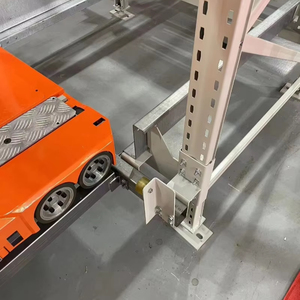
Four Way Radio Shuttle Rack Smart Pallet Rack System Shuttle Pallet Racking Warehouse ASRS Shuttle Racking System
View System Specifications →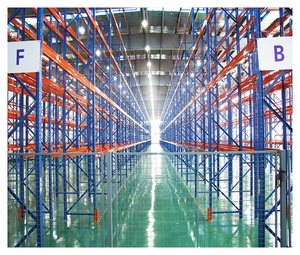
Nanjing A-Plus Factory Manufacture Cold-rolled Steel Box Beam Pallet Racking Heavy Duty Storage Racks
View System Specifications →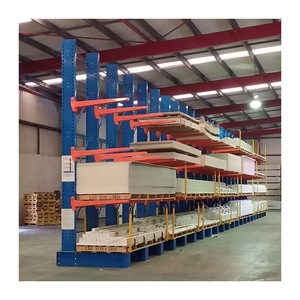
Mracking Adjustable Corrosion Protection Steel Pipe Storage Shelf Custom Warehouse Cantilever Rack System
View System Specifications →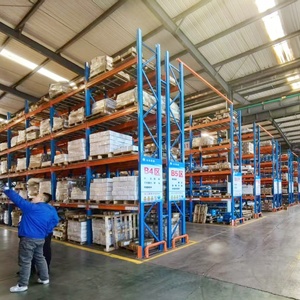
Industrial Warehouse Storage Rack Adjustable Custom 800-3000kg/Level Load Capacity Heavy Duty Selective Pallet Racking System
View System Specifications →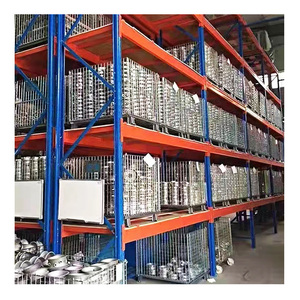
Pallet Racking Warehouse Storage Heavy Duty Industrial Pallet Shelf Narrow Aisle Selective Warehouse Racking System
View System Specifications →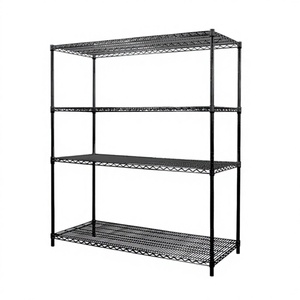
Professional 4 Tier Epoxy Coated Shelves Black Warehouse Shelf Garage Shelving Heavy Duty Wire Metal Shelving with Wheels
View System Specifications →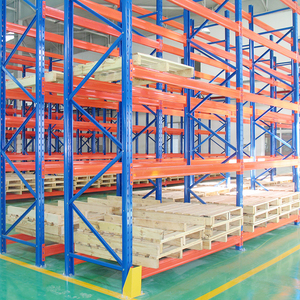
High Quality Heavy Duty Steel Stacking Storage Shelf High Load-bearing Capacity Custom Layer Industrial Pallet Rack
View System Specifications →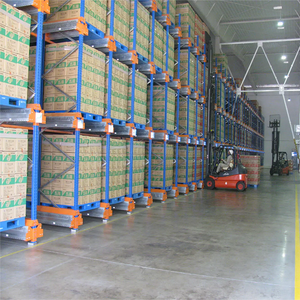
Save Labor Heavy Duty Warehouse Adjustable Radio Pallet Shuttle Racking System 1000-1500kg Load Stacking Racks & Shelves
View System Specifications →Why Global Logistics Leaders Partner with Premier Export Factories
Precision Roll-Forming Engineering, Advanced Seismic Analysis, and End-to-End Supply Chain Traceability
Custom Engineering & CAD Layout
Every facility presents unique spatial constraints. Our structural engineers utilize advanced 3D CAD and BIM modeling to maximize cubic vertical space, optimize aisle widths for specific Material Handling Equipment (MHE), and generate precise load-bearing calculations tailored to your SKU velocity profiles.
Seismic & Environmental Compliance
From earthquake-prone Pacific regions to heavy industrial manufacturing hubs, our racking structures comply rigorously with ANSI MH16.1, FEM 10.2.02, and local seismic regulations (such as CFE manuals). Baseplates, structural bracing, and anchor bolt configurations are calculated dynamically for site-specific risk profiles.
High-Grade Steel & Surface Treatments
We source prime cold-rolled Q235B and Q355B structural steel accompanied by original mill test certificates. Uprights and box beams undergo rigorous multi-stage chemical pretreatment, shot blasting, and high-durability electrostatic epoxy powder coating or hot-dip galvanizing for harsh outdoor and cold-storage sub-zero conditions.
Technical Whitepaper: Procurement & Technological Trends in Industrial Racks (2025–2030)
The global warehousing landscape is undergoing a structural paradigm shift driven by nearshoring manufacturing surges, labor cost escalation, and the global expansion of e-commerce logistics centers. Enterprise procurement managers can no longer view industrial storage racks merely as static iron furniture. Instead, modern racking systems serve as the structural backbone of integrated warehouse management systems (WMS) and automated material handling workflows.
1. The Shift from Static Selective Racking to Semi-Automated & Fully Automated Systems
While traditional selective pallet racking remains the default baseline for facilities requiring 100% SKU selectivity, soaring industrial real estate costs are forcing facility managers to convert footprint into vertical volume. High-density storage solutions, such as Four-Way Intelligent Radio Shuttle Systems and Automated Storage and Retrieval Systems (ASRS), are seeing a projected Compound Annual Growth Rate (CAGR) of over 11.4% through 2030.
Four-way shuttles represent a major leap forward over classic two-way shuttle systems. By operating across both longitudinal storage lanes and transverse cross-aisles without requiring overhead crane switches, four-way shuttles optimize fleet utilization, reduce battery consumption, and dramatically increase pallet moves per hour (PPH). When integrated into high-bay clad rack structures, overall warehouse space utilization increases by up to 75% compared to conventional floor stacking or low-bay selective systems.
2. Structural Material Science: High-Tensile Cold-Rolled Profiles vs. Structural Channel
A central technical consideration for warehouse structural engineers is the choice between cold-formed roll-formed steel profiles and structural hot-rolled C-channel steel:
- Cold-Formed Steel (e.g., Teardrop and Omega Profiles): Offers exceptional weight-to-strength ratios, cost efficiencies, and total height adjustability (typically in 50mm, 75mm, or 2-inch increments). Advanced roll-forming lines allow manufacturers to engineer multi-ribbed upright columns with localized strain hardening, yielding high moment capacities without adding dead structural weight.
- Hot-Rolled Structural Channel Steel: Essential for high-impact environments, heavy industrial machinery storage, or heavy-duty outdoor cantilever racking systems. Structural rack components exhibit superior resistance to forklift impacts, reducing long-term maintenance overhead in high-throughput 3PL fulfillment centers.
3. Sustainability, Zero-VOC Coatings, and Cold Chain Resilience
Environmental regulatory compliance has shifted factory manufacturing standards globally. Modern exporters have transitioned to automated zero-VOC (Volatile Organic Compound) electrostatic powder coating lines. In sub-zero cold chain environments (operating as low as -30°C), specialized low-temperature epoxy formulations or hot-dip galvanizing (HDG) with zinc coating thickness exceeding 65–85 microns are mandatory to prevent micro-fissuring, structural embrittlement, and rust propagation caused by thermal cycling.
System Selection Matrix for Procurement Directors
To assist industrial buyers in balancing capital expenditures (CAPEX) with spatial efficiency, the table below outlines structural specifications across major racking topologies:
| Racking Topology | Pallet Selectivity | Storage Density | Typical Load Capacity | MHE Requirement | Optimal Industry Application |
|---|---|---|---|---|---|
| Selective Pallet Rack | 100% Direct Access | Moderate (40-50%) | 800 kg – 3,500 kg / level | Standard Counterbalance / Reach Truck | 3PL Warehousing, FMCG, Retail Fulfillment |
| Narrow Aisle (VNA) | 100% Direct Access | High (65-75%) | 1,000 kg – 2,500 kg / level | VNA Turret Truck / Articulated Forklift | High-Bay Distribution, Pharmaceutical, Electronics |
| Radio Shuttle ASRS | LIFO / FIFO Automated | Maximum (80-90%) | 1,000 kg – 1,500 kg / pallet | Standard Reach Truck + Autonomous Shuttle | Cold Storage, Beverage Staging, High-Volume Bulk |
| Cantilever Rack System | Direct Open Front | Variable (Linear) | 500 kg – 5,000 kg / arm | Side Loader / Heavy Duty Forklift | Steel Pipe, Aluminum Extrusions, Lumber, Sheet Metal |
| Heavy Duty Stacking Rack | Batch / Modular | High Stackable Density | 1,000 kg – 2,000 kg / rack | Standard Forklift | Automotive Parts Buffers, Seasonal Agricultural Storage |
Factory Structural Testing & Quality Assurance Standards
Acquiring industrial storage racks from premier exporting factories ensures strict adherence to structural engineering mechanics. The integrity of high-bay racking systems relies on rigorous verification during production:
Key Engineering Verification Metrics:
1. Beam Deflection Limits (L/180 Standard): Under maximum rated uniformly distributed loads (UDL), structural beams must not exceed a deflection limit of 1/180th of the clear beam span. Exceeding this boundary induces fatigue on beam-to-upright connector hooks and heightens the risk of accidental load dislodgements during forklift operations.
2. Upright Column Frame Stability: Upright frames are evaluated under dynamic axial compression combined with bending moments. Computer-controlled tensile testing beds verify the yield strength ($f_y$) and ultimate tensile strength ($f_u$) of cold-rolled steel coils prior to profile extrusion.
3. Connector Safety Locks & Locking Pins: Automatic safety pins with minimum shear resistance standards ensure that upward strikes from forklift tines cannot dislodge loaded beams from column teardrop or structural keyholes.
Frequently Asked Questions (FAQ)
Clear, Technical Insights for Procurement Officers, Plant Managers, and Structural Engineers
How do factory engineers verify rack safety compliance for high seismic zones?
Factory engineers utilize finite element analysis (FEA) software to model structural rack response under dynamic ground acceleration. We apply site-specific seismic coefficients derived from regional building codes (such as ASCE 7, IBC, or CFE manuals), specifying enlarged heavy-duty baseplates, additional floor anchors, and reinforced horizontal/diagonal frame bracing ratios.
What documentation is provided to support facility safety audits (OSHA / NOM-006-STPS)?
Every project shipment includes stamped layout drawings, official beam/frame load capacity charts, steel mill test certificates (MTC), and standardized safety plaque signs. These compliance documents enable your internal environmental health & safety (EHS) team to pass municipal, workplace safety, and insurance audits seamlessly.
What information is required to receive an accurate CAD warehouse layout and quote?
To generate a precise engineering proposal, our team requires: (1) Facility floor plan dimensions and clear ceiling height under building trusses/sprinklers; (2) Concrete slab thickness and load capacity rating; (3) Pallet dimensions (Length x Width x Height including cargo overhang); (4) Maximum unit load weight per pallet; and (5) Specific forklift models and their minimum turning radius requirements.
When should a warehouse select Cantilever Racking over Pallet Racking?
Cantilever racking is designed specifically for long, continuous, or irregularly shaped commodities that cannot be safely stored on conventional pallet rack beams without intermediate vertical obstruction—such as steel pipes, PVC tubing, aluminum extrusions, timber planks, sheet metal packs, and furniture components. Pallet racking should be reserved for standardized unitized pallet loads.
What are the standard manufacturing lead times for large export orders?
Standard manufacturing lead times range between 14 to 25 business days depending on order volume, profile roll-forming schedules, and powder coat color customizations. Rapid production lines enable phased container shipments to align directly with client warehouse construction milestones.