Heavy-Duty Racking Systems for High-Capacity Distribution
Explore our top-tier industrial storage architectures, engineered for maximum cube utilization, structural safety, and high-turnover logistics performance.
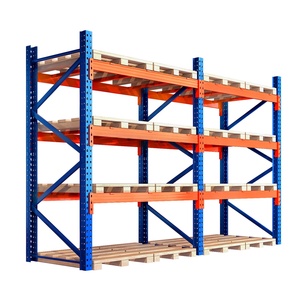
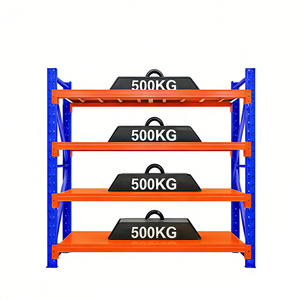
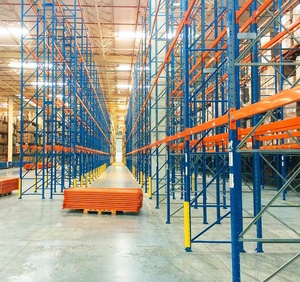
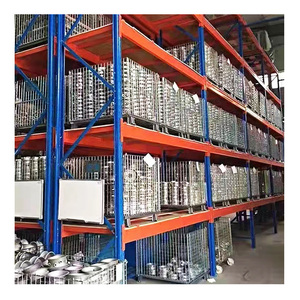
Engineering Whitepaper: Strategic Sourcing of Industrial Storage Racking for Global Exporters & Wholesalers
As modern international supply chains shift toward nearshoring, regional fulfillment hubs, and rapid SKU throughput, the structural reliability and volumetric efficiency of warehouse racking systems have become pivotal business drivers. For B2B procurement managers, warehouse operations directors, and bulk racking wholesalers, selecting an industrial storage partner goes far beyond evaluating cost-per-pallet position. It requires a rigorous assessment of structural metallurgy, seismic engineering parameters, total cost of ownership (TCO), and long-term compliance with international safety codes such as ANSI MH16.1, FEM 10.2.02, RMI, and NOM-006-STPS.
This whitepaper breaks down the technical imperatives, structural methodologies, procurement trends, and quality verification standards required to build scalable, high-density warehousing infrastructure optimized for industrial exporters and high-volume wholesalers worldwide.
1. Structural Metallurgy & Mechanical Design Considerations
Industrial pallet racks are dynamic load-bearing structures subjected to heavy static weights, repetitive impact loads from material handling equipment (MHE), and lateral forces induced by seismic activity or thermal contraction in cold-storage environments. High-spec racking systems utilize Q235B or Q355B cold-rolled structural steel, engineered via Finite Element Analysis (FEA) to maximize load distribution across beam connections and upright frames.
- Upright Column Profile Geometries: Column profiles feature open-c-shape or closed-box configurations with multiple stiffness ribs. Upright punch patterns (teardrop, hex, or structural bolting) must maintain dimensional stability without compromising section modulus ($Z_x$).
- Beam Deflection Engineering: Under full design load, maximum allowable beam deflection is strictly constrained to $L/180$ (where $L$ is the clear span beam length), preventing structural sag, load instability, or localized weld stress fatigue.
- Seismic Baseplate & Anchoring Integrity: In accordance with CFE seismic design guidelines and ANSI MH16.1, heavy-duty baseplates are sized to distribute vertical and overturning moment loads safely into the concrete slab, using heavy-duty chemical or mechanical expansion anchors.
Industrial Racking Architecture Comparison
Evaluate density, accessibility, and MHE operational requirements across primary rack configurations.
| Rack Architecture | Storage Density | SKU Selectivity % | Ideal Inventory Profile | Handling Equipment Required | Seismic Resistance |
|---|---|---|---|---|---|
| Selective Pallet Rack | Standard (40-50% floor) | 100% Direct Access | High SKU counts, fast picking cycles | Standard Counterbalance / Reach Trucks | High (Rigid Bracing) |
| Double-Deep Pallet Rack | High (+30% vs Selective) | 50% Direct Access | Medium SKU count, paired pallet batches | Deep-Reach Forklifts | High (Double Frame Depth) |
| Drive-In / Drive-Thru | Very High (+75% floor) | 20-30% (LIFO/FIFO) | Low SKU variety, mass bulk stock | Standard Counterbalance inside lanes | Moderate (Requires Top Bracing) |
| Push-Back System | High (2 to 6 deep) | Moderate (Per lane) | High-density buffers, gravity-fed LIFO | Standard Forklifts (No lane entry) | Very High (Nested Carts) |
| Cantilever Racks | Linear Open Storage | 100% Linear Access | Long stock: Pipes, steel bars, lumber | Side-loaders / Overhead Cranes | High (Heavy Duty Columns) |
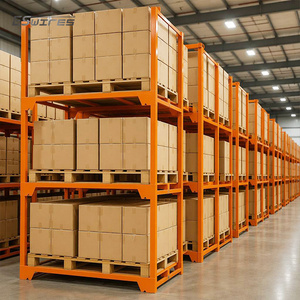
| Nestainer / Portable Frames | Flexible Bulk Stacking | Batch Selectivity | Seasonal inventory, shipping buffers | Standard Forklifts (Stack & Nest) | Moderate (Interlocking Base) |
Why Global Procurement Teams Partner With Us
Turnkey engineering support, automated manufacturing, and end-to-end export logistics engineered for international wholesalers.
Rapid CAD Layout & Engineering Validation
Our structural engineering team delivers fully optimized 2D/3D CAD layouts, aisle clearance calculations, and load capacity specifications within 3 to 5 business days upon receiving facility architectural drawings.
Site-Specific Seismic Engineering
Every rack installation is customized with ground acceleration parameters ($S_s, S_1$) derived from local geographic seismic maps, ensuring full compliance with CFE, ANSI MH16.1, and international building safety codes.
Export Container Load Optimization (CKD)
Components are packaged in Complete Knock-Down (CKD) bundles using custom steel framing and corrosion-resistant wrapping to maximize 40ft HQ container cubic utilization while protecting factory powder finishes during ocean transport.
ISO 9001 Traceable Manufacturing
From mill test certificates (MTC) for every batch of raw coil steel to automated robotic welding lines and thermosetting epoxy powder coating (60-80 microns thickness), our quality assurance is fully documented.
NOM-006-STPS Operational Compliance
We supply standardized load capacity signage, row end protectors, safety frame netting, and structural inspection checklists required for passing stringent industrial labor and facility safety audits.
Macro Trends Shaping Industrial Storage Sourcing (2025 – 2030)
The global industrial warehousing market is undergoing a structural transition driven by nearshoring supply chain reconfiguration, automated material handling, and stringent ESG (Environmental, Social, and Governance) directives. Exporters and wholesalers must align their capital expenditure with these emerging industry paradigms:
Trend 1: AS/RS Integration and Hybrid Automation Compatibility
Modern distribution centers are rapidly migrating toward Automated Storage and Retrieval Systems (AS/RS), autonomous mobile robots (AMRs), and pallet shuttle systems. Storage racks are no longer passive steel frames; they serve as structural guides for high-speed automated cranes. Procurement managers must specify rack manufacturing tolerances within millimeter accuracy ($\pm 1.0\text{ mm}$ beam straightness) to support optical sensor navigation and automatic positioning.
Trend 2: ESG Metallurgy and Sustainable Surface Coatings
International buyers increasingly audit vendor carbon footprints. The storage racking sector is shifting toward low-emission steel production (electric arc furnace processing) and zero-VOC (Volatile Organic Compound) thermosetting powder coatings. Galvanized finishes using eco-friendly zinc-aluminum-magnesium coatings are replacing traditional solvent paints to extend product lifespan under aggressive ambient conditions.
Trend 3: Smart Sensors & Structural Health Monitoring (SHM)
With warehouse vertical heights exceeding 12 to 15 meters, forklift impacts represent major operational hazards. Future-ready racking installations integrate IoT structural health sensors embedded inside critical column bases and main beams. These micro-sensors continuously measure deflection strain, vibration frequencies, and impact forces, alerting facility safety teams in real time before micro-fractures lead to catastrophic structural failure.
Frequently Asked Questions by Industrial Sourcing Managers
Clear, technical guidance on compliance, lead times, customization, and export logistics.
Yes. Every industrial racking project is engineered in strict accordance with ANSI MH16.1 specifications, FEM 10.2.02 codes, and site-specific seismic design manuals (including CFE seismic maps for high-risk zones). Load capacity calculations factor in dead weight, live pallet weight, seismic spectral acceleration ($S_D1$), and MHE impact allowances.
We provide comprehensive engineering compliance packages including Mill Test Certificates (MTC) for steel raw materials, structural load calculation reports, stamped CAD layout drawings, official load capacity warning plaques for every aisle, and routine safety inspection checklists required for labor safety compliance audits.
Preliminary CAD layouts, 3D render designs, and structural capacity estimates are delivered within 3 to 5 business days after receipt of warehouse architectural plans. Manufacturing lead times generally range from 3 to 5 weeks depending on total tonnage, surface finishing requirements (powder coating vs hot-dip galvanizing), and order customization.
All upright frames, beams, and cantilever arms are bundled into high-density Knock-Down (CKD) units secured with heavy-duty steel strapping, edge corner guards, and moisture-barrier plastic film wrapping. Small hardware, baseplates, and beam safety pins are packed in reinforced, palletized wooden crates to prevent loss and transit corrosion.
Choose Cantilever Racks when storing long, continuous, or irregularly shaped materials such as steel pipes, aluminum extrusions, timber, or sheet metal where front upright columns would block loading. Choose Nestainer Portable Stacking Frames for temporary or seasonal bulk storage where floor flexibility is needed, allowing dynamic stacking without permanent floor anchoring.
Optimize Your Warehouse Footprint & Storage Capacity
Upload your warehouse floor plan, clear height specifications, and SKU handling requirements. Our senior engineering team will generate a customized, seismic-verified storage layout and competitive export quote.