Precision-Engineered Heavy-Duty Racking Systems
Explore our flagship, certified heavy-duty warehouse storage equipment designed for extreme load capabilities, seismic stability, and maximum vertical space optimization.
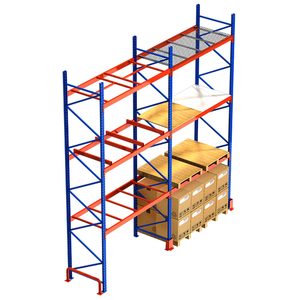
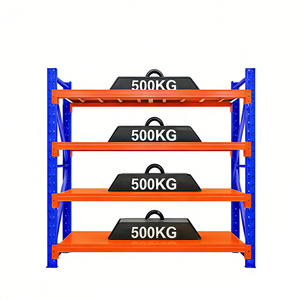
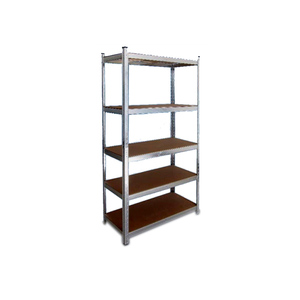
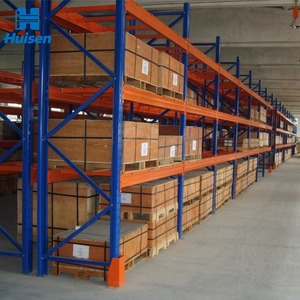
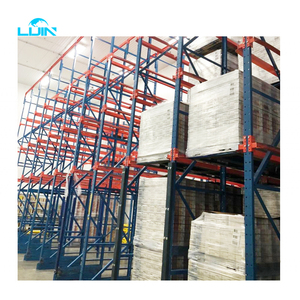
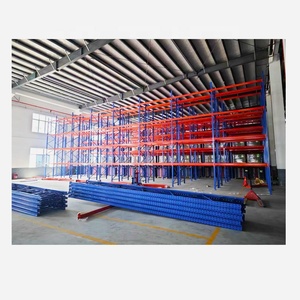
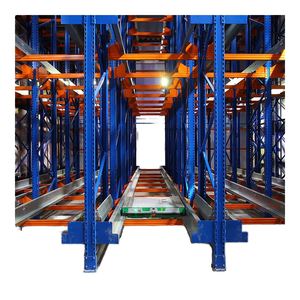
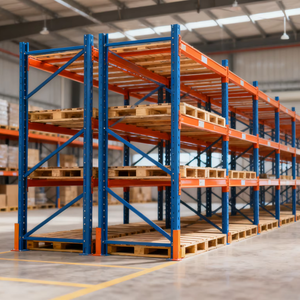
Structural Engineering Standards in Modern Industrial Racking & Shelving Manufacturing
In global supply chain management, selecting top trusted industrial racking and shelving factories is a strategic decision that directly impacts operational safety, floor utilization efficiency, and long-term capital efficiency. Modern high-density logistics facilities require warehouse racking systems that go beyond basic storage; they require structural integrity calculated under complex load dynamics, seismic coefficients, and heavy cycle frequencies.
As industrial facilities expand vertically to combat rising commercial land costs, structural engineering standards such as ANSI MH16.1 (Rack Manufacturers Institute), FEM 10.2.02, and EN 15512 have become the baseline for tier-one global suppliers. Leading racking factories strictly adhere to cold-rolled steel profiling utilizing high-grade structural alloys such as Q235B and Q355B (equivalent to ASTM A1011 SS Grade 50). These materials deliver optimal yield strengths capable of absorbing continuous dynamic impacts from materials handling equipment (MHE) like reach trucks, VNA (Very Narrow Aisle) turrets, and autonomous mobile robots (AMRs).
Finite Element Analysis (FEA)
Advanced structural modeling ensures upright frames and beam connectors withstand buckling, torsional shear, and dynamic loading forces prior to roll-forming production.
Seismic Design Compliance
Customized baseplate anchors, structural bracing geometry, and moment connections calculated according to site-specific seismic ground acceleration data.
Surface Treatment Longevity
Automatic 9-stage pre-treatment cleaning combined with thermosetting epoxy-polyester powder coating (60–80 µm) or hot-dip galvanizing for harsh environments.
Metallurgical Selection and Mechanical Properties of Heavy-Duty Rack Steel
A primary differentiator between standard commercial shelving manufacturers and top-tier industrial racking factories lies in raw material verification. Premium racking producers implement rigid Quality Assurance (QA) protocols, subjecting incoming steel coils to ultrasonic flaw detection, yield stress testing, and thickness tolerance checks ($0.05\text{mm}$ maximum variance).
| Steel Grade Standard | Yield Strength ($R_{eH}$) | Tensile Strength ($R_m$) | Elongation ($A_5$) | Primary Rack Component Usage |
|---|---|---|---|---|
| Q235B (ASTM A36 equiv.) | $\ge 235\text{ MPa}$ | $370 - 500\text{ MPa}$ | $\ge 26\%$ | Light-to-medium shelf beams, baseplates, row spacers, tie bars. |
| Q355B (ASTM A572 Gr50) | $\ge 355\text{ MPa}$ | $470 - 630\text{ MPa}$ | $\ge 22\%$ | Heavy-duty upright columns, box beams, drive-in pallet rails. |
| SS400 (JIS G3101) | $\ge 245\text{ MPa}$ | $400 - 510\text{ MPa}$ | $\ge 21\%$ | Standard pallet beam connectors, safety pins, frame bracing. |
| Hot-Dip Galvanized S350GD | $\ge 350\text{ MPa}$ | $\ge 420\text{ MPa}$ | $\ge 16\%$ | Cold storage automated racking, outdoor continuous shelter racks. |
Warehouse Storage System Comparison & Load Parameters
Logistics planners must align operational throughput demands (FIFO vs. LIFO) with physical warehouse clear heights and floor load ratings. The evaluation table below provides high-gain insight into selecting the correct structural configuration from reliable industrial racking factories.
| Racking Architecture | Storage Density | SKU Selectivity | Max Load per Level | Forklift / MHE Required | Optimal Industry Application |
|---|---|---|---|---|---|
| Selective Pallet Racking | Standard (40-50%) | 100% Direct Access | 4,500 kg / level | Counterbalance / Reach Truck | 3PL FMCG, High-SKU Fulfillment Centers |
| Double-Deep Racking | High (60-65%) | 50% Immediate Access | 3,200 kg / level | Deep-Reach Pantograph Truck | Cold Storage, Batch Production Warehouses |
| Drive-In / Drive-Through | Very High (75-85%) | Low (LIFO / FIFO) | 1,500 kg / pallet pos | Standard Counterbalance | Seasonal Goods, Homogenous Bulk Storage |
| Radio Shuttle Automation | Maximum (85-90%) | Automated Programmed | 2,000 kg / pallet pos | Standard Forklift + Shuttle Bot | Cold Chain Logistics, High-Throughput Food |
| Cantilever Systems | Variable / Heavy | 100% Linear Access | 5,000+ kg / arm | Side Loader / Multi-directional Truck | Steel Pipe, Timber, Aluminum Profiles |
| ASRS High-Bay Structural | Ultra-High (90%+) | 100% Automated | 3,000 kg / bay unit | Automated Stacker Cranes / AGV | Smart Factory Distribution, Automotive OEM |
Global Procurement & Technological Trends in Racking Manufacturing
The industrial storage equipment sector is undergoing a massive transformation driven by supply chain nearshoring, warehouse automation, and stringent environmental sustainability goals. Procurement directors evaluating global racking factories must account for four macro trends defining the industry over the next decade:
1. Convergence with Autonomous Mobile Robots (AMR) & ASRS
Traditional structural racking is increasingly combined with automated pallet runners, four-way radio shuttles, and overhead ASRS crane systems. Modern factories must manufacture cold-formed profiles with structural tolerances down to $\pm 0.5\text{mm}$ across a $12\text{-meter}$ column height to guarantee flawless laser navigation and sensor detection by warehouse robotics.
2. Nearshoring and Supply Chain Regionalization
Global manufacturing shifts toward regional hubs in North America (Mexico-US border corridors), Southeast Asia (Vietnam, Thailand), and Eastern Europe require racking suppliers capable of seamless international logistics, localized engineering approvals, and compliance with native building safety codes.
3. Modular Modularization & Rapid Reconfigurability
Dynamic e-commerce SKU fluctuations demand modular shelf designs featuring tear-drop or multi-clasp beam connectors. Fast, tool-less vertical beam adjustments (typically spaced on $50\text{mm}$ or $75\text{mm}$ pitch centers) allow warehouse managers to alter layer heights in response to changing pallet dimensions without structural disassembly.
4. Low-Carbon Steel & Eco-Friendly Finishes
Leading factories are adopting low-emission electric arc furnace (EAF) steel and solvent-free, heavy-metal-free powder coatings. Environmental Product Declarations (EPD) are rapidly becoming standard criteria in corporate ESG procurement evaluations.
Why Partner With Premier Racking & Shelving Manufacturers
Building a high-density warehouse represents a major capital expenditure. Operating with substandard racking components exposes organizations to severe safety hazards, operational downtime, and costly structural collapse risks. OEM/ODM tier-one manufacturers provide end-to-end accountability from custom CAD floorplan optimization to final installation sign-off.
Rigorous Quality Control Protocols
Top trusted industrial racking factories enforce a 6-stage quality control workflow embedded directly into the production line:
- Chemical & Tensile Raw Material Inspection: Spectrographic material verification for steel coils before slitting and roll-forming.
- Precision Roll-Forming Tolerances: Continuous automated monitoring of column profile curvature, hole punch centering, and beam box closure.
- Robotic MIG/TIG Welding: Structural connectors and beam end-plates are welded using automated robotic arms ensuring 100% weld seam depth penetration.
- Phosphate-Free Chemical Pre-treatment: Multi-stage spray washing removes processing oils and applies a dense conversion coating for superior powder adhesion.
- Electrostatic Powder Curing: Computerized oven baking at $200^\circ\text{C}$ guarantees scratch resistance, salt-spray durability, and uniform finish thickness.
- Destructive & Non-Destructive Load Testing: Batch testing of beam connector hooks, column compression stability, and weld shear strength.
Frequently Asked Questions by Industrial Buyers
Get expert engineering answers to key technical questions regarding racking layout design, safety standards, load capacity calculations, and custom OEM manufacturing.
Beam load capacity is calculated based on Uniformly Distributed Load (UDL) principles and structural deflection limits dictated by RMI/ANSI MH16.1 standards (typically maximum deflection $\le L/180$, where $L$ is the beam length). Engineering finite element calculations account for steel thickness, profile depth, hook connector engagement, and safety factor multipliers (typically 1.65 to 1.80 above working capacity).
Cold-rolled rack components are formed by passing sheet steel through continuous rollers at room temperature, producing lightweight yet high-tensile shapes suitable for standard logistics applications. Structural steel racks are manufactured from hot-rolled C-channels, offering superior resistance to heavy forklift impacts, making them ideal for freezer storage, harsh industrial yards, and high-impact environments.
Yes. Custom seismic engineering involves increasing baseplate surface area, utilizing heavy-duty chemical expansion anchors, thickening column profiles, adding horizontal/vertical back-bracing trusses, and strengthening beam connector locking mechanisms according to localized seismic peak ground acceleration ($S_{DS}$) calculations.
A reputable factory should hold ISO 9001:2015 Quality Management certification, ISO 14001 Environmental management, CE certification for European compliance, RMI certification compliance for the North American market, and third-party material testing verification certificates (such as SGS or TÜV Rheinland).
Typical factory production lead times range from 15 to 25 working days depending on tonnage volume, color customization, and structural complexity. Engineering CAD layout approval and structural approval drawings generally take 3 to 5 days prior to steel coil slitting.
Optimize Your Warehouse Footprint Today
Connect directly with our senior structural engineering team for a customized CAD layout analysis, structural load calculation, and factory-direct wholesale quote tailored to your exact facility specifications.