Engineered Heavy-Duty Industrial Storage Systems
Certified export-grade pallet racks, cantilever frameworks, wire container units, and customized structural storage systems built to rigorous international loading standards.
1. Strategic Imperatives for International Industrial Storage Procurement
Modern global logistics, high-density distribution centers, and nearshoring manufacturing plants demand structural storage solutions engineered to handle unprecedented static and dynamic operational loads. As a tier-one top trusted industrial rack storage exporter, establishing structural reliability requires strict adherence to advanced metallurgy standards, cold-formed structural design calculations, dynamic finite element analysis (FEA), and stringent quality verification protocols. When global procurement officers source industrial pallet racks and cantilever systems across international borders, the primary focus spans structural integrity, seismic safety factors, modular versatility, compliance with regional warehouse labor safety directives (such as ANSI MH16.1, FEM 10.2.02, and NOM-006-STPS), and total cost of ownership (TCO).
Industrial storage infrastructure serves as the load-bearing backbone of global supply chains. Selecting structural cold-rolled coil profiles—specifically Q235B and high-yield Q355B carbon steel—ensures optimal tensile strength ratios, enabling upright frames to support vertical bay loads exceeding 20 metric tons while retaining elastic recovery under heavy fork-truck impacts. International racking exporters must guarantee that raw material mill certificates (MTCs) verify uniform grain structures, yield strengths above 355 MPa, and precise thickness tolerances, eliminating hidden material fatigue under multi-tier vertical storage stresses.
Technical Information Gain Insight: Structural rack deflections under maximum design load must not exceed L/180 for standard pallet racking or L/200 for Automated Storage and Retrieval Systems (AS/RS). Standardizing beam profile geometry with continuous robotic pulse welding mitigates stress concentrations at column-to-beam connectors, extending operational lifespan by over 250% compared to traditional manual stitch welding.
2. Enterprise Engineering Competencies & Manufacturing Quality Assurance
Achieving international recognition as a premier global racking exporter requires rigorous end-to-end quality control across raw material processing, roll forming, automated welding, surface finishing, and export container packing. Modern production facilities utilize high-precision multi-stage continuous cold roll forming mills, capable of producing upright profiles with up to 13 bending deformation zones. This multi-rib profile design significantly increases section modulus and torsional resistance without adding unnecessary dead weight to the warehouse floor slab.
FEA Structural Modeling
Advanced 3D Finite Element Analysis modeling evaluates structural deflection, dynamic bucking, and joint stiffness under extreme non-uniform live loads.
Seismic Dynamic Resistance
Custom structural baseplate sizing, heavy anchor bolt patterns, and X/D frame bracing configured for high-risk dynamic seismic zones per regional building codes.
ISO 9227 Corrosion Armor
Automated thermosetting epoxy-polyester powder coating and hot-dip galvanizing options withstand salt spray testing up to 500+ hours in humid environments.
Precision manufacturing aligns directly with global shipping logistics. Heavy-duty pallet racks, cantilever arms, and structural decking are engineered with knockdown structural connectors, allowing optimized volume nesting during shipping container loading. Overseas buyers benefit from maximized 40ft High Cube (40HC) container volumetric utilization—achieving up to 26,000 kg net structural steel load per container—dramatically lowering transatlantic and transpacific freight cost per storage position.
3. Technical Material & Structural Comparison Matrix
To assist warehouse operations managers, industrial engineering teams, and supply chain procurement managers in selecting optimal storage architectures, the following technical matrix outlines operational capabilities across primary storage structural types:
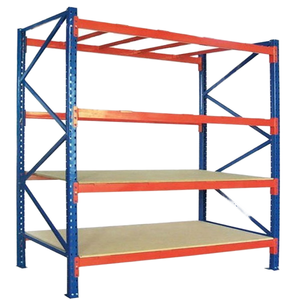
| Storage System Type | Structural Profile Material | Max Load / Level (KG) | Selectivity Rate | Seismic Resistance | Ideal Industry Use-Case |
|---|---|---|---|---|---|
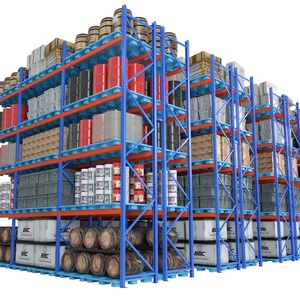
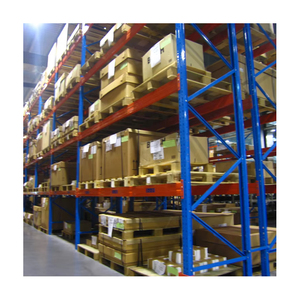
| Selective Pallet Racking | Q235B / Q355B Cold Formed Steel | 1,000 – 4,500 kg | 100% Direct Access | High (Custom Baseplates) | 3PL, E-Commerce, FMCG Warehouses |
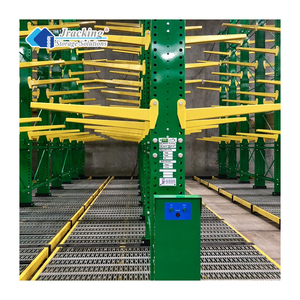
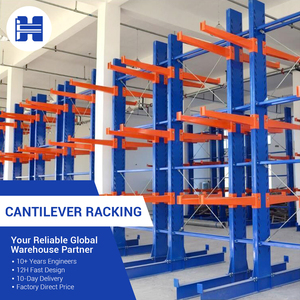
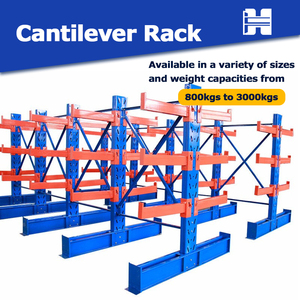
| Heavy-Duty Cantilever Racks | Structural H-Beam / C-Profile Steel | 500 – 3,000 kg / Arm | 100% Linear Access | Very High (Heavy Footing) | Steel Pipe, Timber, Aluminum Profiles |
| Drive-In / Drive-Thru Systems | High-Tensile Cold Formed Channel | 1,000 – 1,800 kg | 20% - 30% (LIFO/FIFO) | Medium (Requires Top Bracing) | Cold Storage, Beverage Distribution |
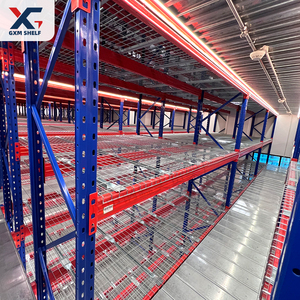
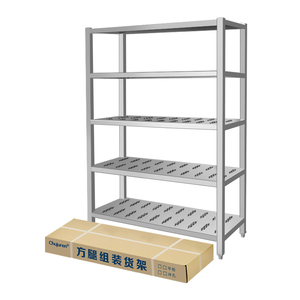
| Wire Container & Deck Systems | Cold-Drawn Gauge Steel Wire | 300 – 1,500 kg | High Visual Visibility | N/A (Accessory Level) | Parts Picking, Order Fulfillment, Retail |
| Multi-Tier Mezzanine Racks | Structural Column & Beam Grid | 300 – 1,000 kg / sq.m | Multi-Level Flexible | High (Tied Structure) | Automotive Parts, High-SKU Logistics |
4. Strategic Sourcing & Future Industry Procurement Trends (2025–2030)
The global industrial storage manufacturing landscape is undergoing a structural transformation driven by warehouse automation, nearshoring supply chain restructuring, and sustainability mandates. Enterprise buyers seeking long-term reliability from an industrial storage exporter must evaluate four core emerging industry trends:
A. Seamless Integration with AS/RS & AGV Automated Ecosystems
Modern distribution centers are rapidly replacing manual material handling with Autonomous Mobile Robots (AMRs), Automated Guided Vehicles (AGVs), and High-Bay AS/RS stacker cranes. Storage racking systems are no longer static shelves; they operate as high-precision structural guides for automated machinery. Beam manufacturing tolerances have tightened from ±2.0mm down to sub-millimeter precision (±0.5mm), while column upright verticality tolerances demand strict compliance with FEM 10.2.02 standards. Future-proof procurement requires racking systems equipped with integrated optical reflector mounting points, floor-guided aisle rail integration, and continuous sensor channels.
B. Nearshoring Supply Chain Resilience & Modular Scalability
Global manufacturing networks are decentralizing. Key regional logistics corridors in North America, Central Europe, and Southeast Asia are experiencing unprecedented demand for rapid-deploy warehouse infrastructure. Exporters who provide modular standard-pitch upright perforation patterns (e.g., 50mm, 75mm, 76.2mm teardrop or Euro-style hook connectors) allow logistics operators to expand, reconfigure, or elevate storage levels without structural cutting or field welding, preserving local structural building permits and safety certifications.
C. Environmental Sustainability, Low-VOC & Green Steel Sourcing
Corporate ESG commitments require industrial suppliers to document carbon footprints across the full raw-material-to-finished-goods life cycle. Top trusted industrial rack exporters are transitioning to electric arc furnace (EAF) green steel billets, which reduce embedded carbon emissions by up to 60%. Furthermore, advanced powder coating lines utilize zero-VOC, heavy-metal-free thermosetting resin coatings. closed-loop chemical pre-treatment wash systems eliminate hazardous wastewater discharge, meeting stringent European and international environmental directives.
D. Smart Racking Infrastructure & Real-Time IoT Structural Monitoring
The integration of IoT deflection sensors, fiber-optic strain gauges, and wireless impact monitors into structural rack columns represents the cutting edge of industrial storage safety. Modern logistics managers receive automated alerts if a forklift collision exceeds structural tolerance thresholds or if rack bay loading creates localized stress concentrations. Leading global exporters are incorporating smart bracket cutouts and cable management pathways directly into upright profiles to facilitate seamless digital retrofit installations.
5. Enterprise Advantages: Why Partnering with a Certified Exporter Matters
Exporting structural steel products worldwide requires extensive expertise in international trade regulations, customs documentation, localized structural building codes, and job-site installation logistics. Working with a dedicated global manufacturer offers key engineering and operational advantages:
Bilingual CAD & Building Code Compliance: Professional engineering teams provide full 2D layout drawings, 3D structural renderings, dynamic load calculation sheets, and site-specific structural stamp documentation, supporting smooth permitting with municipal building authorities worldwide.
Strict Batch Material Traceability: Every shipment includes certified mill test reports detailing chemical compositions (Carbon, Manganese, Silicon, Phosphorus content) and mechanical stress testing results (Yield point, Ultimate Tensile Strength, Elongation percentage). Each structural beam and frame component carries stamped heat numbers for full life-cycle accountability.
Turnkey Export Packaging & Protection: Heavy industrial racking components face severe mechanical vibrations and marine humidity during ocean transport. Certified exporters utilize wooden pallet cradles, heavy-duty steel banding, corner edge protectors, waterproof VCI plastic wrapping, and desiccant packs within shipping containers to ensure cargo arrives zero-defect and ready for rapid installation.
6. Comprehensive Industrial Storage Sourcing FAQ
To assist purchasing teams, facility managers, and safety compliance officers, our chief structural engineers have addressed the most critical questions regarding global racking sourcing: