Engineered Warehouse Racking & Structural Mezzanine Systems
Factory-direct OEM/ODM certified industrial storage solutions manufactured from high-tensile Q235B/Q355B structural steel to maximize volumetric space utilization.
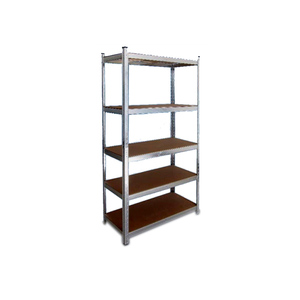
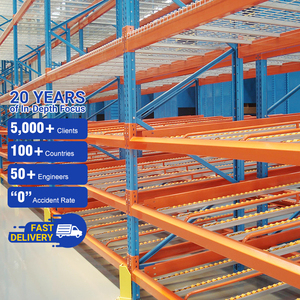
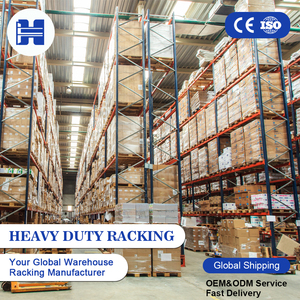

1. White Paper: Structural Engineering Standards in Modern Industrial Mezzanines & Racking
As modern global logistics operations pivot toward omnichannel fulfillment, micro-fulfillment, and aggressive nearshoring strategies, maximizing internal clear warehouse height has evolved from a simple spatial consideration into a mission-critical financial imperative. Industrial enterprise procurement leads, warehouse infrastructure developers, and 3PL operational directors require racking systems that balance structural integrity, seismic safety compliance, and high throughput efficiency.
As a leading China warehouse racking mezzanine exporter and wholesaler, our structural design framework adheres strictly to international engineering benchmarks, including ANSI MH16.1 (Specification for the Design, Testing and Utilization of Industrial Steel Storage Racks), FEM 10.2.02 (European Racking Federation), EN 15512, and AS4084-2012. By utilizing high-grade cold-rolled structural steel—specifically Q235B and Q355B grades—our heavy-duty racking and multi-tier mezzanine platform solutions deliver superior yield strength, elastic modulus stability, and dynamic resistance to forklift impact forces.
Technical Benchmark: Q355B structural steel offers a minimum yield strength of 355 MPa, providing a 40% increase in structural load capacity over standard mild steel profiles without adding proportional dead weight to the warehouse floor slab.
Multi-tier mezzanine platforms effectively double or triple accessible operational floor space without expanding the physical building footprint. By converting vertical volumetric air space into functional pick levels, sorting zones, or integrated automated conveyor bays, enterprise facilities achieve immediate operational payback while minimizing real estate leasing overhead.
Enterprise Strengths & Manufacturing Capability
Why leading global logistics providers, automotive plants, and retail distributors choose our Chinese engineering facilities for strategic supply chain infrastructure.
Custom CAD Layout & Seismic Design
Our in-house structural engineers engineer site-specific 2D/3D CAD layouts incorporating local seismic hazard coefficients, slab depth calculations, and dead/live load dynamic modeling.
Automated Roll-Forming & Robotic Welding
Precision continuous cold roll-forming production lines paired with automated robotic welding arms ensure uniform structural beam connections, zero-tolerance pitch alignment, and high structural durability.
Heavy-Duty Up to 4,000kg/Level
Specifically engineered box beams, step beams, and structural uprights designed for concentrated heavy industrial cargo, achieving high safety factors (1.5 to 1.8) under full rating.
Advanced Epoxy Powder & Galvanizing
Electrostatic powder coating baked at 200°C for superior scratch, chemical, and wear resistance, alongside hot-dip galvanizing options compliant with ISO 1461 for harsh coastal or cold-chain environments.
Global Export Logistics & Installation Support
Standard container packaging designed to maximize CBM utilization, complete with pre-assembled component kits, clear assembly blueprints, and international engineering field guidance.
Turnkey E-E-A-T Quality Assurance
From raw material mill test certificates (MTC) to final ultrasonic weld testing and powder coat thickness verification, our QA protocols ensure zero-defect factory dispatch.
2. Strategic Future Procurement Trends in Industrial Racking & Mezzanines
Global warehouse racking procurement is shifting rapidly from static storage acquisition toward integrated intralogistics system specification. B2B procurement managers and supply chain directors must anticipate several macro structural trends when sourcing from OEM/ODM exporters in China:
A. Integration with Automated Storage & Retrieval Systems (ASRS)
Static pallet racking is increasingly yielding to high-density ASRS infrastructure, stacker crane racking, and Shuttle-based storage systems. Modern mezzanine platforms are now engineered with reinforced structural deck floors capable of accommodating Autonomous Mobile Robots (AMRs), Automated Guided Vehicles (AGVs), and high-speed overhead sorting conveyors. Future-proof procurement requires structural beams designed to minimize deflection under high-frequency robotic travel (deflection limits tightened to L/300 or L/400).
B. Modular Structural Flexibility and Scalability
Volatile market demand requires modular racking architectures that allow for rapid reconfiguration. Boltless beam adjustment hooks, standardized teardrop/metric frame profiles, and expandable mezzanine floor joists enable operational teams to adjust shelf heights or extend floor platforms with minimal downtime and zero hot work (welding) on site.
C. Environmental Sustainability and Low-Carbon Steel Specification
Corporate ESG (Environmental, Social, and Governance) policies are establishing strict carbon footprint metrics across the supply chain. OEM manufacturers in China are responding by utilizing recycled scrap steel processed via Electric Arc Furnaces (EAF), adoption of zero-VOC waterborne or powder-coating processes, and optimized structural profiles that reduce steel consumption without sacrificing certified load capacity.
3. Technical Comparison: Heavy-Duty Storage Racking Architecture
To assist global buyers in selecting the precise structural frame for their warehouse operational profile, the following matrix outlines the key load, density, and accessibility metrics for primary industrial racking configurations:
| Racking System Type | Storage Density | Pallet Selectivity | Max Load / Level | Optimal Application Scenario |
|---|---|---|---|---|
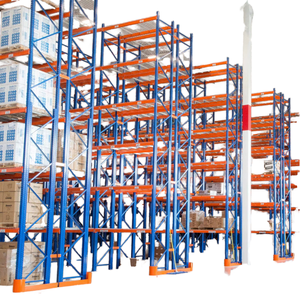
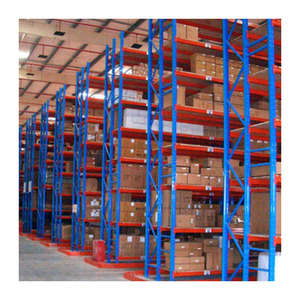
| Selective Pallet Racking | Medium (40-50%) | 100% Direct Access | Up to 4,000 kg | High SKU variety, fast-moving consumer goods (FMCG), 3PL fulfillment centers. |
| Structural Mezzanine Platform | Ultra-High (200-300%) | 100% Manual / Pick Bay | 300 - 1,000 kg / sqm | Vertical footprint expansion, small-parts picking, office space, e-commerce sortation. |
| Drive-In / Drive-Through Rack | Very High (75-85%) | Low (LIFO / FIFO) | Up to 1,500 kg | Cold storage, bulk batch items, low SKU count with massive volume. |
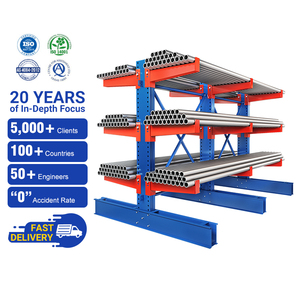
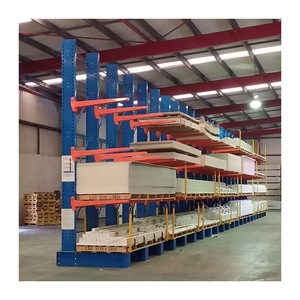
| Heavy-Duty Cantilever Rack | High for Long Goods | 100% Side Pick | Up to 1,500 kg / Arm | Steel pipes, aluminum profiles, timber, PVC tubing, sheet metal storage. |
| Gravity Flow Roller Racking | High (70-80%) | Automatic FIFO | Up to 2,000 kg | Perishable items, high-turnover staging bays, food & beverage staging. |
| Automatic ASRS High-Bay Racking | Maximum (>90%) | 100% Automated | Up to 3,000 kg | Fully automated smart factories, high-density vertical fulfillment hubs (>20m height). |
4. Industry Development Trends: The Evolution of Chinese Racking Manufacturing
The global industrial warehouse racking market is undergoing a structural evolution driven by automation, material science, and real-time operational telematics. Over the next decade, Chinese exporters and wholesalers are advancing technical capabilities in three core domains:
1. Advanced High-Strength Steel Roll-Forming
By transitioning from conventional Q235 cold-rolled steel to ultra-high-yield micro-alloyed steel grades, manufacturers can roll thinner gauge material while retaining structural load specs. This reduces total shipping weight, lowers international freight costs per metric ton, and decreases structural dead weight on soft warehouse sub-floors.
2. Smart Racking & Digital Twin Structural Monitoring
The integration of IoT strain gauges, optical deflection sensors, and wireless impact monitors directly into racking uprights is turning passive steel structures into active telemetry nodes. Warehouse management systems (WMS) can now receive real-time alerts if a forklift collision compromises an upright column or if an over-capacity pallet induces dangerous beam deflection.
3. Global Standardization and Cross-Border Engineering Compliance
Chinese racking manufacturers have heavily invested in third-party international engineering certifications. Leading factories undergo annual audits for ISO 9001 quality management, ISO 14001 environmental management, ISO 45001 occupational health, and structural CE marking per EN 1090-1. This rigorous compliance allows global EPC (Engineering, Procurement, and Construction) contractors to integrate Chinese structural rack systems into European, North American, and Australasian projects with full regulatory confidence.
5. Frequently Asked Questions (FAQ) for Global Racking Procurement
Targeted answers to standard technical, structural, and commercial questions raised by international logistics buyers and enterprise project engineers.