Industrial Pallet & Shelving Systems Showcase
Engineered for high-bay logistics centers, cold-storage environments, and automated heavy-duty manufacturing warehouses. Explore our top-tier standardized and custom structural storage solutions manufactured in China.
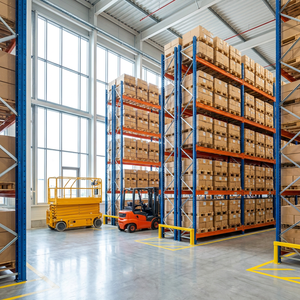
3000KG Loading Rack Multi Level Pallet Rack Warehouse Shelving Heavy Duty Shelves
- Payloads up to 3,000 kg per beam level
- High-grade Q235B / Q355B structural steel
- Pitch pitch height adjustable by 75mm
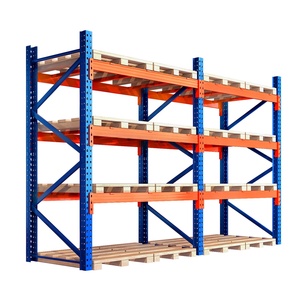
Industrial Heavy Duty Storage Shelves System Stacking Units Metal Rack Steel Pallet Racking
- Modular interlocking frame engineering
- Electrostatic epoxy powder-coated finish
- Optimized for standard forklift operations
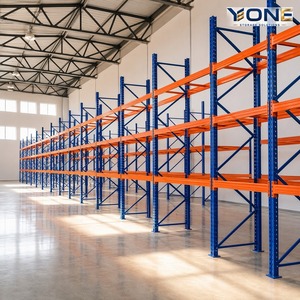
Steel Storage Rack Heavy Duty Pallet Racking Q235B Steel Selective Racking
- 100% Direct pallet selectivity for high SKU counts
- Certified load deflection ratio < L/180
- Heavy-duty footplates & expansion anchors
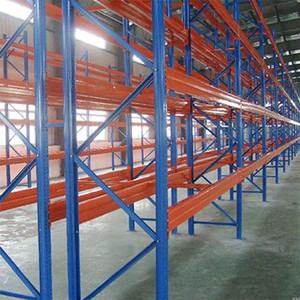
Factory Price 4-Layer Steel Corrosion Protection Warehouse Storage Rack 2000kg 3000kg
- Enhanced anti-corrosion galvanized surface option
- Multi-tier bulk stacking configuration
- Severe humidity & cold room resistant
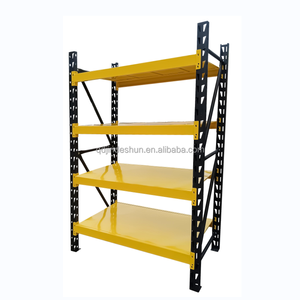
Industrial 4-Layer Adjustable Metal Shelf Racks Medium Duty Warehouse Storage Rack
- Ideal for manual picking & carton storage
- Boltless assembly with safety locking pins
- Custom shelf decking options (Steel/Wood)
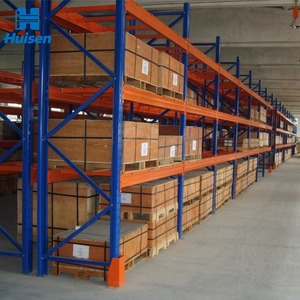
Custom Heavy Duty Shelving 3000 Kg Layer Tier Warehouse Metal Stacking Shelf
- Fully customized bay dimensions & upright profiles
- High-impact column base protectors included
- Flexible integration with mezzanine racks
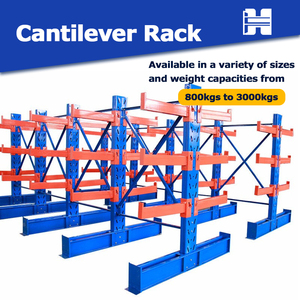
Industrial Design Steel Cantilever Rack Adjustable Single Double Sided Arm
- Purpose-built for pipes, timber, steel bars & sheets
- Unobstructed front row access for long loads
- Available in light, medium, and heavy-duty arm ratings
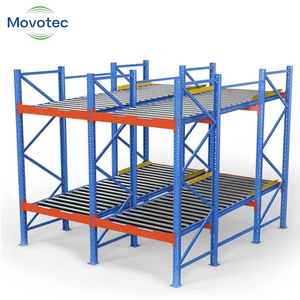
Warehouse Storage Racks Shelving Systems Pallet Rack Gravity Roller Flow Racking
- Automatic FIFO (First-In, First-Out) inventory rotation
- Integrated speed controllers & safety braking rollers
- Up to 60% floor space saving vs standard selective rack
Enterprise Core Strength: Engineering Excellence from Top China Manufacturing Hubs
Sourcing industrial pallet racking from top China suppliers requires a rigorous evaluating framework spanning material chemistry, cold-roll forming precision, finite element analysis (FEA), and surface treatment longevity.
Certified Mill Structural Steel
Our manufacturing partners utilize high-yield strength structural carbon steel strictly conforming to GB/T 1591 and ASTM standards. Raw materials undergo tensile, yield, and chemical spectrum testing to guarantee load-bearing stability under static and dynamic loading conditions.
Seismic Engineering & FEA Modeling
Every rack layout is subjected to computer-assisted Finite Element Analysis (FEA) modeling. Baseplates, upright bracing geometry, and beam-to-column connector brackets are engineered in strict alignment with ANSI MH16.1 design practices and regional seismic hazard coefficients.
Automated Robotic Roll-Forming & Welding
Precision cold-roll lines ensure uniform profile cross-sections with dimensional tolerances within ±0.05mm. Automated multi-axis robotic welding cells produce full-penetration seams on beam connectors, preventing structural fatigue and weld failures.
Compliance & Quality Control Assurance
Our direct-factory OEM sourcing channel eliminates middleman markups while providing full compliance documentation. Racking systems are pre-assembled and load-tested in-factory, supporting NOM-006-STPS material safety standards, FEM 10.2.02 European design codes, and RMI (Rack Manufacturers Institute) specification norms.
Industry Development Trends: The Evolution of Pallet Shelving Racks
The global warehousing and logistics sector is undergoing a rapid transition toward automated high-bay facilities, sustainable material usage, and smart digital inventory tracking. Understanding these core developments allows supply chain executives to future-proof their capital investments.
1. High-Bay Vertical Expansion & ASRS Compatibility
As industrial real estate costs escalate globally, warehouses are shifting from traditional 6-to-8-meter clear heights to vertical storage structures reaching up to 30 to 45 meters. Modern pallet racking is no longer just static steel shelving; it serves as the structural building framework in rack-supported buildings and Automated Storage and Retrieval Systems (AS/RS). These systems demand ultra-tight manufacturing tolerances so automated stacker cranes and AGVs can navigate storage bays without collision risks.
2. Transition from Low-Carbon to High-Strength Cold-Formed Steel
Leading Chinese steel racking manufacturers are replacing conventional Q235 steel profiles with advanced high-yield Q355B and Q460 steel alloys. Cold-forming engineered geometry—such as multi-ribbed upright profiles with up to 12 distinct bending folds—delivers significantly higher moment of inertia and buckling resistance while reducing overall structural deadweight. This evolution cuts raw material consumption and container transport costs without sacrificing beam payload capacity.
3. Green Surface Finishes & Severe Environment Resistance
Environmental regulations are reshaping the surface coating landscape. High-emission solvent paints have been completely replaced by heavy-duty thermosetting epoxy polyester powder coatings. For cold-chain logistics (-30°C freezer storage) and coastal facilities exposed to salt-spray corrosion, hot-dip galvanizing (HDG) and pre-galvanized structural steel profiles have become the benchmark requirement to prevent rust-induced structural degradation over multi-decade operational cycles.
4. Modular Boltless Safety & Hybrid Storage Engineering
Operational flexibility is critical for 3PL providers managing fluctuating SKU dimensions. Modern industrial racking emphasizes modular, boltless beam adjustments paired with self-locking safety pins that prevent accidental dislodgement from lift-truck impact. Hybrid storage configurations—combining lower-tier carton live flow lanes with upper-tier reserve selective pallet positions—are becoming standard in e-commerce fulfillment hubs.
Future Global Sourcing & Strategic Procurement Trends (2025–2030)
Procurement directors and supply chain engineers are moving away from simple unit-price comparisons. Strategic procurement now prioritizes Total Cost of Ownership (TCO), risk mitigation, nearshoring logistics coordination, and direct digital integration with factory engineering departments.
Total Cost of Ownership (TCO) Model
Evaluating China racking suppliers extends beyond FOB freight quotes. Strategic buyers evaluate:
- Container loading density optimization (nesting beam profiles to maximize ocean container cubic capacity).
- Installation velocity (pre-assembled bracing panels vs knock-down site assembly labor costs).
- Damage replacement rates and long-term modular component availability.
BIM & Digital Twin CAD Integration
Leading manufacturers provide full Building Information Modeling (BIM) files and 3D step files prior to contract signing. This allows project engineers to simulate forklift turning radiuses, sprinkler clearance height, and slab load distribution within digital twin warehouse environments before steel production begins.
Industrial Storage System Technical Comparison Matrix
Compare structural performance, selectivity, and space utilization efficiency across primary industrial racking configurations to determine the optimal system for your facility.
| Racking System Type | Max Load per Level | Pallet Selectivity | Floor Space Utilization | Forklift Compatibility | Optimal Application Context |
|---|---|---|---|---|---|
| Selective Pallet Rack | 1,000 kg – 3,500 kg | 100% Direct | 40% – 50% | Standard Counterbalance, Reach Truck | High SKU variety, fast-moving consumer goods (FMCG), 3PL fulfillment. |
| Double-Deep Pallet Rack | 1,000 kg – 3,000 kg | 50% Direct | 55% – 65% | Deep-Reach Pantograph Forklift | Paired pallet SKU storage, medium turnover rate manufacturing buffers. |
| Drive-In / Drive-Thru Rack | 1,000 kg – 2,000 kg | 20% – 30% (LIFO/FIFO) | 70% – 85% | Specialized Narrow Counterbalance | Cold storage freezers, homogeneous high-volume seasonal inventory. |
| Push-Back Racking | 1,500 kg – 2,500 kg | LIFO Lane Access | 65% – 75% | Standard Counterbalance, Reach Truck | Medium SKU density, staging areas, automotive component staging. |
| Gravity Roller Flow Rack | 500 kg – 1,500 kg | Strict FIFO Rotation | 75% – 85% | Standard Lift Trucks (Separate Loading/Picking) | Perishable food, date-sensitive pharmaceuticals, high-throughput buffer lines. |
| Heavy-Duty Cantilever Rack | 500 kg – 5,000 kg / Arm | 100% Open Access | Variable (Long Stock) | Side Loader, Multi-directional Forklift | Steel pipes, aluminum profiles, timber, sheet metal, long extrusions. |
Industrial Pallet Racking Sourcing & Engineering FAQ
Direct technical answers addressing structural safety, compliance standards, customization capabilities, and global procurement procedures.
How do top Chinese manufacturers ensure racking structural safety in seismic zones?
Engineering teams calculate seismic shear forces and base plate overturning moments based on the site-specific ground acceleration parameters, referencing the ANSI MH16.1 design specification and regional building codes. Upright frame depth, bracing patterns, floor anchor embedment depths, and structural footplate thicknesses are custom-calculated to resist seismic dynamics and dynamic forklift impacts.
What structural steel grades are utilized for heavy-duty 3000KG racking systems?
Standard heavy-duty racking columns and load beams primarily utilize certified Q235B cold-rolled structural steel (yield strength ≥ 235 MPa) or high-strength Q355B steel (yield strength ≥ 355 MPa) for extra high-bay or extreme load requirements. Raw material mill test certificates (MTC) accompanying every batch confirm mechanical yield, ultimate tensile strength, and chemical composition.
What is the maximum permissible deflection ratio for industrial load beams?
Under maximum uniformly distributed load (UDL), structural beam deflection must not exceed L/180 (where L is the clear length of the beam span), in compliance with ANSI and FEM standards. For instance, a 2700mm beam under maximum design load will exhibit a central vertical deflection of less than 15mm, returning to flat orientation upon unloading without permanent plastic deformation.
How long does a customized warehouse CAD design and quote take?
Upon receiving building CAD floor plans, building clear heights, forklift operational parameters, and pallet profile details, our technical team generates a preliminary 2D layout drawing, pallet capacity estimation, and structural cost proposal within 48 to 72 business hours.
Do products support NOM-006-STPS and international safety compliance audits?
Yes. All warehouse structural layouts are engineered to support NOM-006-STPS material handling safety requirements, providing standardized capacity plaques, yellow safety warning color schemes, frame column protectors, safety mesh decks, and documented inspection checklists required by safety auditors and warehouse insurance underwriters.
What surface treatment is recommended for outdoor or high-humidity applications?
For indoor temperature-controlled facilities, electrostatic epoxy powder coating (60–80 micron thickness) provides robust protection against scratches and minor impacts. For outdoor storage yards, chemical processing plants, or humid cold-storage freezers, Hot-Dip Galvanizing (HDG) per ASTM A123 delivers a zinc coating thickness of 65–85 microns, offering 30+ years of rust prevention.