Engineered Heavy-Duty Storage Systems
Explore our top-tier industrial storage racking systems manufactured from high-tensile cold-rolled steel. Precision-engineered for high-density warehousing, automated shuttle logistics, and extreme vertical clearance utilization.
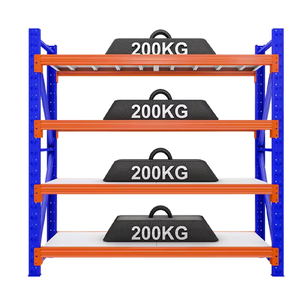
Industrial Heavy Duty Pallet Rack Selective Storage System 1000-5000kg Capacity
Material: Q235B / Q355B Cold-Formed Steel
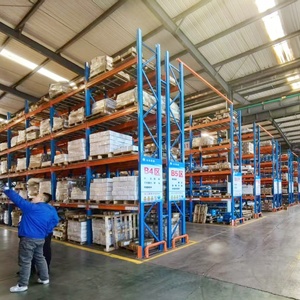
Industrial Warehouse Storage Rack Adjustable Custom 800-3000kg Load System
Finish: Electrostatic Powder Coating
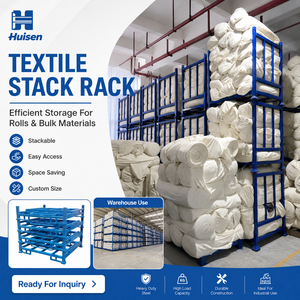
Heavy Duty Stackable Steel Stacking Rack for Warehouse Pallet Storage
Application: Flexible Seasonal Buffer
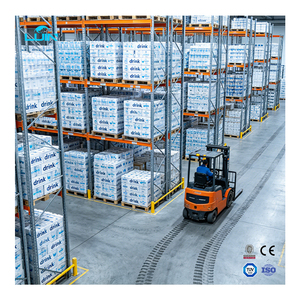
Heavy Duty Structural Racking System Warehouse Storage Rack Factory Wholesale
Impact Resistance: High Forklift Shield
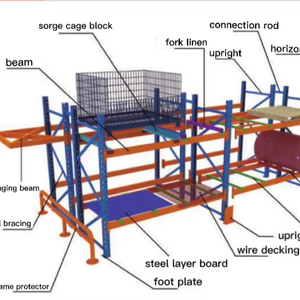
Heavy Duty Selective Pallet Racks Multifunctional Rack Organizer Shelves
Deck Options: Wire Mesh / Steel Panel
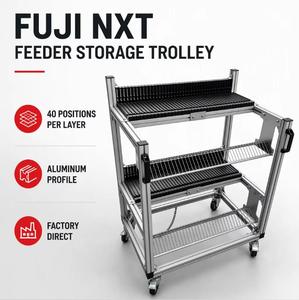
FUJI NXT SMT Feeder Storage Trolley Precision Feeder Cart Rack
Feature: ESD Anti-Static Stainless
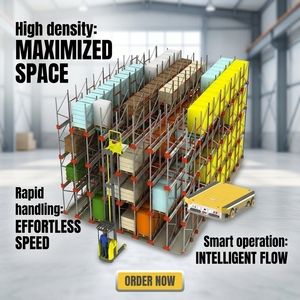
Automatic Efficient Radio Shuttle Pallet Racking System 500-1500kg Capacity
Density: High FIFO / LIFO Utilization
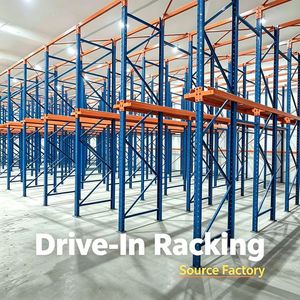
Drive-in Pallet Storage Racking System for Bulk Goods in Industrial Warehouse
Best For: Uniform Bulk Pallet Cargo
1. Executive Summary & Market Intelligence: China's Racking OEM Landscape
The global industrial logistics and supply chain sector is experiencing an unprecedented structural shift. Modern warehousing demands higher vertical volume utilization, automated material handling integration, and strict adherence to international seismic safety codes. China has emerged as the premier global manufacturing hub for enterprise-grade industrial racking systems, leveraging fully integrated steel supply chains, advanced cold-roll forming technologies, and automated electrostatic finishing processes.
Industrial buyers, supply chain directors, and 3PL procurement managers seeking direct OEM supply from China must navigate complex technical specifications. Selecting the optimal manufacturing partner requires evaluating raw material grades (such as SS400, Q235B, and high-yield Q355B steel), section modulus calculations, weld seam integrity, and compliance with structural standards including ANSI MH16.1 in North America, FEM 10.2.02 / EN 15512 in Europe, and AS 4084-2012 in Australia.
Technical Insight: Information Gain in structural racking stems from optimizing beam profile cross-sections and upright column punching geometry. Upright profiles featuring multi-rib cold-formed profile structures engineered from Q355B structural steel deliver a 22% higher load-to-weight ratio compared to conventional hot-rolled channel profiles, directly reducing international ocean freight costs per pallet position.
China's leading industrial racking factories, primarily clustered in Jiangsu (Nanjing hub) and Zhejiang (Ningbo hub), have evolved from producing basic selective racking to constructing complex automated multi-tier mezzanine frameworks and 40-meter-tall self-supporting AS/RS (Automated Storage and Retrieval Systems) rack-clad structures.
2. Comparative Structural Matrix: Choosing the Right Racking Architecture
Selecting the optimal warehouse storage architecture requires balancing pallet accessibility (selectivity) against cubic density storage. Below is a engineering comparison matrix developed by our senior structural engineering team to guide procurement decisions:
| Racking Architecture | Cubic Density | SKU Selectivity | Optimal Handling Equipment | Load Capacity Range | Structural Steel Standard |
|---|---|---|---|---|---|
| Selective Pallet Racking | Moderate (40-50%) | 100% Direct Access | Counterbalance / Reach Truck | 1,000 - 4,500 kg / level | Q235B / Q355B Cold Formed |
| Double-Deep Pallet Rack | High (60-65%) | 50% Immediate Access | Deep-Reach Pantograph Truck | 1,200 - 3,200 kg / level | Q355B Structural Steel |
| Drive-In / Drive-Through | Very High (75-85%) | Low (LIFO / FIFO Lanes) | Standard Counterbalance | 1,000 - 2,000 kg / pallet | Heavy Duty Top Tie Channel |
| Radio Shuttle System | Ultra-High (85-90%) | Automated Lane Access | Lift Truck + Autonomous Shuttle | 500 - 1,500 kg / pallet | Precision Cold-Rolled Rail |
| Heavy-Duty Cantilever | High for Pipe/Lumber | 100% Linear Access | Side-Loader / Crane / Forklift | 500 - 5,000 kg / arm | Hot-Rolled H-Beam Structural |
| Automated High-Bay AS/RS | Maximum (90-95%) | 100% Computerized Pick | Stacker Crane / AGV / AMR | Up to 40m Vertical Height | High-Yield Structural Steel |
3. Enterprise OEM Manufacturing Superiority & Technical Quality Control
What differentiates tier-1 Chinese industrial racking factories from low-cost workshops is rigorous adherence to quality engineering and traceable material sourcing. Premier manufacturers control every link in the fabrication chain:
Automated Roll-Forming Lines
Utilizing 18 to 26 continuous roll-forming station mills with automated online punching. Ensures continuous beam and column section geometry with tight length tolerances within ±0.5 mm.
Robotic MIG/MAG Welding
Full robotic welding cells for beam connectors, baseplates, and truss bracings eliminate human error, producing seamless, deep-penetration weld seams tested via ultrasonic inspection.
Pre-Treatment & Powder Coating
Automated 6-stage chemical pre-treatment (degreasing, phosphating, rinsing) followed by thermosetting epoxy-polyester electrostatic powder coating baked at 200°C for superior impact and corrosion protection.
Finite Element Analysis (FEA) and Seismic Calculation Capability
In modern industrial warehouse design, structural safety is non-negotiable. Qualified Chinese racking factories utilize advanced 3D Finite Element Analysis (ANSYS / SAP2000 software) to simulate static loading, dynamic forklift impact forces, sway buckling, and regional seismic acceleration coefficients. Upright frame post-buckling behavior and beam-to-column connector stiffness ($K_i$) are calculated precisely to prevent catastrophic rack collapse under maximum load capacity.
4. Future Procurement Trends in Industrial Storage (2025–2035)
Global logistics managers are transitioning from legacy manual racking to forward-engineered, technology-enabled storage infrastructure. Enterprise procurement strategies are being shaped by four core trends:
Trend 1: Convergence of Racking with Autonomous Mobile Robots (AMR) & AGV Systems
Traditional fixed rack configurations are adapting to accommodate floor-navigating autonomous robots. Modern selective and push-back racking designs now integrate specialized bottom-level clearance channels, magnetic track embeds, and retro-reflective QR positioning targets. Factories in China are engineering structural upright frames engineered to withstand continuous high-cycle AMR dockings.
Trend 2: Ultra-High Density Radio Shuttle Integration
Semi-automated pallet shuttle systems represent the fastest-growing racking sector. By embedding self-powered robotic shuttles inside deep storage channels, operations eliminate forklift entry into racks. China manufacturing plants now supply standardized shuttle racking channels equipped with stainless steel safety guide rails, emergency optical sensors, and integrated IoT battery charging stations.
Trend 3: Cold-Chain Optimization & Sub-Zero Anti-Corrosion Alloys
With global demand for frozen food and pharmaceutical storage surging, racking systems operating in temperatures down to -30°C require specialized metallurgy. Sub-zero environments cause standard carbon steel to suffer hydrogen embrittlement. Leading Chinese factories utilize low-temperature impact-tested steel (Q355D grade) combined with hot-dip galvanizing (HDG per ISO 1461) achieving zinc coating weights over 450 g/m² for lifetime rust prevention.
Trend 4: Sustainable Steel Sourcing & Carbon Footprint Documentation
Multinational enterprises require Environmental Product Declarations (EPD) and carbon footprint transparency from their supply partners. Leading Chinese racking producers are transitioning to electric arc furnace (EAF) green steel sourcing and deploying solar panel microgrids on factory roofs to offer certified low-carbon racking profiles to international buyers.
5. Frequently Asked Questions (Procurement & Engineering FAQ)
6. Risk Mitigation & Installation Best Practices
Procuring industrial racking from China is only the first step; proper installation and safety accessories ensure operational longevity. Enterprise buyers must incorporate the following safety components into their bill of materials:
- Heavy-Duty Column Protectors: Formed steel or polyurethane protectors anchored directly to the floor in front of perimeter upright frames to absorb fork truck impacts.
- Structural Row Spacers: Rigid tubular connections joining back-to-back rack rows, preserving structural alignment and maintaining required fire-sprinkler flue space (typically 6 inches / 150 mm).
- Welded Wire Mesh Decking: Electro-galvanized mesh panels with under-welded channel supports fitted on step beams to prevent loose box falls and comply with NFPA 13 sprinkler water penetration standards.
- Safety Back Stop Beams: Mechanical steel stops installed on push-back or selective racks to prevent pallets from overhanging into rear aisles.
Ready to Engineer Your Warehouse Layout?
Consult directly with our senior racking structural engineers. Send us your architectural floor plan, clear ceiling heights, and pallet load profiles for a complimentary 2D/3D CAD layout design and direct factory quote within 24 hours.
Get a Quote