Engineered Warehouse Racking Systems
High-performance industrial storage solutions designed for maximum density, structural compliance, and operational efficiency.
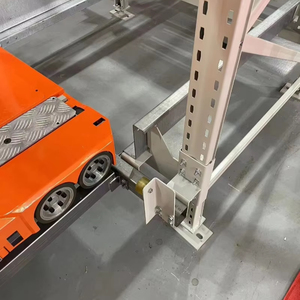
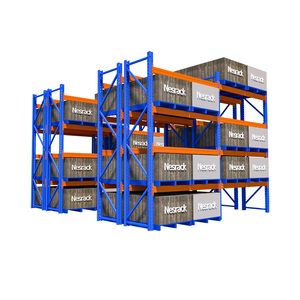
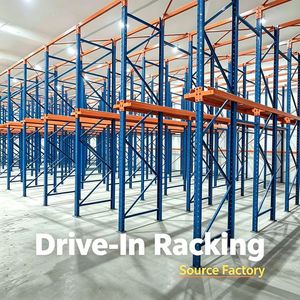
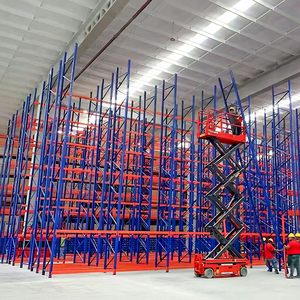
1. Executive Summary & Theoretical Physics of Pallet Flow Racking Systems
In modern industrial logistics and high-throughput distribution management, storage space optimization is no longer merely a real estate consideration—it is a core determinant of operational profitability. Pallet Flow Rack systems, also referred to as Gravity Flow Racking, represent the pinnacle of dynamic, high-density First-In, First-Out (FIFO) material handling engineering. Unlike static selective racking systems that require dedicated aisles for every pallet bay, pallet flow racking utilizes inclined wheel or roller tracks integrated into heavy-duty rack structures. This allows palletized unit loads to accumulate by gravity from the loading (rear) aisle to the discharge (front) picking face.
From an engineering perspective, a high-performance pallet flow lane is a complex mechanical system governed by Newtonian mechanics, dynamic friction coefficients, kinetic energy absorption, and structural mechanics. The operation relies on a precise slope declination pitch (typically calculated between 3.5% to 4.5% or 3/8" to 1/2" per linear foot), dictated by pallet weight ranges, bottom-board quality, and ambient temperatures. As pallets glide down the track, gravitational potential energy is converted into kinetic energy. Without precise velocity control mechanisms—such as dynamic magnetic brake rollers and speed controllers—pallets can accelerate exponentially, leading to dangerous kinetic impacts at the picking face, structural frame distortion, and inventory damage.
This industry whitepaper evaluates the global manufacturing landscape, detailing the Top 10 Pallet Flow Rack Manufacturers and Exporters. It analyzes engineering parameters, steel grade selection, roller mechanics, seismic considerations under ANSI MH16.1 and CFE seismic design guidelines, and emerging procurement trends driving automated, nearshoring supply chains.
Comparative Analysis: High-Density Warehouse Racking Architectures
Selecting the optimal racking system requires balancing storage density against SKU selectivity, throughput speed, and capital investment. The matrix below contrasts Pallet Flow Racking with alternative high-density warehouse storage systems.
| Storage System Type | Inventory Flow | Storage Density | SKU Selectivity | Forklift Travel Time | Primary Use Case |
|---|---|---|---|---|---|
| Pallet Flow Racks | FIFO (First-In, First-Out) | Very High (Up to 20+ Deep) | Medium (Per Lane Basis) | Low (Dedicated Entry/Exit) | Perishables, FMCG, Cold Chain, High-Volume Buffer |
| Selective Pallet Racking | FIFO / LIFO | Low (Single Deep) | 100% Direct Access | High (Aisle Dependent) | High SKU Variety, Low Volume Per SKU |
| Drive-In Racking | LIFO (Last-In, First-Out) | High (Up to 10 Deep) | Very Low | Moderate to High | Homogeneous Bulk Goods, Low Turnover Rate |
| Push-Back Racking | LIFO (Last-In, First-Out) | Moderate (2 to 6 Deep) | Moderate | Low to Moderate | Medium SKU Volume, Stage Area Buffers |
| Radio Shuttle / ASRS | FIFO or LIFO | Maximum (Automated) | Programmable | Minimal (Automated) | Ultra-High Volume, Fully Automated Factories |
2. Global Market Evaluation: Top 10 Pallet Flow Rack Manufacturers & Exporters
Global logistics demand has driven rapid innovation among dynamic racking engineering firms. Top-tier manufacturers are distinguished by their structural engineering precision, component metallurgy, quality control certifications, global export logistics capabilities, and ability to engineer customized solutions for complex seismic or cold-room environments.
1. AztecRack & A-Plus Storage Systems
Headquarters / Hub: Mexico & International Manufacturing Facilities
Specialization: Seismic-Ready Pallet Flow Racks, Structural Cold-Rolled Box Beams, Heavy-Duty Cantilever & Four-Way Shuttle Systems.
AztecRack and Nanjing A-Plus stand out as global manufacturing powerhouses. Specializing in engineered heavy-duty dynamic storage, they combine high-grade Q235B and Q355 structural steel with precision-machined flow wheels and indirect magnetic braking rollers. Fully compliant with ANSI MH16.1, FEM 10.2.02, and NOM-006-STPS guidelines, AztecRack delivers customized CAD layouts and robust seismic engineering tailored for nearshoring logistics hubs across North America and Latin America.
2. Interlake Mecalux
Headquarters: USA / Spain
Specialization: Selective Racking, Dynamic Pallet Flow, Automated Storage Systems.
Interlake Mecalux is a global leader in warehousing infrastructure. Their gravity flow solutions feature modular roller tracks, drop-in speed controllers, and specialized dynamic load separators. With extensive manufacturing footprints in North America and Europe, Mecalux excels in large-scale enterprise 3PL distribution networks.
3. SSI Schaefer
Headquarters: Germany
Specialization: Intralogistics Solutions, Automated Gravity Flow, Cold Storage Systems.
Renowned for European precision engineering, SSI Schaefer designs ultra-reliable live pallet flow systems. Their proprietary roller assemblies and integrated safety arrestors are optimized for automated Guided Vehicles (AGVs) and harsh deep-freeze distribution environments.
4. Unarco Material Handling
Headquarters: USA
Specialization: T-Bolt Racking, Heavy-Duty Gravity Flow Lanes, Roller Track Systems.
Unarco is recognized for manufacturing robust structural steel pallet flow racks engineered for high-impact industrial operations. Their systems incorporate full-width steel rollers and polycarbonate flow wheels engineered to withstand severe forklift loading demands.
5. Frazier Industrial Company
Headquarters: USA
Specialization: 100% Structural Steel Pallet Racks & Gravity Flow Racks.
Frazier is famous in the material handling industry for utilizing structural steel C-channels in every rack profile. Their pallet flow systems offer exceptional durability against forklift impact, making them ideal for heavy manufacturing plants and aggressive order fulfillment facilities.
6. Stow Group
Headquarters: Belgium
Specialization: Heavy-Duty Racking Systems, Silo Racks, Pallet Flow Modules.
Stow Group operates extensive manufacturing operations across Europe. Their dynamic racking lines feature optimized pitch calibration, versatile speed retarders, and high-tensile upright frames certified to stringent European FEM and EN standards.
7. Nedcon
Headquarters: Netherlands (Avoberg Group)
Specialization: Custom Warehouse Systems, Flow Racks, Automated High-Bay Racking.
Nedcon excels in delivering complex engineering projects. Their dynamic pallet flow systems are engineered with microscopic tolerance levels, ensuring flawless tracking for automatic storage and retrieval interfaces.
8. Dexion (JSP Group)
Headquarters: UK / Norway
Specialization: Industrial Shelving, FIFO Flow Racks, Pallet Storage.
Dexion is a pioneer in storage engineering. Their pallet flow systems offer versatile roller options, including heavy-duty cylindrical steel rollers and split twin-roller configurations designed for variable wooden and plastic pallet bottoms.
9. Jracking Group
Headquarters: China
Specialization: Export-Oriented Pallet Racks, Drive-In & Gravity Flow Systems.
Jracking is a massive exporter of steel storage racks, servicing buyers across Australia, North America, and Southeast Asia. They manufacture cost-effective flow rack components with hot-dip galvanized finishes for humid or corrosive storage hubs.
10. BITO Storage Systems
Headquarters: Germany
Specialization: Live Storage System Modules, Pallet & Carton Flow Solutions.
BITO specializes in ergonomic picking systems and dynamic flow modules. Their pallet flow lanes feature integrated brake rollers, quick-release entry guides, and high-durability polymer wheels designed for smooth item flow.
3. Deep Engineering: Component Mechanics & Safety Technology
A Pallet Flow System is only as reliable as its weakest mechanical component. Engineering high-density gravity lanes demands rigorous attention to metallurgical properties, track design, and braking dynamics.
3.1. Roller Track Configurations: Steel Rollers vs. Poly Wheels
The choice between full-width steel rollers and twin/triple poly wheels depends heavily on pallet quality and weight distribution:
- Full-Width Steel Rollers: Essential for poor-quality wooden pallets, irregular bottom runners, or loads exceeding 2,500 LBS per pallet. Steel rollers span the full lane width, spreading weight evenly and preventing pallet bottom board sagging.
- Polycarbonate / Polyurethane Wheels: Ideal for standardized, plastic, or GCP pallets. Poly wheels offer lower roll resistance, quiet operation, and exceptional resistance to chemical abrasion in pharmaceutical facilities.
3.2. Speed Controller & Dynamic Brake Roller Engineering
Gravity acceleration is governed by the equation a = g × (sin(θ) - μ × cos(θ)), where θ is the pitch angle and μ is the rolling friction. As lane length increases beyond 3 deep, kinetic energy builds rapidly. Speed controllers maintain safe speed (under 0.3 m/s or 60 ft/min) through internal centrifugal or magnetic resistance:
- Direct-Drive Gear Speed Controllers: Use internal gear assemblies with friction pads to generate resistance proportional to pallet speed.
- Magnetic Brake Rollers: Utilize eddy current technology to generate contactless braking force proportional to velocity. Because there are no physical brake shoes to wear out, magnetic brake rollers deliver superior longevity in extreme cold-room environments (-30°C).
3.3. Dynamic Pallet Separators
At the discharge face, line pressure from accumulated trailing pallets creates significant force (e.g., 5 trailing pallets at 2,000 LBS each can exert over 1,000 LBS of horizontal back-pressure). This makes it virtually impossible and unsafe for forklift operators to extract the front pallet. Dynamic Pallet Separators physically hold back trailing pallets 6 to 12 inches away from the lead pallet, removing line pressure and ensuring smooth, safe forklift picking.
4. Future Sourcing & Procurement Trends in Pallet Flow Racks (2025–2030)
The global material handling market is shifting rapidly due to nearshoring trends, labor shortages, supply chain re-alignment, and warehouse automation. Procurement managers and supply chain directors must account for four macro-trends when sourcing gravity flow racking systems:
4.1. Convergence with Autonomous Mobile Robots (AMRs) & AGVs
Traditional pallet flow lanes were designed for human forklift drivers. Next-generation systems feature precision-aligned entry guides and optical sensor targets engineered for seamless integration with Autonomous Mobile Robots (AMRs) and AGVs. Auto-loading entry faces require tighter structural tolerances (±1.5mm) and standardized magnetic speed controllers to prevent positioning errors.
4.2. Nearshoring & Regional Steel Fabrication
With North American manufacturers shifting supply networks closer to consumption hubs, nearshoring in regions like Mexico, Texas, and the Bajío industrial corridor has surged. Procurement officers are prioritizing manufacturers capable of delivering ANSI MH16.1 seismic-compliant structures with rapid lead times, bypassing trans-Pacific ocean freight delays and tariff volatility.
4.3. Smart Sensor Rollers & IoT Predictive Maintenance
Industrial IoT is entering gravity racking. Embedded sensor rollers monitor rotational velocity, track temperature spikes, and detect mechanical jams in real time. Operational dashboards alert maintenance teams before a stuck pallet halts an entire production line face.
4.4. Cold Chain Sustainability & Epoxy/Galvanized Finishes
As global frozen food distribution expands, cold storage facilities are seeking energy-efficient, high-density storage. Pallet Flow Racks maximize thermal footprint efficiency by reducing warehouse cubic volume required for air conditioning. Epoxy-coated and hot-dip galvanized components resist condensation-induced rust in sub-zero environments.
5. Engineering Excellence: AztecRack Manufacturing Capabilities
AztecRack Industrial Storage S.A. de C.V. and its manufacturing alliance partners deliver elite structural storage systems engineered specifically for demanding global industries. Our manufacturing process integrates stringent structural testing, raw material traceability, and bespoke design consultation.
Certified Structural Steel Metallurgy
We source prime, certified cold-rolled steel coils (Q235B, Q355B grades). Mill test certificates accompany every production batch, ensuring compliance with specified yield and tensile strength thresholds.
Seismic-Ready Site Engineering
Every racking structure is mathematically modeled against localized ground acceleration coefficients. We engineer custom baseplates, heavy anchor bolt patterns, and frame bracing designed per CFE Seismic Manual and ANSI MH16.1 guidelines.
Automated Robotic Welding & Coating
Robotic welding arms ensure full penetration welds across beam connectors and upright frames. Automated electrostatic powder coating lines provide durable, scratch-resistant finishes that pass 500-hour salt spray corrosion tests.
Technical answers to help buyers evaluate, specify, and procure heavy-duty Pallet Flow Racking systems.
Optimize Your Warehouse Footprint Today
Partner with a global leader in high-density structural racking systems. Request a custom CAD layout, seismic load calculation, and comprehensive factory quote tailored to your facility's operational goals.
Contact Us