High-Performance Storage Racking Systems
Explore our flagship heavy-duty industrial shelving and pallet racking solutions, engineered to meet rigorous international structural standards (ANSI MH16.1, EN 15512, NOM-006-STPS).
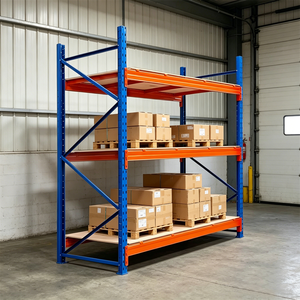
Powder Coated Heavy Duty Rack Industrial Warehouse Storage Pallet Racking Adjustable Industrial Shelves
Fully customizable frame height up to 12m. Treated with electrostatic powder coating for optimal corrosion resistance in demanding factory environments.
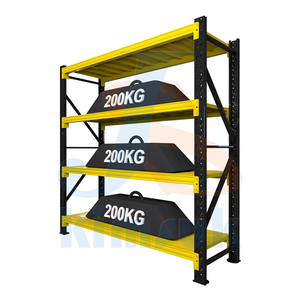
Warehouse Heavy Rack Ing Warehouse Storage 19 Pallet Rack System for Racking Rack Shelf Factory Shelf
Heavy-duty structural 19-pallet system designed for high unit load capacities. Engineered for high-frequency forklift loading and automated storage environments.
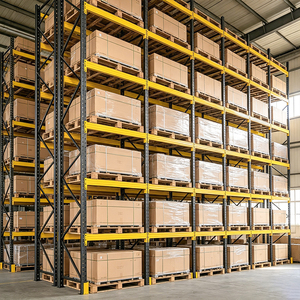
Industrial Selective Pallet Racking Heavy Duty Adjustable Warehouse Pallet Storage Shelving
Maximum 100% pallet selectivity for fast-moving logistics hubs and 3PL operations. Beam levels adjustable pitch at 50mm or 75mm increments.
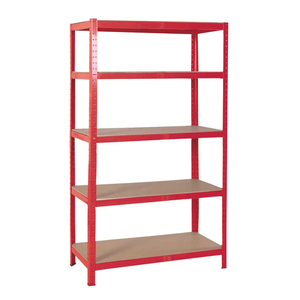
Industrial 5-Layer Corrosion Protected Steel Warehouse Rack Boltless Assembly Storage Shelf
Interlocking boltless design allowing effortless manual setup. Surface-passivated structural steel panels engineered for high-humidity & chemical storage.
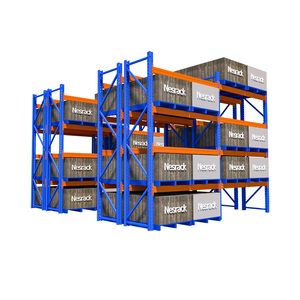
Hot Sale Heavy Duty Steel Multi-Layer Boltless Stacking Shelves Pallet Rack Corrosion Protection for Garage Warehouse Storage
Versatile multi-tier modular storage rack engineered for raw material inventory and finished product archives in manufacturing plant facilities.
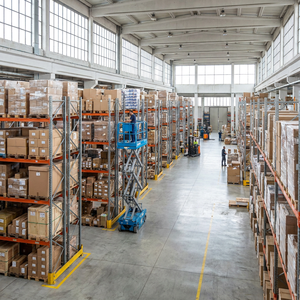
Professional Heavy Duty Pallet Rack Supplier Warehouse Storage System Manufacturer
Factory-direct structural racking system engineered with premium Q235B/Q355B cold-rolled steel, tailored for heavy distribution centers.
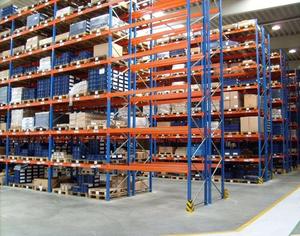
China Suppliers Warehouse Storage Pallet Racking Box Beam Type Heavy Duty Rack
Heavy-gauge twin C-profile welded box beams delivering exceptional torsional resistance and load ratings up to 4,500 kg per beam level.
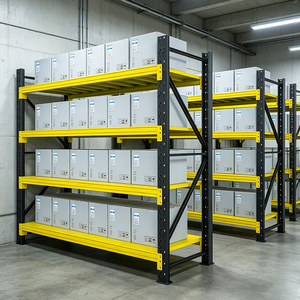
Warehouse Racking Pallet Rack warehouse Small Parts Shelves Tires Stacking Racks Shelves
Specialized hybrid rack designed for mixed storage needs, combining tire stacking frames, small parts bins, and heavy unit pallet positions.
Structural Safety, Seismic Engineering & Manufacturing Rigor
Industrial storage shelving is not merely a steel commodity; it is a critical structural asset that directly impacts operational continuity, human safety, and supply chain efficiency. Building upon AztecRack’s established reputation in North America and Latin America, our structural solutions combine advanced metallurgy with localized building code compliance.
Advanced Finite Element Analysis (FEA)
Every frame configuration undergoes rigorous FEA modeling under static, dynamic, and impact stress vectors. We simulate full loading scenarios to guarantee a minimum 1.65 safety factor per RMI (Rack Manufacturers Institute) and EN standards.
- Non-linear buckling analysis
- Deflection limit validation (< L/180)
- Dynamic forklift impact resilience
Site-Specific Seismic Engineering
Incorporating local seismic acceleration coefficients—such as Mexico’s CFE Seismic Design Manual and US IBC/UBC standards—we engineer oversized baseplates, heavy-gauge anchors, and cross-bracing configurations tailored to fault-zone risks.
- Custom anchor embedment calculations
- Zone 1 through Zone 4 seismic ratings
- Enhanced beam-to-column connector safety locks
Regulatory & Audit Compliance
Navigating global regulatory landscapes requires verifiable compliance paperwork. Our systems include pre-calculated load capacity signage, defined aisle width layouts, and documentation supporting NOM-006-STPS-2014 material handling requirements.
- Traceable mill test certificates (Q235B / Q355B steel)
- NOM-006-STPS & OSHA compliance ready
- Third-party structural engineering stamps
Information Gain Insight: Selecting a top-tier industrial shelving manufacturer is no longer just about price per metric ton. It involves total cost of ownership (TCO) analysis, where structural longevity, powder coat micron thickness (60–80 μm standard), and seismic reliability prevent catastrophic collapse risks and costly facility downtime.
Top 10 Evaluation Matrix for Industrial Racking Suppliers
When enterprise procurement leaders evaluate top global suppliers and exporters for industrial storage shelving, ten critical technical dimensions determine tier-1 status.
1. Steel Quality & Metallurgy Traceability
Tier-1 manufacturers utilize certified structural high-strength steel (minimum yield strength 235 to 355 MPa). Fully traceable mill certificates ensure no recycled sub-grade scrap steel is introduced into load-bearing columns.
2. Cold-Roll Forming Precision
High-precision multi-stage continuous roll-forming lines preserve structural grain alignment, eliminating micro-fractures in continuous beam sections and upright columns up to 12 meters in single-piece length.
3. Surface Treatment & Coating Tech
Automated 9-stage pre-wash, phosphatizing, and electrostatic epoxy-polyester powder coating (60-90 microns) guarantee superior salt spray resistance (ASTM B117 > 500 hours) for humid and industrial coastal environments.
4. Beam-to-Upright Connection Rigidity
Engineered multi-hook connector lugs with automatic safety drop-locks prevent accidental beam dislodgements under high-velocity forklift operations, maximizing frame stability and moment-frame stiffness.
5. Seismic Design & FEA Capability
Leading exporters maintain in-house R&D departments capable of executing finite element analysis (FEA) tailored to geographical ground acceleration specs (PGA values), delivering stamped structural engineering packages.
6. Modular Versatility & Interchangeability
Systems engineered around standard drop-in beam pitches (e.g., 50mm, 75mm, or teardrop profiles) provide unmatched scalability, permitting seamless retrofitting of wire decking, pallet supports, and dividers.
7. Automated Manufacturing Scale
Robotic welding cells, automated punching lines, and multi-line powder coating facilities guarantee consistent weld penetration quality and strict dimensional tolerance controls across multi-thousand-pallet projects.
8. Logistics & Export Packaging Rigor
Global exporters utilize heavy-gauge protective strapping, custom wooden crating, edge protectors, and vapor-barrier wrapping to prevent ocean-freight transit corrosion and mechanical damage during handling.
9. Turnkey Engineering & CAD Design
From initial DWG floorplan reviews to 3D BIM integration, leading suppliers supply fully optimized warehouse layout proposals within 72 hours, calculating maximum pallet yield per square meter.
10. Environmental & Safety Compliance
Adherence to global standard governance, zero-VOC powder coating processes, ISO 9001/14001 quality management, and comprehensive product liability insurance policies establish enterprise-grade exporter credibility.
Comparative Specification Matrix Across Racking Architectures
Selecting the optimal storage shelving configuration requires balancing pallet accessibility, floor area utilization, and total capital expenditure.
| Racking Architecture | Storage Density | Pallet Selectivity | Typical Load Rating | Ideal Inventory Motion | Operational Focus |
|---|---|---|---|---|---|
| Selective Pallet Racking | Medium (60%) | 100% Direct Access | 1,000 - 4,000 kg / level | FIFO (First-In, First-Out) | High SKU variety, fast fulfillment centers & 3PLs |
| Double-Deep Pallet Rack | High (75%) | 50% Immediate | 1,000 - 3,200 kg / level | LIFO (Last-In, First-Out) | Medium SKU count, consolidated batch staging |
| Drive-In / Drive-Thru Racking | Very High (85%) | Low (Batch Access) | 1,000 - 2,500 kg / level | LIFO / FIFO options | Cold storage, homogeneous high-volume goods |
| Push-Back Storage Racking | High (80%) | Lane Selectivity | 1,000 - 3,000 kg / lane | LIFO (Gravity Cart) | Buffer storage near manufacturing assembly lines |
| Heavy Duty Cantilever Racking | Specialized | 100% Open Access | 500 - 5,000 kg / arm | Direct Crane / Forklift | Steel pipes, timber, aluminum profiles & bar stock |
| Boltless Industrial Shelving | Medium | 100% Manual Pick | 300 - 1,000 kg / shelf | Manual Hand Picking | E-commerce fulfillment, spare parts, archival bins |
Future Procurement Trends & Technological Innovations
The industrial storage landscape is undergoing a massive transformation driven by nearshoring dynamics, warehouse automation, and green manufacturing imperatives.
1. Automation & AMR/AGV Compatible Baseplates
As Autonomous Mobile Robots (AMRs) and automated forklifts replace conventional material handling, rack baseplate flushness, column tolerance, and guide-rail integration require tight millimeter-level precision. Modern exporters supply pre-drilled, ultra-flat structural interfaces ready for ASRS integration.
2. IoT Structural Health Monitoring
Next-generation high-bay racking systems now feature integrated strain gauges and tilt sensors. These IoT nodes monitor frame deflections, detect unrecorded forklift impacts in real time, and deliver predictive maintenance alerts directly to warehouse management software (WMS).
3. Decarbonized "Green Steel" Manufacturing
Multinational enterprise buyers actively track Scope 3 carbon emissions. Leading industrial racking manufacturers are transitioning toward Electric Arc Furnace (EAF) recycled steel production powered by renewable grids, cutting product carbon footprints by up to 45%.
Frequently Asked Procurement & Engineering Questions
Expert guidance on key technical questions asked by global supply chain directors, facility engineers, and procurement managers.
How do I determine whether my concrete slab can support heavy-duty selective pallet racking?
Slab capacity evaluation requires assessing concrete thickness (typically 6 to 8 inches minimum), compressive strength (minimum 3,000 to 4,000 PSI), soil subgrade modulus, and rebar reinforcement layout. Modern structural racking engineering specifies point loads per upright baseplate. If point loads exceed allowable slab pressure, engineers design wider spreader baseplates to distribute the weight across a larger surface area.
What is the difference between cold-rolled steel profiles and structural hot-rolled channels in industrial shelving?
Cold-rolled steel is formed at room temperature, producing tight dimensional tolerances, smooth surface finishes, and lighter structural weight suitable for standard teardrop and adjustable box-beam racking. Structural hot-rolled steel channels feature thicker gauge profiles, offering superior resistance to forklift impact and heavier load ratings, making them ideal for rugged manufacturing plants, outdoor cantilever yards, and heavy-duty die storage.
How do seismic zones impact the total cost and structural design of industrial racking?
In active seismic regions (such as the Pacific Coast, California, or Central Mexico seismic belts), structural codes require larger anchor bolt diameters, deeper embedments, heavy-duty floor plates, thicker frame column profiles, and augmented horizontal cross-bracing. While seismic engineering increases steel weight by roughly 10% to 25%, it prevents catastrophic frame collapse during ground motions.
What safety standards should global exporters comply with for industrial warehouse shelving?
Tier-1 exporters must comply with recognized international standards based on their target market. In North America, ANSI MH16.1 (RMI specification) governs design, testing, and utilization. In Europe and global ISO markets, EN 15512, EN 15620, and EN 15635 provide benchmarks for structural calculations, tolerances, and safety inspections. In Mexico, NOM-006-STPS-2014 regulates material handling safety and operational capacity compliance.
Why is wire decking preferred over solid wood or sheet metal decks in pallet racking?
Welded wire mesh decking allows overhead fire sprinkler water to penetrate down through lower rack levels, satisfying NFPA 13 fire safety standards and reducing insurance premiums. Additionally, wire decking prevents dust accumulation, permits light visibility for forklift operators, and accommodates loose hand-stacked inventory or variable pallet dimensions safely.
What lead times should be anticipated when procuring custom industrial shelving from overseas exporters?
Production lead time for custom engineered racking systems generally ranges between 2 to 4 weeks depending on order volume and finish specifications. Ocean freight transit times range from 15 to 30 days depending on the destination port. Leading exporters streamline this by offering rapid 3-to-5 day CAD layout engineering and pre-cleared customs logistics partnerships.
Optimize Your Storage Footprint & Demand Technical Depth
Planning a new warehouse installation, nearshoring expansion, or high-density distribution center retrofit? Work with experienced structural engineers to receive custom CAD layouts, FEA stress analyses, and direct export pricing.