Whitepaper: Strategic Procurement & Engineering Trends in Cantilever & Pallet Racking
The acceleration of global nearshoring, combined with modern automated logistics, has redefined structural warehouse demands. Procurement directors can no longer view industrial racking merely as static furniture; it is a high-stress, engineered structural envelope that directly impacts operational throughput, safety compliance, and insurance liabilities.
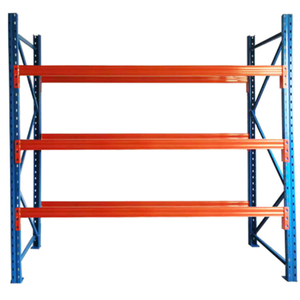
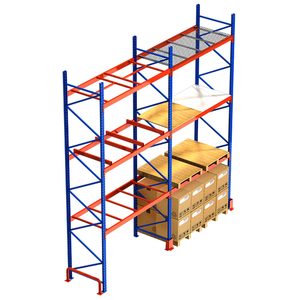
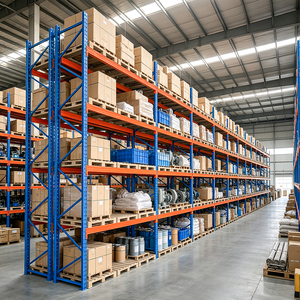
Understanding Cantilever vs. Selective Pallet Racking Structural Dynamics
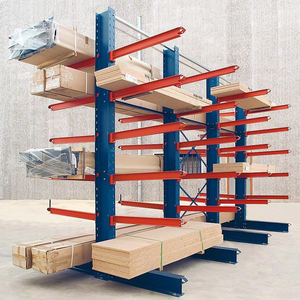
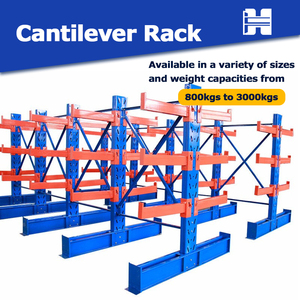
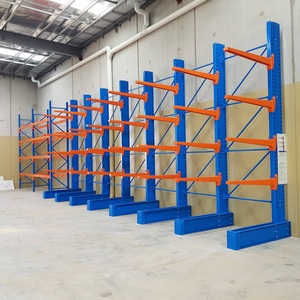
When storing linear, continuous, or oversized commodities—such as structural steel pipe, extruded aluminum profiles, timber, PVC conduit, or automotive salvage chassis—conventional front-leg pallet rack frames create prohibitive operational obstacles. Cantilever racks eliminate front vertical columns, providing an unobstructed horizontal loading plane.
| Structural Parameter | Selective Pallet Rack | Roll-Out / Heavy-Duty Cantilever Rack | Nestainer / Stacking Palletainer |
|---|---|---|---|
| Primary Load Geometry | Uniform Pallet Unit Loads (e.g., 40"x48") | Long, Bulky, Irregular, or Linear Cargo | Block-Stacked Bulk Goods & Temporary Buffers |
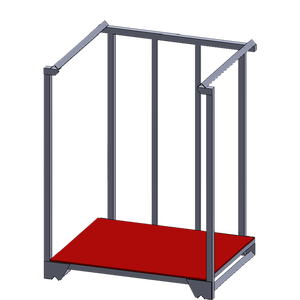
| Load Distribution | 2-Point Beam Support to Front/Rear Uprights | Eccentric Arm Load to Single Central Column | Self-Supporting 4-Corner Tubular Base |
| Bending & Deflection Limits | Beam deflection restricted to $L/180$ per ANSI MH16.1 | Arm deflection restricted to $L/180$; Column tip $H/240$ | Stackable 4-5 high under full rated payload (1,000kg+) |
| Handling Equipment Required | Standard Counterbalance / Reach Trucks | Side-Loaders, Combilifts, or Overhead Cranes | Forklift or Pallet Jack for block positioning |
| Ideal Industry Application | 3PL, E-commerce, FMCG, Cold Storage | Steel Yards, Manufacturing, Salvage, Piping | Flexible Warehousing, Seasonal Overflow Staging |
Evaluation Matrix: Top 10 Cantilever & Pallet Racking Wholesalers Globally
To assist procurement managers in evaluating tier-1 racking suppliers, our engineering panel analyzed market leaders based on structural steel grade, compliance certifications, custom CAD capabilities, and nearshoring responsiveness.
1. AztecRack (Mexico & North America)
Core Specialization: Seismic-ready industrial pallet rack, heavy-duty cantilever systems, and structural wire decks tailored for nearshoring plants in Monterrey, Bajío, and CDMX.
Key Strengths: Full compliance with NOM-006-STPS and CFE Seismic Guidelines, rapid 3-to-5 day CAD design turnaround, structural Q355B steel, and zero-compromise engineering backing.
2. Mecalux / Interlake Mecalux
Core Specialization: High-bay automated warehouse racking, automated storage and retrieval systems (ASRS), and standard selective frames.
Key Strengths: Massive global footprint, extensive software integration (WMS), and automated shuttle technology integration.
3. Frazier Industrial Company
Core Specialization: 100% Structural Steel Pallet Racking and Cantilever systems using hot-rolled structural C-channels.
Key Strengths: Exceptional impact resistance against forklift abuse, highly durable for heavy manufacturing and food distribution.
4. SSI Schaefer
Core Specialization: Fully integrated logistics systems, modular cantilever shelving, and automated tote handling.
Key Strengths: European engineering standards, high precision for automated picking environments, global supply chain network.
5. Unarco Material Handling
Core Specialization: T-Bolt, interchangeable teardrop racking, push-back racks, and engineered cantilever solutions.
Key Strengths: Patented fast-installation connection systems, extensive distributor network in Central & North America.
6. Dexion Industrial
Core Specialization: Adjustable pallet racking, mobile cantilever racking (MOVO), and heavy-duty industrial shelving.
Key Strengths: Pioneer in warehouse slotting layout software, mobile heavy-duty racking solutions for maximized cubic space.
Future Procurement Trends in Heavy-Duty Cantilever Racking (2025–2030)
As industrial facilities shift toward zero-downtime operation, key technological and economic trends are transforming how procurement executives select cantilever and pallet racking wholesalers:
1. Automated Roll-Out & Crank-Out Cantilever Systems
Conventional cantilever racks require skilled forklift operators or side-loaders to navigate narrow aisles. The industry is rapidly adopting Roll-Out Cantilever Racks (such as Product #2 in our showcase). Featuring 100% extendable arms powered by hand-crank gearboxes or electric drives, these systems allow overhead bridge cranes to load structural steel and bundles directly from above, cutting retrieval times by up to 60% and narrowing operational aisle requirements.
2. Nearshoring Infrastructure & Seismic Dynamic Calculations
The explosion of manufacturing expansion across northern border corridors (Monterrey, Saltillo, Tijuana) and the Bajío region demands racking engineered specifically for local seismic conditions. Wholesalers must calculate baseplate anchor shear ratings using local code factors (such as Mexico's CFE Seismic Design Manual and ANSI MH16.1 guidelines). Upright frames now feature heavy-gauge footplates welded with multi-anchor bolt arrays to resist overturning moments during ground acceleration.
3. High-Durability Hot-Dip Galvanizing for Outdoor Yards
With indoor warehouse square footage costs rising, raw material suppliers are relocating heavy steel pipe, tubing, and lumber storage to outdoor staging yards. Traditional powder coating degrades rapidly under intense ultraviolet radiation and moisture. Leading wholesalers now supply Hot-Dip Galvanized (HDG) Cantilever Racking, delivering self-healing corrosion resistance that survives 25+ years of aggressive weather exposure.
Need a Certified Engineering Layout & Load Calculation?
Our structural design team evaluates your facility's clear height, floor slab capacity, forklift turn-radii, and SKU weight profiles to deliver a customized CAD layout within 3 to 5 business days.
Send an InquiryEvolution & Technological Growth Trends in Material Handling Racking
Historically, warehouse storage relied on basic roll-formed light-gauge steel profiles assembled with static bolting. Modern heavy-duty racking has evolved through several key technological shifts:
- High-Yield Micro-Alloyed Steel Grades: Transitioning from standard Q235 steel to micro-alloyed Q355B and high-tensile cold-rolled coils allows manufacturers to reduce overall structural dead weight while increasing load capacity ratings by up to 35%.
- Precision Laser-Cut Keyhole & Column Pitching: Modern automated punching lines allow arm pitch adjustments at tight 50mm or 75mm increments. This maximizes vertical space utilization by matching arm heights exactly to raw material bundle diameters.
- Smart Impact Monitoring Sensors: High-density distribution hubs are implementing wireless IoT impact sensors retrofitted onto racking columns. These devices immediately alert safety teams to forklift collisions, logging peak force data to ensure structural integrity is never compromised without inspection.