Featured Storage & Racking Solutions
Direct from certified OEM/ODM manufacturing facilities. Precision cold-formed structural steel systems certified for high load capacity and extreme operational durability.
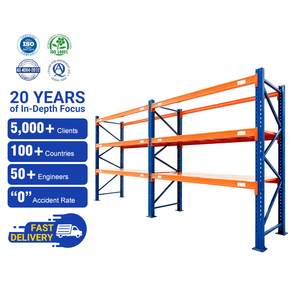
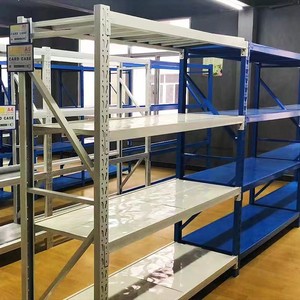
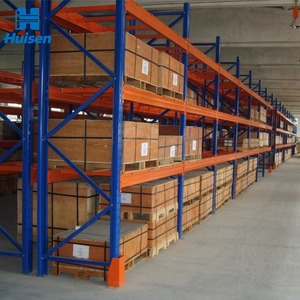
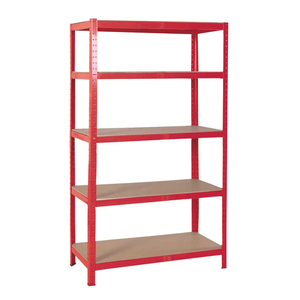
Global OEM/ODM Racking Manufacturing & Structural Engineering Leadership
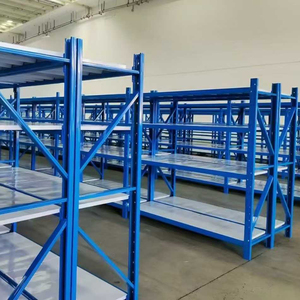
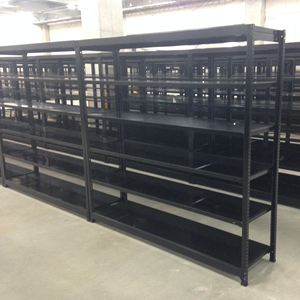
In an era characterized by aggressive supply chain re-shoring, nearshoring expansions, and rapid e-commerce proliferation, global enterprise procurement leaders cannot afford structural compromises in warehouse infrastructure. As a premier OEM/ODM Storage Racking Supplier and Exporter, our manufacturing paradigm bridges advanced metallurgy, computerized Finite Element Analysis (FEA), and fully customized cold-formed steel fabrication. We deliver heavy-duty selective pallet racking, structural cantilever arrays, multi-tier mezzanine floors, and automated storage interface components designed to maximize cubic storage volume while guaranteeing uncompromising operational safety.
Unlike generic storage vendors offering rigid catalog dimensions, our OEM/ODM model operates on structural adaptability. Every steel profile—from roll-formed teardrop uprights to heavy structural C-channel beams—is engineered around site-specific parameters. We evaluate key structural constraints including building clear height, concrete slab load bearing capacity (kPa), forklift aisle turning radiuses, material handling equipment (MHE) velocity, SKU throughput velocity, and local seismic acceleration coefficients (ranging from low-risk zones to high-seismic fault regions across North America, Latin America, Europe, and Asia-Pacific).
Seismic-Ready Engineering
Custom engineered base plates, dynamic bracing systems, and high-tensile floor anchor bolts engineered to conform strictly with ANSI MH16.1 specifications and localized seismic guidelines (e.g., CFE Manual de Diseño por Sismo).
High-Density Optimization
Customized VNA (Very Narrow Aisle), Drive-In, Push-Back, and Shuttle Racking architectures engineered to boost storage capacity by up to 85% without altering the existing building footprint.
Strict Audit Compliance
Full compliance documentation including traceable steel mill test reports, precise safe working load (SWL) calculation plaques, and certified alignment with NOM-006-STPS and OSHA standards.
Industrial Storage System Comparison & Engineering Matrix
Selecting the optimal industrial storage framework requires balancing immediate pallet accessibility against total volume storage density. The technical decision matrix below details our standard OEM/ODM production configurations and structural capabilities for industrial logistics facilities:
| Storage Racking System | Primary SKU Profile | Storage Density | Selective Access | Standard Structural Steel Grade | Typical Deflection Limit |
|---|---|---|---|---|---|
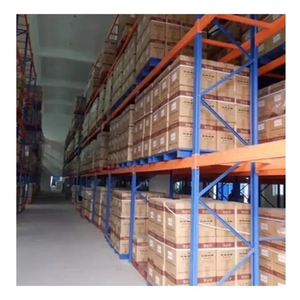
| Selective Pallet Racking | High SKU count, fast-moving items | Medium (40% - 50%) | 100% Direct Access | Q235B / Q355B Cold-Rolled Steel | L / 200 Max Beam Deflection |
| Drive-In / Drive-Thru Racking | Low SKU count, uniform batch items | Very High (75% - 85%) | LIFO / FIFO Group Access | High-Tensile Structural Steel | L / 180 Load Rating Standard |
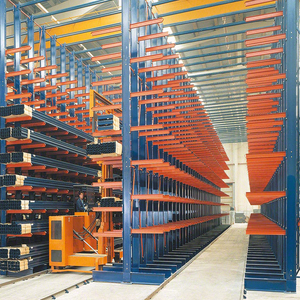
| Heavy-Duty Cantilever Racking | Long, bulky stock (pipes, timber, steel bar) | Custom Variable Density | Direct Frontal Access | Hot-Rolled Structural I-Beams | Arm Tip Deflection < L/180 |
| Push-Back Cart Racking | Medium SKU diversity, high density | High (60% - 70%) | LIFO Lane Access | Precision Galvanized Rail Systems | Cart Dynamic Load Rated |
| Automated Shuttle & AS/RS Racks | Massive inventory, automated picking | Maximum (85% - 95%) | Computer Controlled Direct | Ultra-Precision Cold-Formed Steel | Tight Deflection (Sub-Millimeter) |
Macro Procurement Trends Reshaping Storage Infrastructure (2025–2030)
Strategic sourcing of warehouse racking has evolved from purchasing standard commodity hardware into a high-stakes capital expenditure (CapEx) investment that directly impacts long-term operational expenditure (OpEx), fire protection safety, insurance premiums, and throughput capability. Global supply chain procurement officers are currently navigating several macro industry shifts:
1. Nearshoring Industrial Real Estate Pressures & Vertical Expansion
As manufacturing bases relocate closer to target consumer markets—most notably along the US-Mexico border industrial corridors (Monterrey, Saltillo, Tijuana, Querétaro), Central Eastern Europe, and Southeast Asia—industrial real estate land costs have reached historic highs. Consequently, greenfield distribution centers are being designed with clear height ceilings scaling from standard 8-meter limits up to 14–18 meters. Procuring structural racking that can withstand higher column buckling loads under extreme vertical loads without expanding building footprints has become a primary purchasing directive.
2. Total Cost of Ownership (TCO) & Life-Cycle Procurement
Modern procurement strategies look far beyond initial purchase order costs. Decision-makers evaluate lifecycle resilience, maintenance downtime, boltless repair capabilities, and structural impact protection systems. OEM/ODM customization allows buyers to specify thicker upright column profiles at impact-prone aisle entry corners, heavy-duty floor-anchored column guards, and specialized structural bottom ties. This upfront reinforcement dramatically reduces long-term maintenance costs caused by forklift collisions.
3. Insurance Audit Standardization & Fire Protection Integration
Global industrial property insurers (such as FM Global) are imposing strict structural integrity and fire protection guidelines. Modern rack procurement mandates that storage deck surfaces feature certified open-area percentages to allow unhindered water penetration from ESFR (Early Suppression, Fast Response) ceiling sprinklers. Welded wire deck systems with custom channel supports are rapidly replacing solid wooden or sheet metal decks to satisfy stringent international fire safety compliance audits.
Next-Generation Racking Development & Technological Innovations
The manufacturing of warehouse racking is undergoing a technological revolution. As an advanced OEM/ODM exporter, we integrate cutting-edge metallurgical research and mechanical design innovations into our production lines:
Ultra High-Strength Steel Alloys
Transitioning from standard carbon steel profiles to advanced micro-alloyed, cold-formed high-tensile steels (e.g., Q355B, Q460). These materials deliver significantly higher yield strength (>355 MPa) allowing thinner wall profiles to carry equivalent structural loads, thereby lowering shipping freight costs while preserving safety margins.
Smart Sensor & IoT Structural Monitoring
Embedding strain gauges, tilt sensors, and wireless IoT nodes into critical structural uprights. These smart nodes provide real-time telemetry regarding overload conditions, structural deflection, and unrecorded MHE forklift impacts, notifying safety managers before micro-fractures lead to catastrophic structural failure.
Advanced Anti-Corrosion Coatings
Deploying specialized electro-statically applied thermosetting powder coatings (60–90 micron thickness) alongside hot-dip galvanization (HDG per ISO 1461). This provides total structural protection in aggressive environments such as cold storage freezers (-30°C), coastal humidity, and chemical storage facilities.
Why Partner with Us for OEM/ODM Racking Manufacturing & Global Export?
Navigating complex overseas procurement demands absolute transparency, rigorous quality control, and scalable production capacity. Our manufacturing setup provides a seamlessly integrated engineering and export service tailored to overseas buyers, system integrators, and industrial distributors:
Automated Roll-Forming Precision
State-of-the-art multi-station continuous roll-forming production lines ensure pitch hole accuracy of ±0.5mm across 12-meter continuous upright columns. This guarantees effortless field assembly, perfect connector engagement, and zero structural binding.
Full OEM/ODM Customization
Complete flexibility across pitch dimensions (50mm, 75mm, 76.2mm / 3" standard teardrop), steel profile thicknesses (1.5mm to 3.5mm), beam box profile depths, non-standard powder coat RAL colors, and custom brand label badging.
Global Export Logistics & Packaging
Heavy-duty export packaging designed to endure trans-oceanic shipping. Steel components are bundled with steel strapping, heavy protective corner guards, and plastic stretch wrapping for damage-free container arrivals.
Step-by-Step Engineering & Procurement Process
To eliminate structural design mismatches and ensure friction-free international project delivery, our technical sales team follows a structured 5-stage OEM/ODM implementation workflow:
| Phase | Stage Name | Key Deliverables & Technical Actions | Estimated Timeline |
|---|---|---|---|
| 01 | Data Collection & CAD Layout | Building DWG review, slab specification, forklift turning radius check, initial 2D/3D layout modeling. | 3 - 5 Business Days |
| 02 | FEA Structural Calculation | Static/dynamic load modeling, seismic zone coefficient application, safe beam deflection verification. | 2 - 4 Business Days |
| 03 | Prototype & Tooling Approval | Custom connector stamping, roll-forming profile validation, color powder coat sample sign-off. | 5 - 7 Business Days |
| 04 | Mass Production & QC | Continuous roll-forming, robotic welding, ultrasonic weld testing, online coating thickness checks. | 15 - 25 Business Days |
| 05 | Container Loading & Export | Optimized container space stuffing plan, ocean freight customs clearing documentation, site manual dispatch. | Dependent on Destination |
Frequently Asked Questions (FAQ)
In-depth technical answers for procurement teams, structural consultants, and warehouse operations managers.
A: Absolutely. Every racking project designed for seismic zones is engineered in strict accordance with ANSI MH16.1 (Specification for the Design, Testing and Utilization of Industrial Steel Storage Racks) and local structural design manuals such as Mexico’s CFE Seismic Design Manual. Our engineering team calculates site-specific seismic acceleration coefficients, adjusting base plate dimensions, anchor bolt diameters (e.g., Hilti expansion or wedge anchors), frame bracing patterns, and heavy-duty connector locks accordingly.
A: NOM-006-STPS-2014 and OSHA regulations mandate safe material handling, clearly defined vehicle pathways, structural stability, and visible capacity signage. We support your safety team by engineering aisle widths tailored to your exact forklift specs, integrating column protection guards, providing certified row spacers, wire mesh safety decking, back-stop safety nets, and supplying clear steel Safe Working Load (SWL) capacity plaques for every rack assembly.
A: We utilize certified prime cold-rolled steel coils (Q235B and high-yield Q355B equivalent to ASTM A1011 Grade 50) accompanied by mill test reports (MTR). For standard indoor ambient warehouses, we apply an electro-statically applied, heat-cured epoxy polyester powder coating (60–90 microns). For high-humidity, outdoor, or cold storage freezer environments (-30°C), we offer Hot-Dip Galvanizing (HDG) per ISO 1461 standards to ensure lifelong corrosion resistance.
A: Cantilever racking is specifically engineered for storing long, continuous, or irregularly shaped loads without front vertical column obstructions—such as steel pipes, aluminum extrusions, timber packs, PVC conduits, and sheet metals. Selective pallet racking is designed specifically for standardized unitized pallet loads (e.g., 1000mm x 1200mm or 40" x 48" pallets). If your product mix requires handling linear stock via overhead crane or side-loader forklifts, cantilever racking is the correct structural choice.
A: Typical preliminary CAD layouts and FEA engineering calculations require 3 to 5 business days upon receipt of site dimensions and SKU requirements. Once final manufacturing drawings are approved, production lead time for standard project sizes (5 to 20 high-cube container loads) is approximately 20 to 25 calendar days. Ocean shipping transit varies by port of entry, typically ranging from 15 to 30 days.
Optimize Your Warehouse Layout & Storage Efficiency Today
Ready to scale your warehouse capacity with custom seismic-ready racking? Contact our senior structural engineering team today to receive a free, no-obligation CAD layout design, structural load calculation, and factory-direct quotation.
Get Catalog