Factory-Direct Heavy-Duty Racking Portfolio
Industrial Storage Systems & OEM Components
Explore our engineered structural racking lines, built for maximum volume utilization, severe dynamic loading, and strict compliance with ANSI MH16.1 and international structural standards.
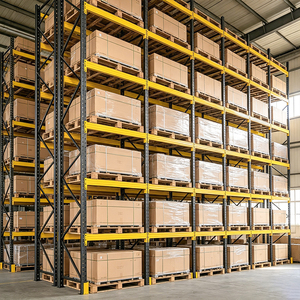
Industrial Selective Pallet Racking Heavy Duty Adjustable Warehouse Pallet Storage Shelving
View Specs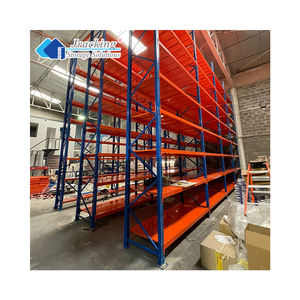
Jracking Dexion Style Warehouse Shelving Heavy Duty Pallet Rack
View Specs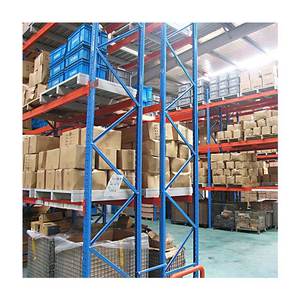
Industrial Heavy Duty Rack Manufacturing Pallet Rack Logistics Equipment Factory Warehouse Storage Racks Heavy Duty Racking
View Specs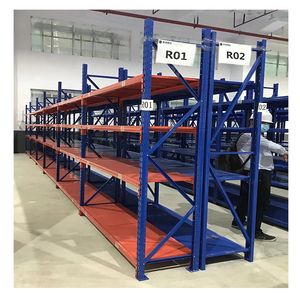
Racking Warehouse Assemble Steel Pallet Rack Heavy Duty Storage Selective Rack System
View Specs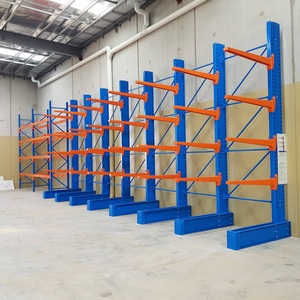
High Quality Heavy Duty Steel Cantilever Salvage Racking Vehicle Storage for Cars Stackable Rack
View Specs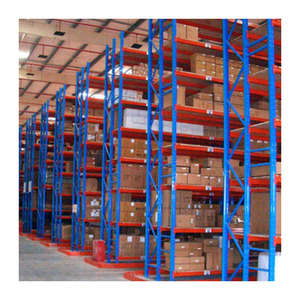
Customized Automatic Heavy Duty Warehouse Vertical Cargo Rack End Pallet Racking Pallet Shelves Racking Systems
View Specs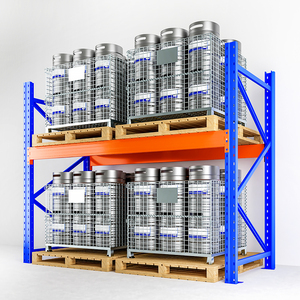
Industrial Steel Heavy Duty Pallet Storage Shelves Systems Stacking Rack Units with 5000KG Load-Bearing CE Certified
View Specs
Industry Technical Guide & Whitepaper
Engineering Excellence in OEM/ODM Push Back Racking Systems
In modern supply chain architecture, spatial efficiency must be balanced against operational throughput. As real estate costs skyrocket across industrial hubs and cold-storage facilities, high-density storage technologies have shifted from a luxury to a baseline requirement. Among these technologies, Push Back Racking Systems represent the optimal equilibrium between storage density, product accessibility, and handling speed.
As a premiere OEM/ODM Push Back Racking Manufacturer and Wholesale Supplier, AztecRack provides customized engineered structural systems built to fulfill exact operational profiles. Unlike standard off-the-shelf selective racking, Push Back systems utilize nested, telescoping cart assemblies riding on inclined steel rails. When a forklift loads a pallet into a bay, it gently pushes back the existing front pallet to expose the next cart beneath. Upon retrieval, gravity seamlessly flows the remaining pallets forward to the picking face.
Information Gain Insight: OEM/ODM customization is not merely about dimensional changes; it requires precise dynamic force calculation, rail pitch optimization (typically 1.5% to 2.5% slope), wheel bearing friction co-efficiency engineering, and seismic sway resistance modeling based on site-specific geotechnical parameters.
Key Mechanics of Nesting Cart Engineering
The core structural advantage of our proprietary Push Back system lies in low-profile, heavy-duty nested cart design. By minimizing cart stack height, warehouses regain up to 4 to 6 inches of vertical beam spacing per level, frequently enabling the addition of an entire extra tier of storage within existing ceiling clear heights.
Nested Steel Carts
Constructed from high-tensile structural steel channels with heavy-gauge corner reinforcements to prevent deflection under concentrated pallet footings.
Precision Bearing Wheels
Machined steel wheels equipped with sealed-for-life bearings designed specifically for ambient or sub-zero cold storage operations (-30°C).
Anti-Lift Safety Locks
Integrated safety stops prevent carts from lifting off track under erratic forklift loading or sudden hydraulic impacts during high-velocity picks.
Technical Decision Matrix
Push Back Racking vs. Alternative High-Density Systems
Choosing the right racking structural typology requires evaluating throughput velocity, SKU diversity, capital expenditure, and maintenance requirements.
| Racking Architecture | Storage Density | Selectivity & Access | Inventory Flow | Forklift Entry Risk | Ideal Application |
|---|---|---|---|---|---|
| Push Back Racking (2-6 Deep) | Very High (75-85%) | High (Per Lane Access) | LIFO (Last-In, First-Out) | Zero (Stays in Aisle) | High-turnover SKU buffers, Cold Storage, Food & Beverage |
| Selective Pallet Racking | Low (40-50%) | 100% Immediate | FIFO / LIFO Flexible | Zero (Stays in Aisle) | High SKU variety, E-commerce fulfillment, 3PL hubs |
| Drive-In / Drive-Thru Rack | Maximum (85-90%) | Very Low (Batch Access) | LIFO / Strict FIFO | High (Truck enters rack) | Homogeneous bulk goods, seasonal harvests, raw materials |
| Pallet Flow (Gravity Flow) | Very High (80-90%) | Moderate (Dedicated Pick/Put) | Strict FIFO | Zero (Stays in Aisle) | Perishable items, fast-moving consumer packaged goods (FMCG) |
| Radio Shuttle Racking | Maximum (85-95%) | Automated Batch Access | FIFO or LIFO | Zero (Automated Shuttle) | Automated dark warehouses, massive cold storage operations |
Tailored Industrial Manufacturing
OEM & ODM Customization Capabilities
As a certified OEM/ODM factory, we adapt every component—from upright post profiling to custom cart geometry—to integrate with specialized handling equipment, non-standard pallet shapes, and unique building constraints.
01
Geotechnical & Layout Audit
We analyze slab floor thickness, soil bearing capacity, building clear height, sprinkler drop clearances, and seismic zone specs.
02
Finite Element Analysis (FEA)
3D CAD simulation of structural stress points, deflection limits under full load (L/180 standard), and dynamic seismic reaction forces.
03
Tooling & Roll Forming
Cold roll forming of upright columns and step beams using certified high-strength structural grade steel coils (Q235B, Q355B, or ASTM A572).
04
Robotic Welding & Finish
Automated robotic arm MIG welding for cart frames and beam connectors, followed by electro-static powder coating or hot-dip galvanizing.
05
Quality Inspection & Audit
Full pre-assembly validation testing cart flow velocity, lock integrity, paint adhesion, and ultrasonic weld flaw checks.
Structural Reliability & Engineering
Compliance Standards, Seismic Engineering & Quality Certification
Global supply chains require racking structures designed for maximum endurance against dynamic loads, forklift impacts, and natural seismic events.
ANSI MH16.1 & RMI Alignment
All engineered upright frames and beam connectors strictly comply with ANSI MH16.1 specifications for the design, testing, and utilization of industrial steel storage racks.
CFE & Geotechnical Seismic Design
Base plates, heavy-duty wedge anchors, and cross-bracing channels are customized according to site seismic coefficient maps, protecting assets in high-risk zones.
NOM-006-STPS Operational Compliance
Complete safety integration including visible load capacity plaques, column impact guards, framed rack end protectors, and clear maintenance inspection guidelines.
Future Storage Outlook (2025-2030)
Emerging Trends in High-Density Warehouse Warehousing
As global manufacturing shifts toward localized supply chain resilient nodes (Nearshoring), warehousing infrastructure is undergoing rapid technological adaptation.
1. Hybrid Push Back & AGV/AMR Integration
Modern high-density warehouses are combining push-back structural lanes with automated guided vehicles (AGVs) and autonomous mobile robots (AMRs). By engineering extended guide funnels on the front picking face, AGVs can smoothly deposit and retrieve pallets without human operator error, achieving true round-the-clock dark warehouse execution.
2. Cold Storage Energy Optimization
Cold storage energy consumption scales directly with cubic volume rather than square footage. Push Back racking allows facilities to increase pallet capacity by 75% compared to selective rack without altering the refrigerated building envelope—slashing electricity overhead per pallet position by up to 35% annually.
3. Advanced Anti-Corrosion Surface Finishing
With humidity, chemical, and sub-zero storage environments expanding, standard paints are being replaced by high-durability polyester powder coatings tested up to 1,000 hours of salt spray exposure (ASTM B117), alongside structural hot-dip galvanizing for long-term outdoor yards and coastal industrial parks.
4. Modular OEM Customization for Non-Standard Containers
Beyond traditional GMA and Euro-pallets, modern manufacturing requires push-back systems capable of holding heavy steel wire baskets, plastic automotive containers, and custom machinery skids. Modular cart inserts engineered by AztecRack allow quick adaptability as inventory profiles evolve.
Expert Procurement Guidance
Frequently Asked Questions (FAQ)
Clear, technical answers to the most common questions asked by industrial buyers, warehouse managers, and structural consultants.
What is the difference between 2-deep, 3-deep, 4-deep, and 6-deep Push Back racking?
The "depth" refers to how many pallets can be stored end-to-end within a single lane. A 2-deep system uses 1 nested cart; 3-deep uses 2 nested carts; 4-deep uses 3 nested carts; and 6-deep uses 5 nested carts. As depth increases, cart telescoping height and rail incline require precise engineering to ensure smooth flow and manageable push force for standard forklifts.
Are AztecRack Push Back systems suitable for seismic zones and heavy dynamic vibration?
Yes. Every system is custom-engineered using finite element analysis (FEA) to calculate the seismic coefficient of your exact job site. Base plates, heavy-duty wedge anchors, frame column profiles, and bracing patterns reference international design codes including ANSI MH16.1 and local seismic standards (e.g., CFE manuals in North/Central America).
What type of forklift is required to operate a Push Back racking system?
Standard counterbalanced forklifts, reach trucks, and deep-reach trucks can operate Push Back systems without requiring specialized mast attachments. The primary requirement is that the forklift has sufficient pushing power and traction to overcome the incline resistance of the loaded nested carts during placement.
Do you comply with NOM-006-STPS for warehouse material storage safety?
Yes. Our layout blueprints and structural equipment support NOM-006-STPS compliance by providing certified load capacity warning plates, standardized aisle clearance widths, frame protectors, safety back-stops, and routine maintenance inspection documentation.
How does Push Back racking perform in sub-zero cold storage rooms?
Push Back systems excel in cold storage environment. We engineer cart wheels with low-temperature synthetic greases, sealed bearings, and low-temperature carbon steel (or hot-dip galvanized finish) to prevent metal embrittlement and bearing lockup at temperatures down to -30°C.
What is the lead time for OEM/ODM custom push back rack manufacturing?
Following CAD approval and structural calculation verification, standard manufacturing lead time is typically 3 to 5 weeks depending on project scale, specialized coatings (powder coat vs. galvanizing), and custom tooling requirements. Preliminary layout designs with full capacity estimates are generated within 3 business days.
Ready to Optimize Your Warehouse Density?
Get a Free Engineering Consultation & Custom CAD Layout
Send us your facility floor plan, clear height, pallet dimensions, and SKU profile. Our senior storage engineers will deliver a comprehensive structural design, capacity analysis, and direct wholesale OEM quotation.