Heavy-Duty Industrial Storage & Racking Systems
Engineered to international structural standards (ANSI MH16.1, RMI, FEM 10.2.02, ISO 9001:2015). Explore our primary export product lines configured for high load capacities and seamless automated integration.
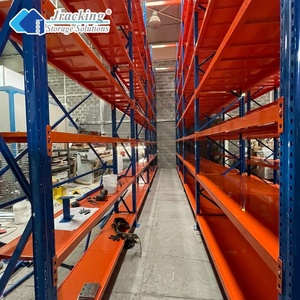
- Load Capacity: 1,000kg – 4,500kg / beam level
- Standard: FEM 10.2.02 & EN 15512 compliant
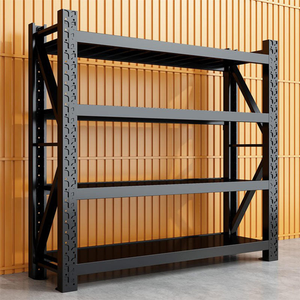
- Feature: 100% Direct SKU Selectivity
- Upright Height: Up to 12,000mm clear vertical
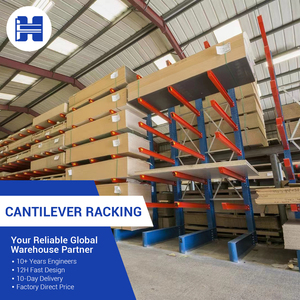
- Application: Pipes, Timber, Steel Profiles & Tubes
- Configuration: Single & Double-Sided Arms
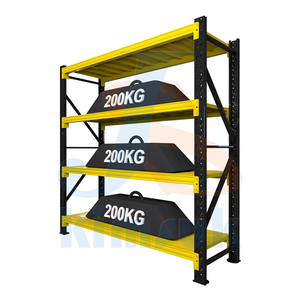
- Material: High-Grade Q235B/Q355B Steel
- Pitch Adjustment: 50mm / 75mm / 76.2mm
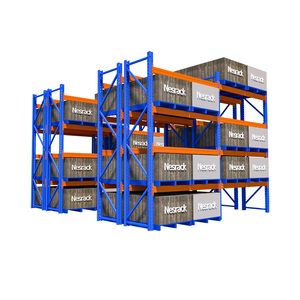
- Type: Boltless Multi-Tier Longspan Shelving
- Surface: Electrostatic Epoxy Powder Coating
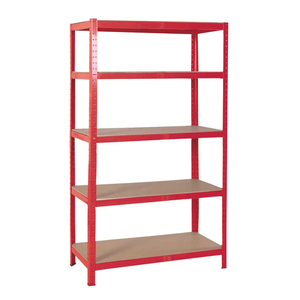
- Capacity: 300kg – 800kg per tier
- Assembly: Fast Snap-in Boltless Design
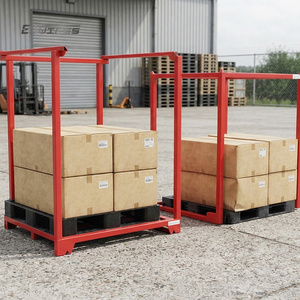
- Mobility: Stackable & Nestable Storage
- Design: Portable Nestainer & Post Rack
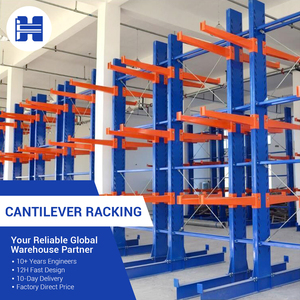
- Engineering: Structural H-Beam Column
- Finish: Hot-Dip Galvanized for Outdoor Use
Technical Whitepaper: Engineering Criteria for Modern OEM Warehouse Shelving & Racking Fabrication
In modern industrial logistics and third-party contract warehousing (3PL), physical footprint optimization has evolved from a basic storage necessity into a critical driver of operational profitability and supply chain velocity. Selecting a qualified custom Original Equipment Manufacturer (OEM) and exporter for heavy-duty warehouse shelving and racking requires meticulous evaluation of structural engineering standards, metallurgical integrity, seismic resilience, and total cost of ownership (TCO).
As global supply chains pivot toward high-bay vertical storage, automated material handling, and nearshoring distribution nodes, standardized off-the-shelf shelving systems frequently fall short of meeting complex floor-load constraints, customized SKU profiles, and strict municipal building codes. Custom OEM racking design bridges this gap by tailoring cold-rolled steel profiles, column bracing patterns, beam-to-upright connection locks, and surface protective coatings to specific operational dynamics.
Metallurgical Standards and Structural Integrity in Cold-Formed Steel Fabrication
The foundational reliability of any industrial warehouse racking installation relies heavily on raw material metallurgy. Premium OEM manufacturers exclusively utilize structural grade steel—primarily Q235B and Q355B high-tensile cold-rolled steel (equivalent to ASTM A1008 SS Grade 33/40 and EN 10025 S355). Cold-forming continuous roll lines impart localized work hardening along profile radius corners, significantly elevating yield strength ($f_y$) and section modulus properties without adding dead load to the concrete building slab.
Critical structural parameters calculated during OEM Finite Element Analysis (FEA) modeling include:
- Bending Deflection Limits: Ensuring horizontal beam member deflection under maximum uniformly distributed load (UDL) strictly adheres to the international threshold of $L/180$ (where $L$ represents clear beam length), preventing permanent plastic deformation and beam dislodgement risk.
- Torsional-Flexural Buckling Prevention: Engineering upright column sections with optimized teardrop, omega, or C-channel geometries, supported by heavy-duty diagonal and horizontal frame bracing welded or bolted at calculated node points.
- Safety Factor Ratios: Standardizing a minimum structural safety factor of 1.65 to 1.95 relative to yield limits in accordance with ANSI MH16.1 (Specification for the Design, Testing and Utilization of Industrial Steel Storage Racks) and FEM 10.2.02 codes.
Comprehensive Structural Comparison of Industrial Storage Systems
To assist logistics procurement directors, warehouse engineers, and supply chain managers in evaluating capital equipment investments, the matrix below details operational performance metrics across standardized and customized OEM racking configurations.
| Racking Architecture | Direct Selectivity | Storage Density | Max Load per Level | Handling Equipment Compatibility | Primary Industrial Use Case |
|---|---|---|---|---|---|
| Selective Pallet Racking | 100% (Immediate) | Moderate (35%-40% floor usage) | Up to 4,500 kg / level | Standard Counterbalance, Reach Trucks | High-SKU 3PL, Retail Distribution, FMCG Hubs |
| Double-Deep Selective | 50% (FILO access) | High (50%-55% floor usage) | Up to 3,200 kg / level | Deep-Reach Forklifts, Pantograph Attachments | Cold Storage, Batch-Manufacturing Inventories |
| Cantilever Systems | 100% (Open Front) | High (Linear continuous) | Up to 6,000 kg / arm | Side Loaders, Overhead Cranes, Multi-directional Trucks | Steel Tubing, Lumber, Extrusions, Sheet Metal |
| Drive-In / Drive-Thru | 15%-20% (LIFO/FIFO) | Very High (75% floor usage) | Up to 1,800 kg / pallet position | Standard Counterbalance Forklifts | Homogeneous Bulk Goods, Seasonal Beverage Pallets |
| ASRS & Pallet Shuttle | 100% Automated | Ultra-High (>85% floor usage) | Up to 2,000 kg / position | Automated Guided Vehicles (AGVs), Shuttle Carts | Fully Automated Smart Logistics Centers & Cold Chains |
| Multi-Tier Mezzanine | 100% Hand-Picks | Maximized Vertical Volumetric | 300 kg – 1,000 kg / m² | Conveyors, Vertical Reciprocating Lifts (VRLs) | E-commerce Small Parts Fulfillment, Auto Spare Parts |
Custom OEM/ODM Manufacturing Engineering Process
From site survey and CAD layout development to automated roll-forming, robotic welding, and overseas shipping logistics, our engineering pipeline guarantees precision compliance.
1. Site Survey & CAD Layout
3D BIM model analysis evaluating warehouse clear height, building column grid spacing, floor slab thickness, seismic zone maps (CFE / IBC), and material handling equipment turning radius.
2. Finite Element Stress Analysis
Simulating structural performance under dynamic forklift impacts, maximum static payload combinations, wind load (for outdoor cantilever racks), and transient seismic accelerations.
3. Precision CNC Manufacturing
Automated continuous cold-roll forming, high-speed CNC punching for multi-pitch upright profiles, and 6-axis robotic welding cells producing AWS D1.1-certified structural welds.
4. Surface Pre-treatment & Finishing
11-stage chemical degreasing and phosphatizing followed by thermosetting electrostatic epoxy-polyester powder coating (60-90 microns thickness) or hot-dip galvanizing per ASTM A123.
5. Strict Quality Control & Testing
Batch tensile testing, salt-spray corrosion resistance validation (ASTM B117 >500 hours), ultrasonic weld flaw detection, and dimensional tolerance checks prior to packaging.
6. Export Packaging & Overseas Shipping
Steel-banded bundling, corrugated corner protection, moisture-proof plastic wrap, and custom container loading schemes designed to maximize 40ft HQ container cubic capacity.
Future Procurement Trends in Industrial Storage Infrastructure
As global commerce adjusts to labor shortages, nearshoring supply strategies, and heightened environmental governance, enterprise procurement teams are updating their criteria for capital equipment acquisition. Key trends shaping warehouse racking contracts include:
1. Integration with Automation & Robotics (ASRS Ready Architecture)
Traditional manual pallet racking is increasingly engineered with dual-compatibility features. OEM designs now incorporate tighter deflection tolerances (up to $L/240$ or $L/300$) and integrated guide rails to accommodate future upgrades to Radio Shuttle Carts, Autonomous Mobile Robots (AMRs), and Automated Storage and Retrieval Systems (ASRS) without requiring structural tear-downs.
2. Seismic Resilience & Regional Building Code Compliance
Global logistics facilities in earthquake-prone corridors (such as the Pacific Rim, Mexico's central industrial zone, or Southern Europe) demand site-specific seismic coefficient calculations. Modern OEM contracts require certified baseplate anchor sizing, enlarged footprint plates, and custom cross-bracing that conform to the CFE Seismic Design Manual, ANSI MH16.1, and Eurocode 8 standards.
3. Sustainable Manufacturing & Carbon-Footprint Traceability
Enterprise buyers under Scope 3 carbon reporting mandates are prioritizing storage suppliers who utilize green steel billets produced via Electric Arc Furnaces (EAF), energy-efficient powder coating curing ovens, and 100% recyclable packaging materials. Closed-loop chemical pre-treatment systems with zero wastewater discharge are becoming standard prerequisites in major vendor audits.
4. Modular Customization and Rapid Re-Configurability
To keep pace with changing e-commerce SKU dimensions and seasonal inventory shifts, modern shelving systems rely on universal teardrop or 50mm/75mm adjustable pitch patterns. Boltless structural beam connectors equipped with heavy-duty safety locks ensure fast height adjustments without specialized tools or prolonged downtime.
Frequently Asked Procurement & Technical Questions (FAQ)
How do custom OEM warehouse racking systems differ from standard off-the-shelf shelving?
Custom OEM racking is engineered specifically for your facility's unique operational parameters, including concrete slab load ratings, clear height clearance beneath sprinkler systems, exact forklift mast heights, specific pallet dimensions, and local seismic zone regulations. Off-the-shelf shelving uses generic gauge steel that may lead to structural under-capacity, poor space utilization, or non-compliance with regional safety audits such as OSHA, EN 15635, or NOM-006-STPS.
What steel grades and surface finishes are recommended for high-humidity or cold-storage facilities?
For cold-storage freezers (-30°C) and high-humidity environments, we recommend high-yield structural steel (Q355B/S355) combined with either continuous Hot-Dip Galvanizing (HDG per ASTM A123, providing 65+ microns of zinc layer protection) or specialized low-temperature resistant epoxy powder coatings. Hot-dip galvanizing prevents sub-surface oxidation, flaking, and structural embrittlement in harsh microclimates.
What documentation and certifications are provided for global export shipments?
Every OEM export order comes with a complete compliance package, including Raw Material Mill Test Certificates (MTC to EN 10204 3.1), ISO 9001:2015 Quality Certificates, Structural Finite Element Analysis (FEA) reports, Factory Acceptance Test (FAT) logs, detailed CAD installation assembly drawings, and official Load Capacity Signage plaques ready for mounting on upright frames.
What is the typical manufacturing lead time for full-container OEM racking projects?
Standard manufacturing lead times range from 15 to 25 business days following 3D approval and CAD layout confirmation. Lead times depend on total order volume (number of 40ft HQ containers), custom profile requirements, and specific powder coating color match requirements (RAL spectrum).
How do you ensure structural compliance with localized seismic regulations?
Our structural engineering team utilizes site-specific ground acceleration data derived from regional seismic hazard maps. We size floor baseplates, anchor bolt embedment depths, frame diagonal bracing patterns, and heavy-duty top-tie connectors to resist dynamic horizontal shear stress, ensuring your facility complies with local building authority inspections.
Optimize Your Warehouse Vertical Space Today
Connect directly with our engineering team for free CAD layout design, floor slab load validation, and competitive direct factory pricing on custom OEM storage systems.