Heavy-Duty Warehouse Storage & OEM Racking Catalog
Explore our engineered structural rack systems, optimized for maximum vertical clearance, high load bearing capacities, and stringent seismic resistance standards.
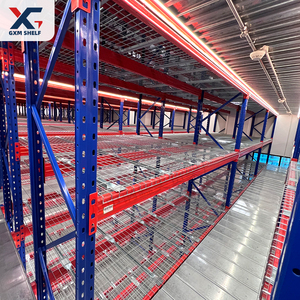
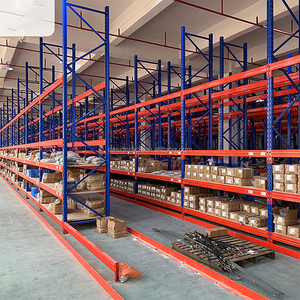
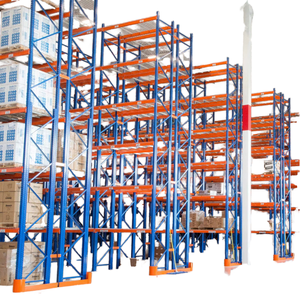
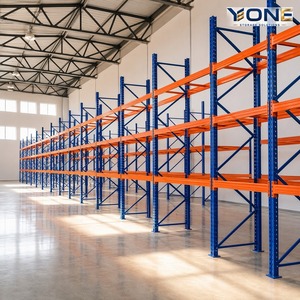
Engineering Whitepaper: Structural Mechanics of Custom OEM Push Back Racking
As global logistics networks, 3PL aggregators, and manufacturing hubs demand higher yield per square meter of floor space, traditional selective pallet racking frequently reaches its spatial efficiency limit. Custom OEM Push Back Pallet Racking represents the peak of Last-In, First-Out (LIFO) high-density storage technology, offering up to 75% higher pallet utilization compared to standard selective layouts without requiring specialized aisle widths or deep-reach forklifts.
Unlike drive-in racking—which forces forklifts to physically enter the structural matrix and increases column impact collision risks by over 60%—push back rack systems utilize a series of nested, inclined carts riding on structural steel inclined rails. When a forklift loads a pallet, it pushes the previously stored pallet backward along the incline. Upon retrieval, gravity smoothly flows the remaining pallets forward to the front aisle picking face.
Precision Rail & Cart Inclination
Calculated at a precise 1.5° to 3.0° grade slope, our low-profile nested carts utilize heavy-duty stainless steel sealed bearings. This minimizes dynamic friction resistance while guaranteeing controlled, safe gravity acceleration during pallet retrieval cycles.
Structural Anti-Pop-Out Stops
Safety engineering is paramount. Engineered with heavy-gauge safety stops, integrated secondary mechanical hooks, and flange guards, our carts remain locked into the heavy-duty structural channels even under aggressive forklift push-back contact.
Bespoke OEM Beam Profiles & Gauge
We roll-form cold-rolled structural steel (Q235B & Q355B grades) in thicknesses ranging from 1.8mm up to 3.0mm. Frame uprights can be customized with teardrop, structural bolt-on, or custom slotted geometry to align seamlessly with existing site infrastructures.
Technical Comparison: High-Density Warehouse Racking Architectures
Choosing the optimal storage matrix requires a quantitative balance between initial capital outlay, floor space utilization, SKU selectivity, and operational cycle speed.
| Racking Type | Storage Density | Selectivity (SKU) | Forklift Type Required | Pallet Damage Risk | Optimal Application Scenario |
|---|---|---|---|---|---|
| Push Back Rack (2–6 Deep) | High (70–75%) | Medium (LIFO per lane) | Standard Counterbalance / Reach | Low (Forklifts remain in aisle) | Medium SKU counts, batch production, cold storage |
| Selective Pallet Rack | Low (35–40%) | High (100% Immediate) | Standard / Any Forklift | Very Low | High SKU velocity, e-commerce picking hubs |
| Drive-In / Drive-Thru | Very High (75–85%) | Low (LIFO / FILO) | Specialized Narrow Counterbalance | High (Forklift drives inside matrix) | Mass uniform product, seasonal hold, bulk food |
| Pallet Flow (Gravity) | Maximum (80–90%) | Medium (FIFO per lane) | Separate Load & Unload Truck | Low to Medium | Fast-moving consumer goods (FMCG), expiration-sensitive |
| Automated Radio Shuttle | Maximum (85–92%) | Medium (Programmed LIFO/FIFO) | Robotic Shuttle + Standard Lift | Minimal | High-volume distribution, automated smart warehouses |
Global Procurement Trends: The Next Era of Industrial Racking Supply Chains
1. Nearshoring and the Demand for Seismic-Certified Structural Racking
The rapid acceleration of global nearshoring—specifically across North American, Mexican industrial corridors (such as Monterrey, Saltillo, Querétaro, and Bajío), and Eastern European logistics belts—has shifted procurement priorities. Enterprise buyers are moving away from light-duty commodity shelving toward rigorously certified seismic-grade racking engineered in accordance with ANSI MH16.1, RMI, and CFE Seismic Design Guidelines. Facilities located in high-seismic active zones now mandate high-ductility steel connections, heavy base-plate anchoring, and verified finite element structural analysis (FEA).
2. Cold Chain Optimization and Sub-Zero Storage Density
Energy costs associated with refrigerated and freezer warehouse spaces have skyrocketed by over 35% globally. Because thermal volume in cold storage facilities costs up to three times more to cool than dry ambient space, high-density push back rack systems have become the preferred standard. By eliminating unnecessary forklift access aisles, cold chain operators shrink cubic space waste, resulting in dramatic kWh power reductions while preserving swift LIFO inventory access.
3. Integration of Hybrid Automated Systems & Smart OEM Customization
As warehouses transition toward partial automation, push back systems are being custom-engineered to integrate with Autonomous Mobile Robots (AMRs) and Automated Guided Vehicles (AGVs). Modern OEM suppliers must deliver tight manufacturing tolerances (within ±1.5mm variance across beam spans) to ensure AGV optical sensors and fork positioners load push-back carts reliably without human intervention.
Why Global Enterprise Buyers Choose AztecRack as OEM Partner
From raw steel coil slitting to fully automated powder coating lines, our end-to-end manufacturing infrastructure ensures uncompromised quality, structural traceability, and direct exporter efficiency.
Certified Raw Steel Traceability
We source high-grade Q235B and Q355B cold-rolled structural steel exclusively from top-tier state mills. Every manufacturing batch is accompanied by comprehensive Mill Test Certificates (MTC), documenting yield strength, tensile limits, and chemical composition.
Robotic Welding & Precision Roll-Forming
Our production facilities operate multi-station CNC continuous roll-forming lines and robotic welding stations. Beam connector brackets undergo automatic robotic MIG welding, guaranteeing uniform penetration, zero slag porosity, and optimal structural rigidity under load.
Thermosetting Electrostatic Powder Coating
Components pass through a 6-stage pre-treatment wash (degreasing, phosphating, and deionized rinsing) before entering our automated electrostatic powder coating line. This delivers a scratch-resistant finish exceeding 500 hours of salt spray exposure testing.
NOM-006-STPS & International Audit Readiness
All projects ship with engineered CAD assembly drawings, certified load capacity calculation plates, and complete maintenance checklist manuals to help facility managers pass NOM-006-STPS-2014, OSHA, and regional safety audits effortless.
Frequently Asked Procurement & Engineering Questions
Clear, authoritative technical answers to assist logistics managers, structural engineers, and procurement teams in specifying custom OEM push back pallet racking.
Are AztecRack pallet racks engineered for high seismic risk zones?
Yes. Every single push back and selective pallet rack system is engineered according to the exact seismic coefficient of your installation site. Referring to the CFE Seismic Design Manual and ANSI MH16.1 practices, our structural engineers custom-size base plates, anchor bolt embedment depths, frame bracing patterns, and heavy-duty beam connector brackets to safely withstand Zone 3 and Zone 4 seismic acceleration forces.
How do push back cart systems prevent pallet hang-ups or jams?
Our OEM push back systems feature precision-machined steel wheels equipped with sealed, maintenance-free ball bearings. Carts are designed with linking mechanism stoppers and large anti-lift tab flanges that wrap around the structural support rail. This prevents misalignment, cart jump-offs, or jamming, ensuring smooth gravity flow even when handling damaged or flexible wooden pallets.
Do your storage racking designs comply with official NOM-006-STPS safety standards?
Absolutely. Our system layouts fully support NOM-006-STPS-2014 material handling safety mandates. We provide certified load capacity plates (indicating maximum weight per level and per bay), defined aisle clearance dimensions, post protectors, and safety inspection guidance so your environmental health & safety (EHS) team can easily document regulatory compliance.
What is the typical turnaround time for preliminary CAD warehouse layout designs?
Once you submit your floor plan architectural drawings, building clear height measurements, forklift specifications, and pallet inventory profiles, our engineering office delivers a full preliminary 2D CAD layout and structural load assessment within 3 to 5 business days.
What is the maximum weight capacity per pallet position in a push back system?
Standard OEM push back cart systems are rated for loads ranging from 500 kg (1,100 lbs) up to 1,500 kg (3,300 lbs) per pallet position. For specialized heavy-industrial applications, such as automotive die storage or raw metal coil handling, we offer custom structural steel cart configurations engineered for loads exceeding 2,500 kg per position.
When should a facility choose Cantilever Rack over Push Back or Selective Pallet Rack?
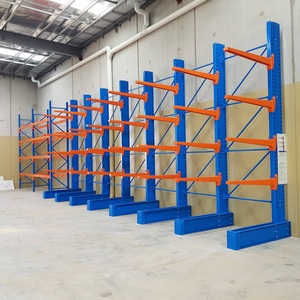
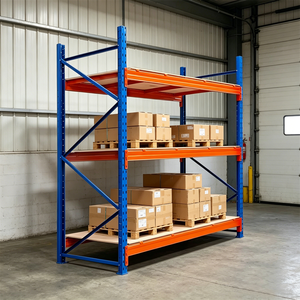
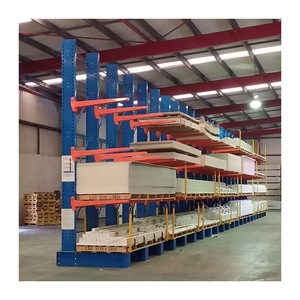
Cantilever racking is designed specifically for un-palletized, long, or irregularly shaped materials such as steel tubing, PVC pipes, lumber bundles, aluminum extrusions, and sheet metal plates. Pallet rack systems (selective or push back) are optimal for standardized unitized pallet loads (e.g., 40" x 48" GMA or 1000mm x 1200mm Euro/Metric pallets).
Optimize Your Warehouse Density & Dynamic Flow Today
Ready to increase your pallet storage capacity by up to 75%? Partner directly with a certified custom OEM push back pallet racking supplier and exporter. Contact our engineering team for free CAD layouts and direct factory quotes.