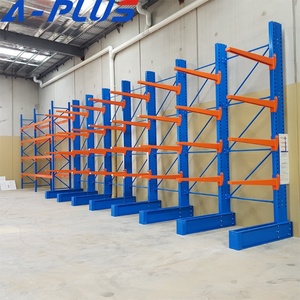
Direct OEM Inventory
Featured Industrial Cantilever Storage Systems
Engineered to ISO9001, CE, and ANSI MH16.1 safety specifications. Select from single-sided, double-sided, structural H-beam, and automated telescopic cantilever configurations manufactured in China for global distribution.
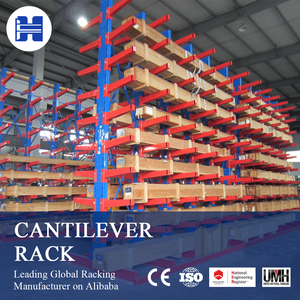
Factory Direct High-Strength Q235B Steel CE Certified Cantilever Rack Heavy Duty Storage Racking System Custom Design
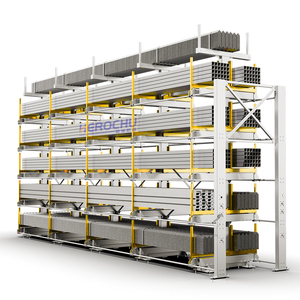
Highly Efficient Safe Industrial-grade Heavy-duty Foldable Cantilever Warehouse Rack 3T/Layer Capacity Anti-Rust for Tubular
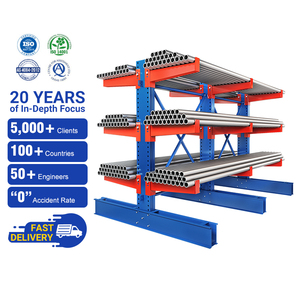
Full Cantilever Rack Heavy Duty Multi-Level Warehouse Rack Cold-Rolled Steel Powder Coated 500kg/Arm CE ISO Durable Corrosion
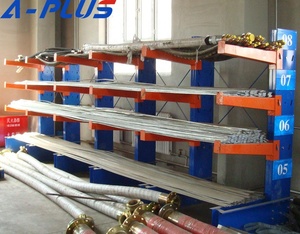
Industrial Shelving Warehouse Steel Pipe Storage Rack Heavy Duty Cantilever Racking
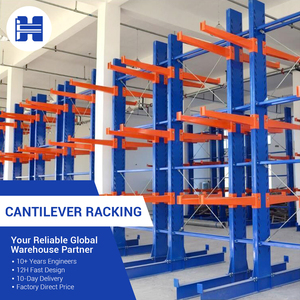
Customized Cantilever Warehouse Racking System Heavy Duty Long Material Industrial Storage Solution
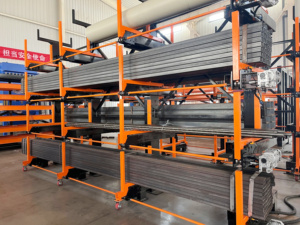
Space Efficient Double-Sided Cantilever Rack with Corrosion Protection for Long Steel Material Storage Heavy Duty Structure Blue
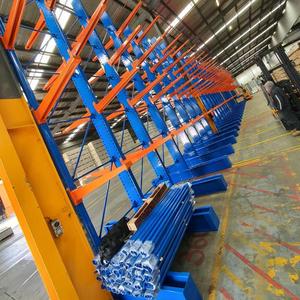
High-Capacity Industrial Warehouse Storage Shelf Rack Heavy Duty Cantilever Racking for Lumber Storage
Engineering Whitepaper
Structural Architecture of Industrial Cantilever Racking
An in-depth analysis of structural integrity, beam mechanics, moment connections, and material stress factors essential for modern B2B warehousing projects.
When storing long, bulky, or awkward loads such as structural steel beams, PVC piping, aluminum extrusions, timber bundles, and heavy sheets, conventional pallet racking with front columns introduces severe operational bottlenecks. Cantilever racking systems solve this spatial constraint by completely eliminating front uprights, creating a continuous, unimpeded horizontal storage bay supported entirely by heavy-duty rear column towers and stable base anchors.
Roll-Formed vs. Hot-Rolled Structural H-Beam Systems
Engineered cantilever systems fall into two structural categories: Cold-Rolled Light/Medium Duty and Hot-Rolled Heavy-Duty (H-Beam). Cold-rolled steel (Q235B) offers cost-efficient storage for loads ranging from 200 kg to 800 kg per arm, utilizing punched tear-drop or pitch-hole patterns. For rigorous industrial environments—such as steel service centers or outdoor lumber yards—Hot-Rolled Structural Steel (Q355B H-beams) provides maximum resistance to forklift impacts, handling uniform loads exceeding 3,000 kg per arm without elastic deformation.
Moment Connections & Deflection Mechanics
The structural stability of a cantilever rack depends entirely on the connection between the vertical column base and the cantilever arm. Under maximum loading conditions, the cantilever arm experiences severe bending moments. Engineering standards mandate that maximum arm deflection must not exceed L/180 (where L is the arm length). Our Chinese factory utilizes high-strength pin-locking mechanisms and heavy-grade gusset plates, ensuring zero arm slippage and providing clear visual cues for safe forklift engagement.
Structural Matrix: Single-Sided vs. Double-Sided Cantilever Racks
| Specification Parameter | Single-Sided Cantilever Rack | Double-Sided Cantilever Rack | Engineering Compliance Notes |
|---|---|---|---|
| Typical Placement | Flush against facility wall perimeters | Central warehouse floor aisles | Requires clear structural building offset |
| Load Distribution | Asymmetric overturning moment on base | Balanced symmetrical load center | Double-sided offers higher stability factors |
| Column Height Range | 2,000 mm to 9,000 mm | 2,000 mm to 12,000 mm | Verified against ANSI MH16.1 & RMI standards |
| Arm Pitch Adjustment | 100 mm / 140 mm pattern increments | 100 mm / 140 mm pattern increments | Bolted or toolless safety pin connectors |
| Surface Protection | Epoxy Powder Coating / Hot-Dip Galv. | Epoxy Powder Coating / Hot-Dip Galv. | ISO 12944 C3/C4 rating for corrosive or outdoor environments |
Strategic Sourcing Insights
Future Procurement Trends in Industrial Racking Sourcing
How global buyers, logistics integrators, and industrial wholesalers are restructuring their supply chain strategies to secure higher ROI, modularity, and automation compatibility.
1. Rise of Automated PLC Electric Telescopic Cantilever Systems
Traditional fixed-arm cantilever storage requires wide forklift operating aisles (often 4 to 5 meters). Modern automated facilities are rapidly adopting Automatic PLC-Controlled Electric Telescopic Racks. These systems feature motorized extendable arms that extend 100% outward into the aisle, allowing overhead bridge cranes or narrow-aisle stackers to pick long profiles directly. Procurement data shows a 45% increase in demand for automated cantilever infrastructure across Europe and North America to achieve up to 80% footprint reduction.
2. Nearshoring & Direct OEM Wholesale Partnerships
Global supply chain realignments have forced logistics directors to bypass intermediary brokers and establish direct OEM engineering partnerships with high-capacity Chinese racking factories. Sourcing directly from verified wholesale suppliers ensures strict adherence to structural raw material certificates (MTRs), precise weld defect inspections (NDT testing), and optimized factory container loading—reducing unit procurement costs by 25% to 35% without compromising safety margins.
3. Seismic-Ready Design & Regional Standard Compliance
International building codes (such as Mexico's CFE seismic guidelines, US RMI/ANSI MH16.1, and European Eurocode 3) now require dynamic seismic calculations for heavy structural racking. Procurement specifications have shifted from standard off-the-shelf items to custom-engineered base-plate anchor configurations, heavier column bracing, and site-specific seismic coefficient testing to prevent catastrophic failure during earth movements.
R&D Roadmap
Innovations & Technology Trends in Cantilever Manufacturing
Advanced steel metallurgy, intelligent anti-corrosion coatings, and modular structural engineering driving the next generation of warehouse racks.
High-Strength Steel Alloy Integration (Q355B & High-Yield Cold Rolled)
Industrial racking R&D has shifted toward high-yield steel grades like Q355B (equivalent to ASTM A572 Grade 50). By switching from traditional Q235 steel to higher-yield strength alloys, structural engineers can design thinner profile uprights that deliver equal or superior load-bearing capacity. This reduces structural self-weight, lowers ocean freight shipping costs per container, and improves carbon footprint performance across B2B supply chains.
Advanced Anti-Corrosion Surface Engineering
For outdoor steel pipe yards, timber holding areas, and coastal logistics hubs, standard paint finishes degrade rapidly. Modern Chinese manufacturing lines now integrate automated thermosetting epoxy powder coating systems with multi-stage zinc phosphate pre-treatment. For extreme environments, Hot-Dip Galvanizing (HDG) per ISO 1461 delivers a zinc coating thickness of 60–80 µm, providing over 30 years of maintenance-free service life against rust and chemical exposure.
Modular Pin-Lock Arms & Pipe Retention Stop Accessories
Safety engineers prioritize versatility. Modern cantilever designs incorporate toolless removable end-stops (removable vertical pins) ranging from 50 mm to 250 mm height. These prevent cylindrical loads—such as steel tubes, copper pipes, and PVC conduits—from rolling off the arms during forklift placement, significantly enhancing warehouse safety (supporting workplace compliance standards like NOM-006-STPS and OSHA regulations).
Finite Element Analysis (FEA) Layout Optimization
Before steel coil uncoiling and roll-forming begin, advanced suppliers utilize Finite Element Method (FEM) software to simulate complex multi-directional load stress points, torsional deflection, and horizontal seismic shear forces. This digital twin testing eliminates structural weak points prior to fabrication, guaranteeing structural stability under full payload conditions.
Enterprise Strengths
Why Source Wholesale Cantilever Racks From Our Factory
We combine heavy industrial structural engineering, fully automated manufacturing lines, and international quality management to supply turnkey storage infrastructure worldwide.
State-of-the-Art Manufacturing Facility
Equipped with automated continuous roll-forming machines, robotic laser welding stations, and high-precision CNC punching lines. Our factory processes thousands of tons of structural steel monthly, maintaining tight dimensional tolerances across every column profile, base channel, and arm bracket assembly.
Stringent QA/QC & Mill Test Traceability
Every batch of raw steel coil or H-beam material undergoes structural tension, yield, and chemical composition testing (supported by certified Mill Test Reports). Finished products undergo rigorous dimensional inspection, powder coating thickness tests (DDT), and weld seam ultrasonic inspection before export packaging.
Full-Service OEM/ODM Custom Engineering
No two warehouses are identical. Our dedicated team of CAD and structural engineers provides tailored floor layout designs, load-bearing calculations, seismic anchoring plans, and 3D rendering services within 3 to 5 business days—ensuring seamless integration with your existing material handling equipment (MHE).
Buyer Knowledge Base
Frequently Asked Sourcing & Technical Questions
Critical engineering, logisitcal, and procurement answers for warehouse operations managers, procurement officers, and structural system integrators.
How do I calculate the required arm load capacity for long materials?
To determine arm capacity, divide the total weight of the stored load per level by the number of support arms under the load. For example, if a 6-meter bundle of steel pipe weighs 3,000 kg and rests evenly on 3 cantilever arms, each arm must carry a minimum uniformly distributed load (UDL) of 1,000 kg. Always verify that arm spacing prevents load sagging or deflection between support points.
When should I choose Cantilever Racking over standard Selective Pallet Racking?
Choose Cantilever Racking whenever your stock items are longer than standard pallet dimensions (e.g., exceeding 1,200 mm) or vary continuously in length. Items like 6-meter steel pipes, 12-meter rebar, PVC conduits, timber sheets, furniture, and aluminum extrusions cannot be safely or efficiently loaded into pallet racks due to vertical upright obstruction. Cantilever racks provide an open-front structure for continuous horizontal storage.
What surface treatment option is recommended for outdoor steel stockyards?
For outdoor applications or humid environments, Hot-Dip Galvanizing (HDG) per ISO 1461 is strongly recommended. During HDG, the steel components are fully submerged in molten zinc, creating a metallurgical alloy coating that protects both exterior surfaces and internal tube profiles against rust. Electrostatic powder coating is highly durable and ideal for indoor climate-controlled warehouses.
What safety certificates and engineering compliance documents are provided?
Our cantilever systems are manufactured under ISO9001 quality management systems and carry CE marking compliance for European and international safety directives. For custom projects, we issue structural calculation sheets (verified under ANSI MH16.1 / RMI standards), steel raw material mill test reports (MTRs), and comprehensive installation layout guides.
How are wholesale cantilever racking shipments packaged for ocean freight?
All upright columns, base profiles, and cantilever arms are bundled into knock-down (KD) sub-assemblies wrapped in protective plastic film and reinforced with steel strapping to prevent movement during container transit. Small hardware components (pins, bolts, anchor bolts, row spacers) are packed in heavy-duty wooden crates or steel-reinforced cartons to maximize 40ft HQ container cubic utilization and streamline site offloading.
Optimize Your Long Material Warehouse Storage
Partner directly with China's leading cantilever racking engineering team. Request a free 2D/3D CAD layout proposal, load-bearing analysis, and competitive factory-direct wholesale quote today.
Get Catalog