Heavy-Duty Industrial Storage & Automated Racking Portfolio
Engineered for high load capacities, structural safety compliant with FEM 10.2.02 and RMI specifications, and seamless integration with modern logistics infrastructure.
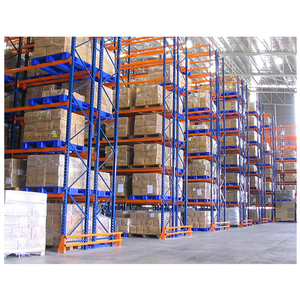
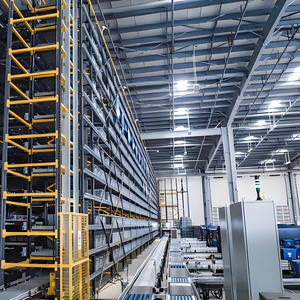
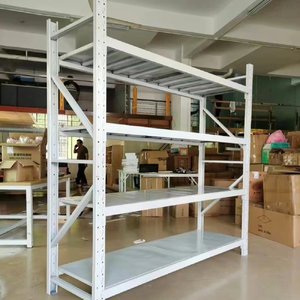
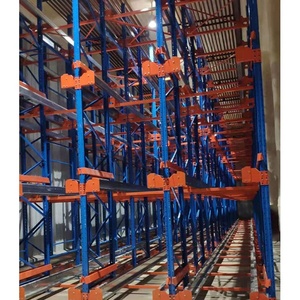
Executive Overview: The Strategic Paradigm of Chinese Pallet Racking Sourcing
In modern global supply chain logistics, warehouse storage density, operational safety, and structural longevity form the baseline of material handling efficiency. As multinational enterprise logistics hubs, 3PL integrators, and manufacturing facilities expand rapidly across North America, Europe, Australia, and Latin America, selecting the right manufacturing and exporting partner in China has evolved into a strategic engineering decision. China's industrial steel sector produces over half of the world's structural cold-formed steel profiles, establishing Chinese racking manufacturers at the absolute forefront of advanced automation, high-yield material fabrication, and cost-optimized warehouse solutions.
This technical white paper explores the critical engineering parameters, metallurgical integrity, manufacturing quality controls, global compliance frameworks, and future technology procurement trajectories that procurement directors, facility engineers, and warehouse operations managers must evaluate when sourcing industrial pallet racking systems from premier Chinese exporters.
Technical Information Gain Insight: Structural rack failure in high-bay logistics centers is rarely caused by uniform over-weight loading; 87% of catastrophic rack failures stem from uncalculated dynamic forklift impact combined with poor weld fatigue resistance and deficient floor plate anchoring. Tier-1 Chinese manufacturers utilize Finite Element Analysis (FEA) to model combined buckling mode shapes and localized axial stress under both static and seismic conditions.
Structural Metallurgy, Engineering Standards & Quality Control
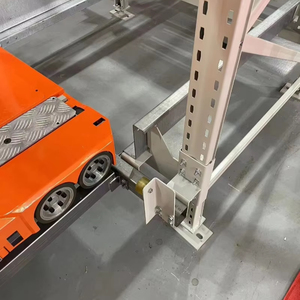
The structural stability of heavy-duty industrial selective racking, drive-in systems, double-deep structures, and shuttle-based ASRS modules relies fundamentally on cold-formed carbon steel chemistry, roll-forming tolerance, and beam connector geometry. High-volume procurement requires strict verification of material grades and quality assurance protocols:
High-Yield Steel Grades
Leading Chinese exporters utilize mill-certified Q235B and high-tensile Q355B (equivalent to ASTM A572 Grade 50 or European S355JR). Higher yield strength allows optimized structural cross-sections, minimizing dead weight while supporting up to 4.5 metric tons per beam level.
Continuous Roll-Forming
Precision multi-pass roll-forming lines guarantee pitch accuracy down to ±0.5mm across 12-meter upright columns. Automatic continuous punching ensures perfect alignment for teardrop or omega-profile connector hooks, eliminating installation binding.
Advanced Surface Coating
Pre-treatment includes automated shot-blasting, multi-stage chemical degreasing, and electrostatic thermosetting powder coating (60–80 microns thick). Optional hot-dip galvanizing provides robust anti-corrosion protection for cold storage (-30°C) and outdoor operations.
Comparative Matrix: Industrial Racking Systems vs Operational Workflows
Selecting the optimal warehouse racking technology requires balancing storage density, pallet accessibility (selectivity), throughput speed, and capital expenditure (CapEx). The structural comparison table below provides a benchmarking reference for warehouse layout design:
| Racking Technology | Storage Density | Selectivity | Pallet Access Speed | Seismic Rating | Primary Industry Application |
|---|---|---|---|---|---|
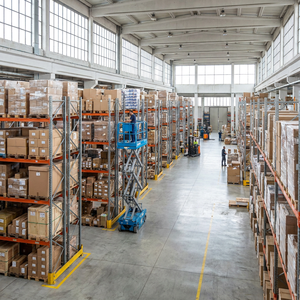
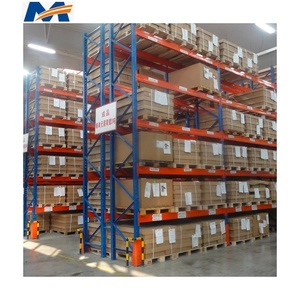
| Selective Pallet Racking | Medium (40-50%) | 100% Direct Access | High (Manual / Reach Truck) | High (Custom Baseplate) | E-Commerce, FMCG, 3PL Warehousing |
| Double-Deep Selective | High (55-65%) | 50% Direct Access | Medium (PANTOGRAPH Truck) | Moderate to High | Cold Storage, Bulk Goods Staging |
| Drive-In / Drive-Thru | Very High (75-85%) | Low (LIFO / FIFO) | Low-Medium (Forklift Enters) | Requires Top/Back Bracing | Uniform Heavy Items, Beverage Batching |
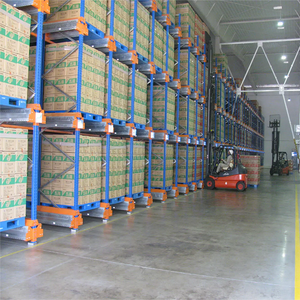
| 2D Radio Shuttle System | Ultra-High (80-90%) | Medium-High (Lane Level) | Fast (Automated Shuttle) | High (Rigid Channel Frame) | Food Processing, Pharmaceuticals |
| 4-Way Radio Shuttle ASRS | Maximum (>90%) | High (WMS/WCS Controlled) | Ultra-Fast (3D Matrix Movement) | Maximum (Integrated ASRS) | Smart Logistics Parks, Automated Factories |
Future Procurement Trends in Warehouse Racking & Automation (2025–2030)
The global material handling industry is undergoing a structural shift driven by rising labor costs, expanding land acquisition prices, and strict corporate ESG (Environmental, Social, and Governance) targets. When sourcing racking systems from Chinese manufacturers, procurement leaders are shifting focus from standalone static steel structures to integrated dynamic storage ecosystems.
1. Rapid Convergence Toward 4-Way Shuttle ASRS
Traditional static pallet racks are increasingly upgraded into 4-Way Intelligent Radio Shuttle ASRS matrix systems. Chinese suppliers are delivering turnkey solutions combining structural steel frames with autonomous shuttles, vertical elevators, and Warehouse Control System (WCS) software, achieving up to 3x vertical cubic space utilization compared to conventional floor stacking.
2. Decarbonized Green Steel & Eco-Coated Profiles
Under international carbon footprint reporting regulations (such as the EU CBAM), global buyers are requesting transparency regarding raw material steel manufacturing emissions. Premier Chinese manufacturers are integrating recycled green-steel billets and zero-VOC (Volatile Organic Compound) powder coating lines to reduce Scope 3 upstream supply chain carbon intensity.
3. Modular Engineering & Digital Twin CAD Modeling
Modern warehouse layouts demand extreme adaptability. Leading Chinese engineering teams utilize BIM (Building Information Modeling) and digital twin simulation tools to evaluate dynamic layout flows, forklift turning radii, sprinkler clearance compliance, and slab loading limits prior to manufacturing, eliminating costly field rework.
Racking Product Engineering & Structural Development Trends
Engineering design in heavy-duty warehousing is moving beyond basic weight support. Development trends focus on safety factors, dynamic load resilience, and installation efficiency:
Optimized Column Profiles & Omega Section Geometry: Advanced cold-roll forming tooling now enables 11-fold to 13-fold profile bending shapes. Additional ribs along the column web significantly increase structural section modulus ($Z_x$) and torsional rigidity ($J$), allowing thinner material gauges to carry higher axial loads safely without column twisting.
High-Performance Connector Hooks & Lock Mechanisms: Beam-to-column connections are the critical shear point in any pallet rack. Advanced connector design incorporates 3 to 5 heavy-duty forged hooks with automatic self-locking safety pins (bright orange zinc coated). This design prevents accidental beam dislodgement caused by upward forklift driver errors during rapid pallet extraction.
Zinc-Aluminum-Magnesium (ZAM) Coating Innovation: For cold storage, chemical processing plants, and highly humid coastal distribution environments, hot-dip galvanized steel is increasingly complemented by Zinc-Aluminum-Magnesium (ZAM) alloy coatings. ZAM provides self-healing cut-edge corrosion protection up to 5 times superior to standard galvanizing, preventing rust at punched hole edges over a 25-year service life.
Enterprise Competitiveness & Global Sourcing Value Proposition
Partnering directly with established Chinese warehouse racking manufacturers and exporters provides global procurement managers with distinct technical, operational, and commercial advantages:
End-to-End OEM / ODM Customization
Full manufacturing versatility from standard teardrop frames for the Americas to heavy structural beam sections for European and Australian standards (FEM 10.2.02, RMI, AS4084-2012). Full customized fabrication per client CAD specifications.
Rigorous Quality Certification Architecture
Manufacturing facilities hold ISO9001, ISO14001, and ISO45001 certifications. Products undergo third-party load capacity testing and weld non-destructive testing (NDT) certified by SGS, TÜV Rheinland, or Bureau Veritas.
Optimized Shipping Container Logistics
In-house export packaging teams optimize bundle stacking inside 40ft High Cube (40HC) ocean containers. Steel components are strapped with plastic protective film, edge protectors, and wooden cradles to eliminate sea transit moisture damage.
Procurement FAQ: Technical & Logistics Guidance for Global Buyers
Engineering teams perform site-specific structural dynamic calculations based on localized seismic acceleration coefficients ($S_s$ and $S_1$) referencing local building codes (such as US IBC / ASCE 7, Eurocode 8, or CFE Mexico). Baseplate thickness is enlarged, anchor bolt diameters are upsized (e.g., M16 x 140mm chemical anchors), and specialized horizontal and diagonal seismic frame bracing profiles are added to absorb transverse ground shear forces.
Standard manufacturing lead time for containerized orders (typically 2 to 10 40HC containers) ranges between 15 to 25 business days following CAD drawing approval and deposit confirmation. For custom automated ASRS projects involving 4-way shuttles or specialized electrical controls, production lead time varies from 35 to 50 days, inclusive of pre-shipment factory testing and trial assembly.
Every export shipment includes comprehensive technical documentation packages: Stamped CAD installation elevation drawings, structural calculation books signed by structural engineers, mill test certificates (MTC) verifying steel chemistry and tensile yield, powder coating thickness test reports, load capacity safety signage plates for aisle display, and step-by-step installation manuals.
Upright frame depths and beam lengths are customized to match target pallet specifications: 1000mm x 1200mm (UK/Asia standard), 1200mm x 800mm (Euro Pallet EPAL 1), or 40" x 48" (GMA North American standard). Upright frame depth is typically engineered 200mm shorter than the pallet depth (e.g., 1000mm depth for a 1200mm pallet) to allow a required 100mm front and rear pallet overhang for safe beam seating.
To prevent expensive forklift impact damage, engineering specifications should include floor-anchored steel column corner guards, heavy-duty rubber-filled polymer upright guards, end-of-row barrier framing, wire mesh back-stop safety drop decking, and heavy-tube pallet back-stops. Investing roughly 3-5% of project budget into safety guards reduces long-term component replacement downtime by over 70%.
Optimize Your Warehouse Footprint Today
Consult with our senior structural engineers to receive a complimentary 2D/3D CAD warehouse layout design, structural load calculation sheet, and direct factory pricing quote.