Featured Industrial Pallet Racks & Storage Systems
Precision-engineered heavy-duty steel racks manufactured with high-tensile Q235B/Q355B structural steel, conforming to ANSI MH16.1, FEM 10.2.02, and ISO 9001 standards.
Strategic Procurement Guide: Sourcing Heavy-Duty Industrial Racking Systems from China Suppliers
An in-depth analysis of metallurgical specifications, structural design compliance, automated logistics integration, and total cost of ownership (TCO) optimization for global supply chain directors.
1. Global Supply Chain Dynamics & The Value Proposition of Chinese Racking Manufacturers
In modern warehousing, logistics infrastructure is no longer viewed merely as static storage furniture, but as a critical lever for vertical space optimization, throughput efficiency, and risk-managed capital expenditure. Global logistics providers, 3PL aggregators, and manufacturing conglomerates face mounting pressure from real estate cost expansion. Building horizontal warehouse footprint is increasingly unviable; maximizing vertical clear height is imperative.
China's industrial storage racking manufacturing sector has undergone a massive technological shift over the past decade. Evolving from basic fabrication workshops into automated, high-precision engineering hubs, leading Chinese rack suppliers combine raw material sourcing economies (utilizing premium steel mills such as Baosteel and Shougang) with advanced robotic roll-forming and laser welding infrastructure. This enables global procurement teams to achieve a 30% to 45% reduction in total project capital expenditure without compromising structural integrity or safety certifications.
Scale Metallurgy Control
Direct access to certified Q235B and Q355B cold-rolled structural steel coils with verified yield strengths up to 355 MPa, ensuring strict load deflection ratios under extreme operational stresses.
Certified Structural Safety
Full structural compliance with RMI (Rack Manufacturers Institute), ANSI MH16.1, and European FEM 10.2.02 guidelines, verified through Finite Element Analysis (FEA) dynamic simulations.
Turnkey OEM/ODM Design
From preliminary 3D BIM/CAD architectural layout modeling to custom frame geometry, beam connector design, and anti-seismic anchoring configurations tailored to specific site codes.
2. Structural Classification & System Selection Taxonomy
Selecting the correct pallet rack architecture requires a detailed technical evaluation of SKU density, pallet turnover velocity, material handling equipment (MHE) clearance, and warehouse floor slab specifications. Below is an engineering breakdown of the key industrial storage systems produced by China's top tier suppliers:
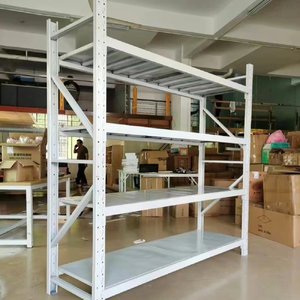
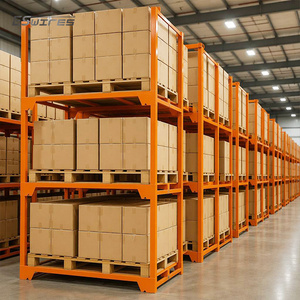
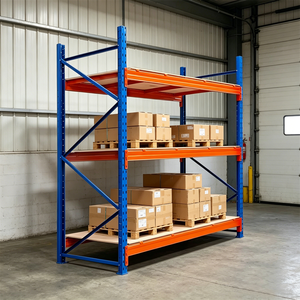
- Selective Pallet Racking: The standard for high-SKU diversity and 100% direct selectivity. Available in both teardrop roll-formed configurations and heavy structural channel steel for high-impact environments. Beams feature 3 or 4-hook connector claws with automatic safety locks.
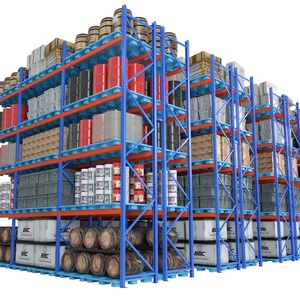
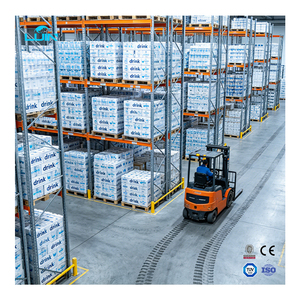
- Drive-In & Drive-Thru Systems: Engineered for high-density storage of homogeneous goods under LIFO (Last-In, First-Out) or FIFO management. Eliminates operating aisles by allowing forklifts to drive directly into structural storage bays, increasing storage volume by up to 75%.
- Very Narrow Aisle (VNA) Racking: High-bay structural solution utilizing specialized turret trucks or wire-guided MHE. Aisle widths are reduced to 1.5m-1.8m, leveraging vertical warehouse height up to 15 meters for maximum cubic space utilization.
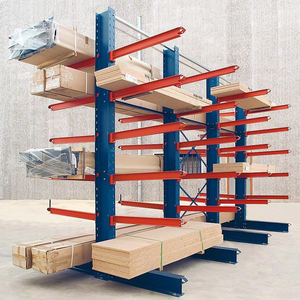
- Heavy-Duty Cantilever Racks: Designed specifically for non-palletized, long, or irregular structural loads (steel pipes, timber, aluminum profiles). Available in roll-out automated arm configurations or rigid structural upright towers with adjustable arm pitch.
- Portable Nestainer & Stacking Frames: Flexible, nestable modular steel frames ideal for seasonal bulk inventory or cold storage facilities where fixed rack structures are impractical.
Industrial Racking Structural & Performance Matrix
Comparative engineering metrics to assist warehouse planners, structural engineers, and B2B procurement managers in selecting the optimal rack architecture.
| Racking System Type | Steel Grade Standard | Storage Density | SKU Selectivity | Max Bay Capacity (kg) | Primary MHE Required | Ideal Industry Application |
|---|---|---|---|---|---|---|
| Selective Heavy-Duty Rack | Q235B / Q355B | Medium (60%) | 100% Direct Access | Up to 25,000 kg | Standard Counterbalance / Reach Truck | 3PL Logistics, Retail, General Warehousing |
| Drive-In / Drive-Thru Rack | Q355B Cold Rolled | Very High (85%) | Low (LIFO / FIFO) | Up to 18,000 kg | Reach Truck / Specialized Narrow Forklift | Cold Storage, Beverage, FMCG Bulk Units |
| Very Narrow Aisle (VNA) | Q355B High Tensile | High (75%) | 100% Direct Access | Up to 20,000 kg | VNA Turret Truck / Articulated Forklift | High-Bay Distribution Centers, E-Commerce |
| Roll-Out Cantilever Rack | Q235B / Structural Channel | Medium (65%) | High (Specific Bar/Pipe) | Up to 5,000 kg/Arm | Overhead Crane / Side Loader Forklift | Heavy Machinery, Steel Pipes, Timber Yards |
| Nestainer / Portable Stack | Q235B Seamless Tube | Flexible High | Block Stacked | Up to 1,500 kg/Frame | Standard Forklift | Chemicals, Food Processing, Seasonal Cold Store |
Future Procurement Trends in Industrial Storage Racking
Key technological, structural, and environmental developments shaping global B2B procurement decisions over the next decade.
1. Automated Storage & Retrieval System (ASRS) Integration
Modern rack structures are transitioning from static storage frames into high-precision structural skeletons for automated stacker cranes, Autonomous Mobile Robots (AMRs), and pallet shuttles. Tolerances in roll-forming and beam deflection must meet millimeter-level precision (deflection limits restricted to L/200 or L/240 under full load) to guarantee smooth sensor-guided robotic operation.
2. Advanced Seismic & Dynamic Load Engineering
Global logistics networks are expanding into seismically active regions. Modern Chinese suppliers deploy advanced finite element analysis (FEA) software to calculate base plate surface areas, anchor bolt shear strength, frame bracing geometry, and post-yield ductility factors tailored specifically to seismic zone coefficients (such as CFE standards in Latin America or US IBC codes).
3. Environmental Pretreatment & Eco-Friendly Powder Coating
Top suppliers have eliminated volatile organic compounds (VOCs) and hazardous chemical baths, adopting fully enclosed automated 9-stage phosphating and thermosetting electrostatic powder coating lines. This delivers salt spray resistance exceeding 500 hours while adhering to strict international environmental compliance audits.
4. Full Lifecycle Traceability & Digital BIM Modeling
B2B procurement now demands complete digital documentation. From raw material heat numbers and steel mill inspection certificates (MTC) to 3D Building Information Modeling (BIM) files, warehouse designers can seamlessly integrate structural racking models directly into digital twin facility layouts.
Why Partner with China's Premier Racking Manufacturers?
Understanding the systemic engineering capabilities, production infrastructure, and quality assurance framework that set leading suppliers apart in international procurement.
Rigorous Quality Control & Engineering Verification
Leading manufacturers operate end-to-end quality control ecosystems. Every production batch of upright columns, load beams, and bracing members undergoes mechanical destructive testing, tensile yield strength verification, and weld-seam ultrasonic flaw detection.
- Continuous Cold Roll-Forming Lines: Multi-station precision rolling mills guarantee consistent profile thickness, crisp punch hole pitch, and minimal residual stress along upright profiles.
- Robotic Welding Cells: Fully automated Panasonic and ABB welding workstations ensure uniform weld penetration on beam connector brackets according to AWS D1.1 structural welding standards.
- Comprehensive Load Safety Signage: Every delivered racking system includes engraved NOM-006-STPS and ANSI compliant load capacity signage, detailing max load per beam level and maximum bay load capacities.
- Container Shipping Optimization: Expert export packaging using custom steel cradles, protective plastic wrap, and strategic bundle sizing ensures zero damage during transoceanic transit while maximizing container space fill-rates.
Standard Engineering Parameters
Frequently Asked Questions for Sourcing Industrial Racking
Clear, technical answers to common queries raised by international procurement managers, structural consultants, and warehouse operations specialists.
Optimize Your Warehouse Storage Capacity Today
Submit your floor plan dimensions, clear height specifications, and load requirements. Our application engineers will return a complete 2D/3D CAD layout design and competitive factory-direct proposal within 24 hours.