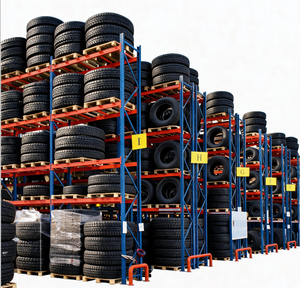
Custom Heavy Duty Industrial Pallet Racking Load Capacity Warehouse Pallet Shelving Q235 Steel Beam Type Adjustable Powder Rack
Capacity: Up to 4,500 kg/level | Pitch: 75mm Adjustable | Material: Q235 Steel
Explore our export-grade industrial shelving units built from premium Q235B & Q355B cold-rolled structural steel, optimized for heavy-duty logistics and global compliance.
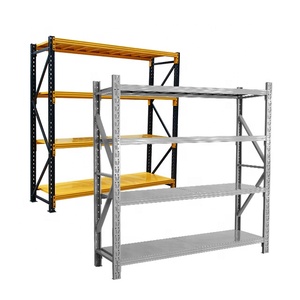
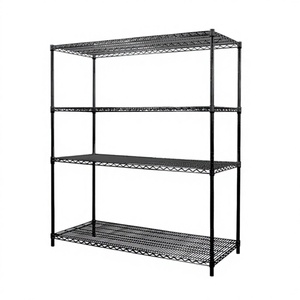
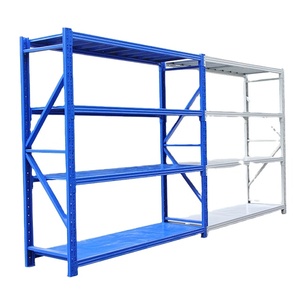
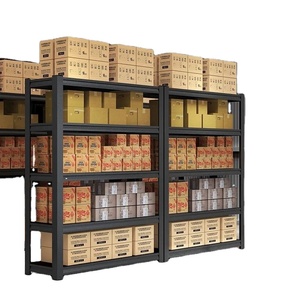
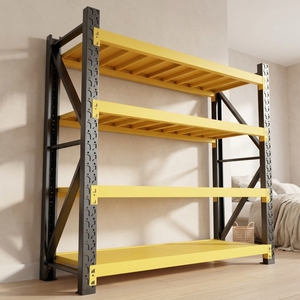
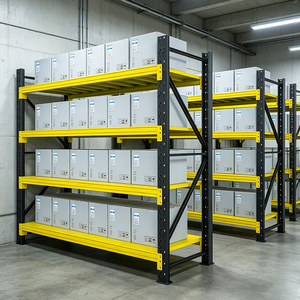
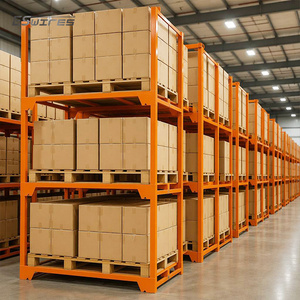
In modern industrial logistics, supply chain efficiency relies heavily on structural integrity, cubic space utilization, and seismic resilience. As global enterprises ramp up automated distribution centers (ADCs), 3PL logistics hubs, and nearshoring manufacturing plants, selecting a reliable China industrial shelving manufacturer has transitioned from a routine procurement task to a critical engineering investment.
China's industrial racking ecosystem manufactures over 60% of the world's heavy-duty pallet racking and longspan storage systems. However, engineering capabilities, raw material selection, dynamic load testing protocols, and surface treatment quality vary significantly across suppliers. This benchmark document outlines key structural parameters, steel chemistry standards, compliance frameworks (such as ANSI MH16.1, FEM 10.2.02, and NOM-006-STPS), and technological trajectories to guide procurement executives and warehouse engineers in selecting top-tier Chinese manufacturing partners.
Technical Insight: Quality industrial shelving goes beyond static load metrics. High-density storage systems must withstand dynamic fork-truck impacts, cyclic loading stress, seismic shear forces, and thermal fluctuations without structural beam deflection exceeding the standard safety threshold of L/200 or L/180.
How top-tier Chinese racking factories deliver engineering superiority through material science and automated manufacturing.
Utilizing high-tensile, prime cold-rolled steel coils certified by Baosteel and Shougang. Yield strengths of 235 MPa to 355 MPa guarantee optimal strength-to-weight ratios under maximum load conditions.
Custom structural calculations incorporating dynamic seismic coefficients (CFE seismic manual & RMI design specifications). Finite Element Analysis (FEA) ensures baseplate and upright safety across seismic zones.
Precision-controlled robotic welding stations provide 100% continuous weld penetration on beam connectors and baseplates, preventing joint fatigue and micro-cracking during heavy usage cycles.
12-stage pre-treatment wash coupled with thermosetting epoxy-polyester powder coating (60-80 μm thickness) delivers 500+ hours of salt spray corrosion resistance for humid and cold-storage facilities.
Turnkey space optimization services: customized 2D CAD floorplans, 3D BIM integration, rack capacity load plates, and step-by-step installation drawings delivered within 3-5 business days.
Complete documentation packages to pass strict safety inspections, including mill test certificates (MTC), ISO 9001 quality audits, NOM-006-STPS material storage compliance, and OSHA standard alignment.
The industrial storage industry is undergoing a structural shift driven by automation, sustainability requirements, and regional supply chain nearshoring. Leading Chinese manufacturers are investing heavily in Next-Gen structural designs to meet evolving logistics demands:
Traditional static storage is rapidly integrating with high-speed automated shuttle systems. Future industrial shelving designs demand tighter manufacturing tolerances (±0.5 mm profile straightness) to allow seamless navigation of four-way radio shuttles and AGVs (Automated Guided Vehicles). Frame profiles are engineered with integrated guide rails and sensor cutouts to support high-bay automated warehouses up to 40 meters high.
Through advanced cold-roll section optimization and micro-alloyed steel compositions, manufacturers are lowering the overall steel tare weight while boosting frame load limits. This innovation slashes global shipping container freight costs and carbon footprints without sacrificing load-bearing capacity.
Driven by strict global ESG (Environmental, Social, and Governance) policies, top manufacturers in China are adopting recycled steel billets produced via Electric Arc Furnaces (EAF) and transitioning to 100% volatile organic compound (VOC)-free electrostatic powder coatings. Closed-loop water treatment systems during phosphating pre-wash processes are now standard among top-tier export facilities.
Smart industrial shelving now features integrated strain gauges and tilt sensors. These IoT modules monitor beam deflection, load distribution anomalies, and accidental forklift collisions in real time, alerting safety managers before catastrophic rack collapses occur.
Selecting the optimal shelving architecture requires matching pallet dimensions, SKU diversity, forklift turn radiuses, and throughput velocity. Below is an engineering comparison matrix for decision-makers:
| Racking System Type | Load Capacity (Per Level) | Space Utilization | SKU Selectivity | Handling Equipment Requirement | Best Industry Application |
|---|---|---|---|---|---|
| Selective Pallet Racking | 1,000 kg – 4,500 kg | 40% – 50% | 100% Direct Access | Standard Counterbalance / Reach Truck | 3PL Logistics, Retail Distribution, FMCG Hubs |
| Heavy Duty Longspan Shelving | 300 kg – 1,000 kg | 60% – 70% | 100% Manual Access | Manual Picking / Order Pickers | E-commerce Spare Parts, Auto Components |
| Drive-In / Drive-Thru Racking | 1,000 kg – 2,000 kg | 75% – 85% | LIFO / FIFO Bulk Access | Standard Reach Truck with Overhead Guard | Cold Storage, Beverage & Uniform SKU Stock |
| Cantilever Storage Racks | 500 kg – 3,000 kg / Arm | 60% – 75% | Direct Column Access | Side Loader / Specialized Crane | Pipes, Steel Bars, Timber, Aluminum Extrusions |
| Push-Back & Gravity Flow Racks | 1,000 kg – 2,500 kg | 70% – 80% | LIFO (2 to 6 Pallets Deep) | Standard Forklift Truck | High-Density Buffers, Automotive Assembly Lines |
Detailed answers to key technical questions faced by international procurement managers and warehouse engineers.
Leading Chinese manufacturers primarily use cold-rolled steel conforming to Chinese National Standard GB/T 700 grade Q235B (yield strength ≥ 235 MPa, equivalent to ASTM A36 or EN10025 S235JR) for standard racking. For heavy-duty high-bay applications, high-strength Q355B/Q460 steel (equivalent to ASTM A572 Grade 50) is used to maintain structural stability while reducing overall steel gauge thickness.
Top-tier exporters employ dedicated structural engineering teams certified in international design practices. Structural frames undergo physical destructive load testing (stub column testing, beam-to-column connector stiffness tests) in ISO 17025 accredited labs. Third-party inspection agencies such as SGS, TÜV Rheinland, and Bureau Veritas perform audits to certify compliance with RMI ANSI MH16.1, FEM 10.2.02, and EN 15512 safety codes.
To generate an accurate engineering proposal, buyers should provide: (1) Facility floorplan with clear height measurements under sprinkler heads, (2) Slab loading capacity (kN/m²) and concrete thickness, (3) Pallet specifications (Width x Depth x Height inclusive of cargo) and maximum weight per pallet, (4) Forklift model, turning radius, and maximum lift height, and (5) Local seismic zone requirements.
Upright frames and beams are bundled using high-tensile steel strapping over heavy-duty corrugated corner protectors. Small components (baseplates, safety pins, row spacers, bolts) are packed in reinforced wooden crates or heavy-gauge steel cages. All steel components are wrapped in moisture-proof VCI plastic film to prevent oxidation during maritime transit.
When installed according to manufacturer guidelines and operated under rated load limits, structural steel industrial racking systems offer a service life exceeding 15 to 20 years. Leading manufacturers provide a 5-year to 10-year structural warranty covering material defects and weld integrity.
Consult with our engineering team today to receive a comprehensive CAD warehouse layout design, structural safety calculation sheet, and direct factory pricing within 24 hours.
Send an Inquiry