Featured Heavy-Duty Industrial Racking Products
Explore our top-tier heavy-duty pallet racking systems, cantilever pipes storage frames, stainless steel shelving, and narrow aisle selective racking certified for international warehouse logistics.
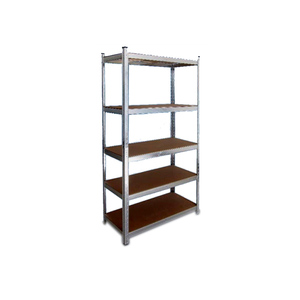
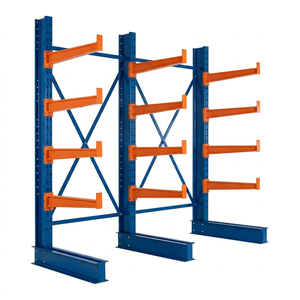
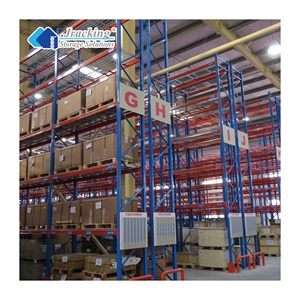
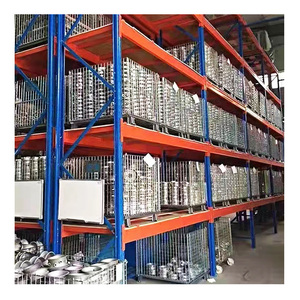
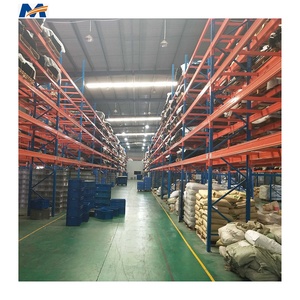
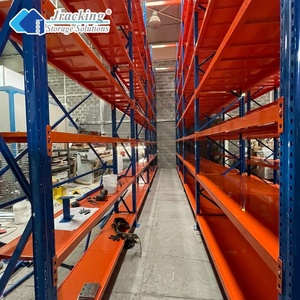
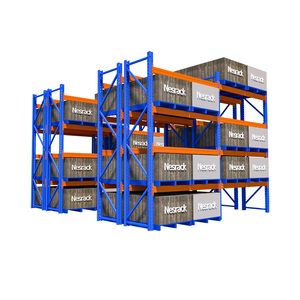
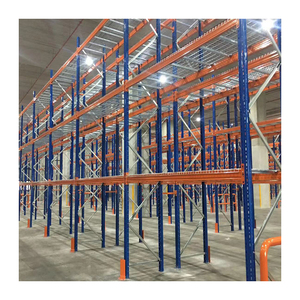
The Global Industrial Racking Landscape: Sourcing from Top Manufacturers in China
As global supply chains shift toward nearshoring, automated fulfillment, and vertical space optimization, modern warehouse logistics demand robust, seismic-engineered, and high-density industrial storage racking systems. Sourcing heavy-duty industrial racking from premier Chinese manufacturers has become a strategic priority for logistics operators, 3PL providers, industrial facilities, and e-commerce distribution networks across Europe, the Americas, and Asia-Pacific.
China's industrial racking ecosystem represents the apex of structural steel engineering, precision cold roll-forming technology, and automated electrostatic powder coating. Leading Chinese manufacturers operate advanced production lines utilizing certified Q235B and Q355B structural steel, complying strictly with international engineering standards such as European FEM 10.2.02, American ANSI/RMI MH16.1, and Australian AS4084-2012 specifications. This whitepaper serves as an authoritative procurement guide, analyzing technological developments, engineering parameters, future procurement dynamics, and structural safety requirements when evaluating high-performance racking suppliers.
Key Strategic Takeaway: Tier-1 Chinese industrial racking manufacturers provide up to 40% cost efficiency over domestic Western suppliers while maintaining identical or superior structural integrity, seismic safety coefficients, and compliance documentation.
Structural Integrity & Steel Metallurgy Standards
The core structural capability of an industrial racking frame relies on the quality of raw coil steel and the profile section modulus of upright columns and load beams. Leading manufacturers work directly with steel conglomerates such as Baosteel and Shougang to source high-yield cold-rolled steel coils. Upright frames are cold-formed through multi-stage precision rolling mills to create continuous 10-fold to 12-fold rib profiles, significantly enhancing column resistance to torsional strain and buckling under heavy payload distribution.
- Q235B Grade Steel: Standard grade utilized for medium to heavy-duty beam loads up to 2,500 kg per level. Excellent ductility and weldability for standard warehouse environments.
- Q355B Grade Steel: High-tensile alloy steel specified for tall upright frames exceeding 8 meters in clear height, heavy-duty drive-in systems, and high-density ASRS (Automated Storage and Retrieval Systems) requiring higher load capacity with reduced steel gauge weight.
- Anti-Corrosion Surface Treatments: Dual-layer electrostatic epoxy powder coating applied at 60–90 microns thickness following a 7-stage chemical pretreatment process (phosphating and degreasing). Hot-dip galvanizing (HDG) to BS EN ISO 1461 standards is offered for cold storage freezers and aggressive outdoor environments.
Engineering Matrix: Industrial Racking Systems Comparison
Selecting the optimal racking system requires balancing storage density (cubic space utilization) against SKU selectivity (direct forklift accessibility). Below is a comprehensive engineering breakdown comparing core warehouse storage modalities manufactured by China's leading suppliers.
| Racking System Type | Space Utilization % | SKU Selectivity | Typical Beam Load Capacity | Ideal Application / Industry |
|---|---|---|---|---|
| Selective Pallet Racking | 40% - 50% | 100% Direct Access | 1,000 kg – 4,500 kg / level | General 3PL fulfillment, high-SKU distribution, e-commerce centers |
| Narrow Aisle (VNA) Racking | 65% - 75% | 100% Direct Access | 1,000 kg – 3,500 kg / level | High bay warehouses, pharmaceuticals, urban logistics hubs |
| Double-Deep Pallet Rack | 55% - 65% | 50% Immediate Access | 1,500 kg – 3,000 kg / level | Cold storage freezers, batch manufacturing, food & beverage |
| Drive-In / Drive-Through Rack | 70% - 85% | Low (LIFO / FIFO) | 1,000 kg – 1,800 kg / pallet | Homogeneous bulk inventory, seasonal products, FMCG warehouse |
| Double-Sided Cantilever Rack | Custom Density | Direct Arm Access | 500 kg – 3,000 kg / arm | Steel pipes, PVC tubing, aluminum extrusions, timber, sheet metal |
| ASRS & Radio Shuttle Rack | 85% - 95% | Automated System Control | 1,000 kg – 2,000 kg / pallet | Smart industry 4.0 warehouses, automated cold logistics centers |
Detailed Product Architecture Breakdown
1. Heavy-Duty Selective Pallet Racking Systems
Selective pallet racking represents the industry workhorse for global warehousing. Utilizing dynamic teardrop or European box-beam connectors, these systems feature step beams or box beams attached to upright frames with high-strength 3-claw or 4-claw connector hooks. Beam locking pins prevent accidental displacement during forklift loading. Selective racks accommodate standard Euro-pallets (800x1200mm) and Industrial ISO pallets (1000x1200mm or 48x48 inches) with ease.
2. Heavy-Duty Double-Sided Cantilever Racking
Designed specifically for long, bulky, or awkward loads, cantilever racks eliminate front column obstructions. Heavy-duty central columns constructed from structural H-beams (or cold-formed C-profiles) support bolted or pinned adjustable cantilever arms. Integrated wire decks, arm stoppers, and custom arm pitch adjustments enable safe storage of steel pipes, timber, plastic tubing, and copper extrusions.
3. Stainless Steel & Custom Powder Coated Storage Shelves
For specialized cleanroom, chemical, pharmaceutical, and high-hygiene food processing facilities, stainless steel (AISI 304 / 316) or custom powder-coated multi-tier boltless stacking shelves provide corrosion resistance, non-magnetic hygiene surfaces, and seamless washable shelf decks.
Future Procurement & Technology Trends in Industrial Racking (2025–2035)
The global material handling industry is undergoing a structural paradigm shift driven by warehouse automation, robotic fleet integration, stringent environmental regulations, and nearshoring logistics corridors. Sourcing managers and project directors must factor in the following emerging macro-trends when selecting Chinese racking manufacturing partners:
1. Deep Integration with Autonomous Mobile Robots (AMRs) & AGVs
Traditional pallet racking was engineered primarily for human-operated counterbalanced forklifts and reach trucks. Modern racking specifications increasingly demand sub-millimeter tolerances to accommodate AGV automated guided vehicles, autonomous forklift fleets, and AMR deck lifters. Chinese manufacturers are deploying automated laser welding cells and CNC punching platforms to guarantee frame straightness tolerances within ±0.5 mm over a 12-meter elevation, preventing robot sensor misalignments during high-speed pallet extraction.
2. Rise of Automated Radio Shuttle & Dense Storage Automation
Land acquisition costs near major transportation hubs are escalating globally. Consequently, warehouses are transitioning from traditional selective racks to pallet radio shuttle systems and 4-way shuttle ASRS structures. Procurement teams are specifying racking systems with high-rigidity guide rails, integrated sensor targets, and low-friction galvanized channel profiles engineered to support robotic shuttle carriages carrying payloads up to 1,500 kg at velocities up to 1.5 m/s.
3. Carbon Neutrality & Green Surface Coating Technologies
Environmental standards such as the European Union's Carbon Border Adjustment Mechanism (CBAM) are compelling enterprise buyers to inspect the carbon intensity of structural steel products. Leading Chinese racking suppliers are upgrading factory infrastructure to incorporate solar-powered manufacturing plants, zero-VOC powder coatings, and closed-loop water recovery systems for metal cleaning lines. Requesting factory environmental compliance certificates (ISO 14001) is becoming standard practice in global RFQs.
4. Seismic Design Engineering for High-Risk Zones
Modern global logistics hubs in regions such as Mexico, the Pacific Rim, Southern Europe, and the Western United States require rigorous seismic design compliance. Chinese suppliers now utilize finite element analysis (FEA) software to simulate seismic wave acceleration, dynamic base shear forces, and frame ductility under earthquake conditions. Base plates are custom-engineered with enlarged anchor bolt hole patterns and heavy-duty floor shims to meet local building codes.
Enterprise Advantages: Why Partner with Top-Tier Chinese OEM Suppliers
Partnering with an established Chinese industrial racking manufacturer delivers measurable operational and financial benefits for international enterprise buyers, supply chain developers, and regional distributors.
End-to-End OEM & ODM Manufacturing Capabilities
Leading Chinese factory facilities encompass over 50,000 square meters of specialized manufacturing space equipped with automatic continuous cold roll-forming lines, automated steel beam welding robots, CNC plate laser cutters, and twin 200-meter automatic powder coating tunnels. Whether requiring custom beam lengths, specialized frame colors (RAL spectrum matching), or custom punched hole patterns, top suppliers deliver complete OEM/ODM customization.
Rigorous Quality Assurance & Testing Protocols
Quality reliability is guaranteed through standardized quality management systems (ISO 9001:2015). Pre-shipment verification protocols include:
- Steel Raw Material Analysis: Spectrographic testing and mill certificate verification for yield strength ($f_y \ge 235 \text{ MPa} / 355 \text{ MPa}$) and ultimate tensile strength.
- Weld Integrity Testing: Ultrasonic non-destructive testing (NDT) on structural beam connectors and heavy duty base plate joints.
- Beam Deflection Testing: Full-scale destructive load testing to verify maximum beam deflection limits ($\le L/200$) under maximum rated payload.
- Coating Adhesion & Salt Spray Tests: Cross-hatch adhesion testing and 500-hour neutral salt spray (ASTM B117) validation for humidity and corrosion resistance.
Frequently Asked Questions (FAQ)
Comprehensive expert answers regarding technical specifications, procurement procedures, engineering compliance, and international logistics for industrial storage racking.
Which international structural codes do Chinese racking manufacturers comply with?
Top Chinese industrial racking manufacturers engineer their systems to comply fully with major international standards. These include the European FEM 10.2.02 and EN 15512 specifications, the American RMI (Rack Manufacturers Institute) ANSI MH16.1 design standard, and Australian AS4084-2012 standards. Mill test certificates, FEA structural reports, and load capacity plates are provided for every project to ensure seamless local safety audit compliance.
How do I determine whether Q235B or Q355B steel is needed for my warehouse racking?
Q235B steel is the standard industry recommendation for light to medium-heavy selective racking applications where individual beam level loads do not exceed 2,500 kg and upright heights remain under 8 meters. Q355B high-tensile steel is recommended for high-bay warehouses, automated ASRS systems, drive-in systems subject to dynamic fork truck contact, and projects located in active seismic zones where higher yield strength ($355 \text{ MPa}$) provides enhanced structural stability without excessive weight.
What is the typical lead time for custom heavy-duty racking orders from China?
Standard manufacturing lead time for containerized racking orders (e.g., 2 to 10 Forty-Foot High Cube containers) ranges between 15 to 25 business days following CAD drawing approval and deposit receipt. For complex multi-tier mezzanine or automated ASRS projects requiring specialized tooling and custom powder coating colors, lead times range from 30 to 45 days. Expedited production schedules can be arranged for urgent warehouse expansions.
How are industrial racking components packaged to prevent damage during sea freight transit?
Industrial racking components are packaged using ocean-safe export bundling techniques. Upright frames and beams are bundled with plastic strapping, protective corner edge guards, and thick corrugated wrapping paper. Small accessories, base plates, row spacers, and safety pins are packed in sturdy plywood crates or reinforced steel-banded cardboard boxes. Bundle dimensions are optimized specifically for 40ft HQ container loading to maximize container volume and prevent movement in transit.
Can Chinese suppliers provide free warehouse CAD layout design and structural calculations?
Yes. Tier-1 manufacturers employ in-house structural logistics engineers who provide complimentary 2D AutoCAD layout proposals and 3D conceptual renderings based on your facility layout, clear building height, slab load capability, forklift aisle requirement, and pallet profile. Detailed structural load calculation documentation can also be provided for building permit applications.
What installation support options are available for overseas projects?
Manufacturers support international installation through comprehensive step-by-step CAD installation manuals, component assembly numbering schemes, and high-definition video walkthroughs. For large-scale logistics developments or complex ASRS projects, manufacturers can dispatch experienced installation supervisors on-site to direct local labor crews and ensure structural tolerances meet project specifications.
Optimize Your Warehouse Capacity Today
Connect directly with our engineering team for custom warehouse CAD designs, structural load calculations, and competitive factory-direct pricing on heavy-duty industrial racking.
Inquire Now