0%

Choosing a Pallet Storage Racking System is not just a matter of comparing prices or counting pallet positions. The right setup must fit the building, the loads, and the way people move through the aisles. A few inches can affect forklift clearance. A heavier pallet can change the demands on a beam. Small details matter.

For honesty, the following is an illustrative line, not a verified quotation: fictional warehouse systems specialist Alex Morgan might say, “A rack works best when its capacity, layout, and daily use are planned together.” That idea is practical, but it is not a substitute for a qualified site assessment. Measure clear heights, aisle widths, floor conditions, and the dimensions of the pallets actually in use. Check how often stock turns, too. A system designed around ideal conditions may disappoint on a busy Monday.

This guide introduces 10 tips for comparing rack types, load requirements, access needs, safety features, expandability, and installation support. It also considers inspection routines and the value of clear operating procedures. The best choice is rarely the tallest rack or the densest layout. It is the system that supports real work without creating avoidable bottlenecks. There is room for uncertainty: product ranges change, and warehouse needs can shift after installation. Use these tips to ask sharper questions, then verify the final design with an experienced racking professional.
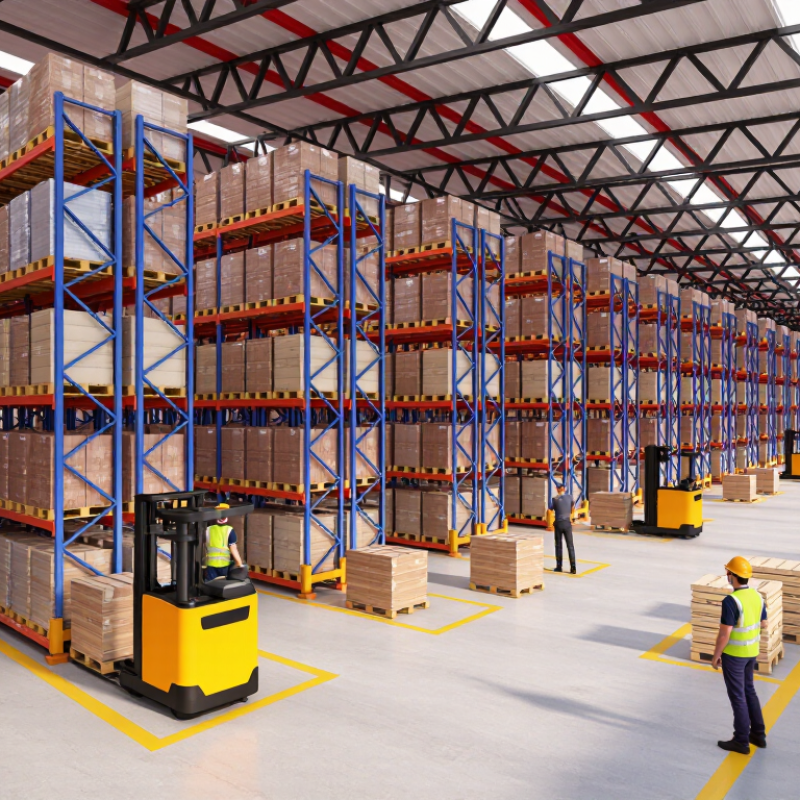
10 Tips for Choosing a Pallet Storage Racking System?

Define Storage Needs, Pallet Dimensions, and Inventory Flow

Before comparing pallet storage racking systems, define what the warehouse must hold and how often it moves. Count active pallet positions, record peak-season quantities, and note which products share storage zones. Measure loaded pallets, not just empty pallet boards. A load may overhang, lean, or sit on a different pallet size. Include its height and weight, too. Small details matter.

Then map inventory flow from receiving to dispatch. Fast-moving pallets near picking or shipping areas can reduce travel, while slower stock may fit farther away. Check whether workers need direct access to every pallet or can use a last-in, first-out arrangement for suitable goods. The right choice depends on product rotation and handling routines. Watch a busy shift, not only a quiet one.

A clean spreadsheet may miss the extra space needed for damaged packaging or temporary staging. It may also assume every pallet moves as planned. That is rarely true. Ask operators where queues form, which loads are awkward, and what changes during seasonal peaks. Their answers can reveal whether the proposed layout supports real work, rather than just the expected inventory count.

Measure Available Space, Aisle Widths, and Building Constraints

Measure the usable floor area, not just the dimensions on a building plan. Record clear height beneath beams, lights, sprinklers, and door tracks. Mark columns, dock doors, floor slopes, fire exits, and other obstructions on a scaled sketch. Measure twice. A neat plan can still mislead if it ignores equipment movement.

Tip: Set aisle widths around the actual lift truck, load size, and turning radius. Measure between rack faces, then check that the truck can turn and place a pallet without clipping uprights. OSHA’s 29 CFR 1910.176(a) requires safe clearances for mechanical handling equipment, but does not set one universal aisle width. That part is easy to overlook.

Allow space for staging and future equipment, not only rack rows. MHI and Deloitte’s 2024 Annual Industry Report found that 55% of surveyed supply-chain leaders planned to increase technology investment. If automation may be added later, check its travel paths and charging or service areas now. Building constraints can force compromises; document them before choosing a layout.

Compare Racking Types for Access, Density, and Handling Equipment

10 Tips for Choosing a Pallet Storage Racking System?
Compare Racking Types for Access, Density, and Handling Equipment

Selective racks provide direct access to each pallet, making them practical for varied SKUs and frequent picking. They need wider aisles, though. Double-deep racks store pallets farther back, but require compatible reach trucks and can slow access to rear loads. Drive-in systems increase density for uniform products, while pallet-flow racks support first-in, first-out rotation. Push-back systems suit last-in, first-out storage. Small details matter: a truck that cannot turn cleanly can erase the gains from denser storage.

Tips: Map SKU variety; count pallet positions; measure loaded pallet heights; record aisle widths; match rack depth to truck reach; check lift height; leave room for guards and sprinklers; choose FIFO or LIFO deliberately; plan replenishment routes; inspect the floor before installation. Measure first.

MHI’s 2024 Annual Industry Report found that 55% of surveyed supply-chain leaders planned to increase technology investment. That is a useful reminder to consider future handling equipment, not just today’s truck fleet. Confirm turning radius and load capacity with equipment specifications, then test the route on the warehouse floor. I would also review the plan with operators. Paper layouts can miss awkward corners.

10 Tips for Choosing a Pallet Storage Racking System? - Compare Racking Types for Access, Density, and Handling Equipment

Tip Racking Type Best Fit Pallet Access Storage Density Typical Handling Equipment Main Trade-Off
1. Start with SKU variety and selectivity. Selective pallet racking Many SKUs with frequent, direct access to individual pallets. High; each pallet position is generally accessible from an aisle. Low to medium, because aisles are needed between rack rows. Counterbalance or reach trucks, depending on aisle width and lift height. Excellent selectivity, but aisle space can limit pallet capacity.
2. Check whether deeper storage suits your inventory. Double-deep racking A moderate number of SKUs with multiple pallets per SKU. Medium; the rear pallet is accessed after the front pallet is moved. Medium to high compared with selective racking. Reach truck fitted with a double-deep pantograph or telescopic fork attachment. Some pallet positions are less accessible; inventory sequencing matters.
3. Use deep lanes for large quantities of similar products. Drive-in racking High-volume, low-SKU inventory stored in multiple pallets per lane. Low to medium; a truck enters the lane, and pallets within a lane are not individually accessible from the aisle. High; fewer aisles are needed than with selective layouts. Counterbalance truck or another compatible truck with suitable mast clearance and dimensions. Typically operates on a last-in, first-out (LIFO) basis; truck travel inside lanes requires care.
4. Consider opposite-side loading if FIFO lane flow is needed. Drive-through racking High-volume products where loading and retrieval can take place from opposite ends. Access is through the ends of each lane; pallets are not individually accessible within a lane. High, with storage concentrated in deep lanes. Compatible counterbalance trucks operating at both ends of the lanes. Can support FIFO lane sequencing when managed from opposite ends, but requires access at both ends.
5. Match push-back lanes to LIFO inventory rotation. Push-back racking Several pallets per SKU when access from one aisle is preferred. Medium; pallets are stored and retrieved from the aisle side, with deeper pallets behind the front pallet. Medium to high; storage depth reduces the number of aisles needed. Counterbalance or reach truck, subject to the system and pallet specifications. Typically LIFO; pallet and load dimensions must suit the carts and rails.
6. Choose pallet flow where rotation and throughput matter. Pallet-flow racking High-throughput goods with consistent pallet loads and FIFO requirements. Loading and picking occur at opposite ends; pallets move along inclined roller or wheel tracks. High; deep lanes store multiple pallets while reducing replenishment and picking aisle overlap. Forklift or reach truck for loading, plus compatible equipment for picking at the discharge face. Higher system complexity; pallets must be suitable for the flow tracks and lane conditions.
7. Compare aisle savings with retrieval frequency. Mobile pallet racking Facilities seeking high storage capacity while retaining access to selected rack aisles. One working aisle is opened by moving rack rows; access to other aisles may require repositioning. High; fewer permanently open aisles are required. A compatible forklift or reach truck; aisle and safety controls must suit the installation. Access can take longer than in fixed-aisle layouts; moving equipment and controls add complexity.
8. Separate pallet reserve storage from each-case picking. Pallet racking with carton-flow picking lanes Operations that store reserve pallets above or behind a forward area for case picking. Good access to pick cartons at the flow face; reserve pallets are replenished separately. Medium to high for the picking area, depending on lane depth and replenishment layout. Forklift or reach truck for replenishment; order-picking equipment for cases. Designed for case picking rather than direct access to every reserve pallet.
9. Verify clearances against the actual truck and load. Any racking type Every project, especially when changing trucks, pallet sizes, or storage heights. Depends on rack configuration, aisle layout, load dimensions, and truck maneuvering requirements. Depends on the usable building footprint after safe aisles and operating clearances are allowed. Specify the intended truck type, turning requirements, lift height, and attachment dimensions. A nominally compact layout may not work if truck, load, sprinkler, or building clearances are overlooked.
10. Make safety, load ratings, and expansion part of the decision. Final system and layout selection All warehouses, including facilities that expect future changes in inventory or equipment. Plan access for inspection, maintenance, emergency routes, and everyday operations. Evaluate usable pallet capacity, not density alone; retain required clearances and access routes. Confirm that trucks, attachments, operators, and rack design are appropriate for the planned loads and layout. Rack capacity, installation, inspections, and protection should be reviewed by qualified professionals and aligned with applicable local requirements.

Note: Access and density are qualitative comparisons. Actual capacity and suitability depend on building dimensions, pallet and load characteristics, operating methods, equipment clearances, and the final rack design.

Check Load Capacity, Safety Features, and Regulatory Requirements

10 Tips for Choosing a Pallet Storage Racking System?

Check Load Capacity, Safety Features, and Regulatory Requirements

Start with the heaviest pallet you expect to store, not the average one. Include the pallet’s weight, product weight, and any packaging. Check beam capacity and bay capacity separately; both must suit the planned loads. Also confirm that pallet dimensions and overhang match the rack layout. Measure twice. A small mismatch can make loading awkward or unsafe.

Tips: Ask the supplier for written load ratings and clear installation drawings. Check that upright guards, row spacers, and anchor bolts suit your site and equipment. Keep aisles clear and post load limits where forklift operators can see them. Inspect for bent frames, loose anchors, and damaged beams on a regular schedule. A quick visual check helps, but it does not replace a documented inspection.

Requirements vary by location, building, and rack design. Confirm applicable building, fire-safety, seismic, and workplace requirements with qualified local professionals before installation. Check sprinkler clearances and emergency access, too. It is easy to focus on rack price and overlook these details; that trade-off deserves another look. Keep approval documents, load plans, and inspection records accessible to warehouse staff.

Evaluate Installation Costs, Maintenance, and Future Expansion

Installation cost is more than the rack quote. Include freight, unloading, floor preparation, permits, installation labor, and downtime in your comparison. Ask for a site survey that checks slab condition, ceiling height, sprinkler clearance, and forklift aisles. A low bid can become expensive when installers discover uneven concrete or blocked access.

Tip: Request an itemized, installed-cost estimate. Keep contingency funds; existing sites rarely match drawings perfectly.

Maintenance affects both safety and operating costs. Specify inspection frequency, damage reporting, replacement-part availability, and who is responsible for repairs. Ask the supplier for written inspection criteria, then record bent uprights, loose anchors, and damaged beams during routine checks. Small impacts are easy to overlook. They can become costly problems. The exact maintenance budget depends on traffic, loads, and site conditions, so avoid relying on a generic percentage.

Plan for growth before choosing bay widths and rack layout. The 2024 MHI Annual Industry Report found that 88% of surveyed supply-chain leaders expected technology investment to increase over five years. That is not a racking forecast, but it signals why adaptable layouts matter. Leave room for added bays, different pallet sizes, and future handling equipment.

Tip: Price one realistic expansion phase now. I would still challenge the forecast: growth plans change, and unused space has a cost.

FAQS

What should I measure before choosing pallet racking?

Measure loaded pallets, including height, weight, and any overhang. Empty boards can mislead.

How should inventory flow affect the layout?

Place fast-moving pallets near picking or shipping areas. Slower stock may fit farther away. Check whether workers need direct access.

Which load-capacity details matter?

Check the heaviest expected pallet, including its packaging. Confirm beam and bay capacities separately. Measure twice.

How can I spot problems with a proposed layout?

Watch a busy shift and ask operators where queues form. Allow space for awkward loads, damaged packaging, and temporary staging.

What safety features should I check?

Review guards, row spacers, anchor bolts, clear aisles, and visible load limits. Keep written ratings and installation drawings accessible.

What should I inspect before installation?

Check the floor, ceiling height, sprinkler clearance, and forklift aisles. Include freight, labor, floor preparation, and downtime in the estimate.

How should rack maintenance be planned?

Set inspection routines and clear damage-reporting responsibilities. Record bent frames, loose anchors, and damaged beams. Quick checks help, but records matter.

How can the layout allow for future growth?

Leave room for added bays, different pallet sizes, and new handling equipment. Price one realistic expansion phase, but question growth forecasts. Plans change.

Conclusion

Choosing the right Pallet Storage Racking System begins with understanding what you store and how it moves through your warehouse. Consider inventory volume, turnover, pallet dimensions, and the way goods are received, stored, and retrieved. Then measure the available floor space, ceiling height, aisle widths, and any building features that could affect the layout. These details help ensure the system fits both your inventory and your daily operations.

Compare racking options by how easily they provide access to products, use storage space, and work with your material-handling equipment. Before deciding, confirm that the system’s load capacity suits your pallets, and assess its safety features and relevant requirements. Include installation and ongoing maintenance costs in your budget, while considering whether the layout can adapt to future growth. A thoughtful evaluation of these factors can support an efficient, safe, and flexible storage setup.

Clara

Clara

Clara is a professional marketing specialist with a deep understanding of the company’s products, their features, and the practical needs they are designed to address. She regularly contributes expert articles to the company website, turning product knowledge and industry insights into clear,......