Global buyers rarely choose Pallet Rack Systems from a catalog photo alone. A rack that looks sturdy on screen may not suit a building’s clear height, floor conditions, or handling equipment. The details matter: pallet dimensions, load weights, aisle widths, sprinkler clearance, and forklift turning space can change the right configuration. Small measurement errors have real consequences.
A useful buying principle is: “Choose the rack around the load, the building, and the daily workflow—not the price tag alone.” This is a proposed editorial quotation, not a verified statement from a named expert. Replace it with a confirmed comment from a qualified pallet-rack specialist before publication. That distinction matters. Expert claims should be traceable, especially when buyers rely on them for safety-related decisions.
This guide presents ten practical checks for comparing suppliers and specifications. It covers load ratings, rack types, material quality, installation support, inspection planning, warranties, and future expansion. Ask for drawings and written capacity data. Confirm that quoted figures match your actual pallet loads and storage layout. Then check the details again.
There is no universal best system. A selective rack may suit varied stock, while a denser layout may serve high-volume storage. Trade-offs remain. A lower purchase price can mean less flexibility later, and a compact layout can slow access. Use these tips to ask sharper questions, compare like for like, and choose a system that fits the operation—not just the quote.
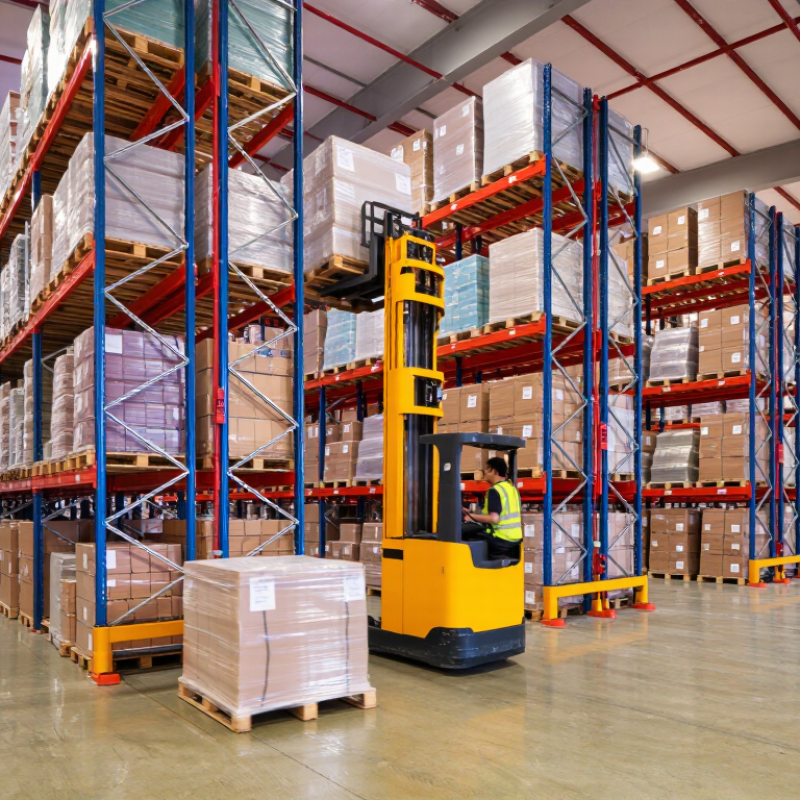
Before selecting pallet rack systems, map the actual inventory: pallet dimensions, average and maximum loaded weight, SKU count, and turnover. Include the pallet itself and any attachments in every load estimate. A 1,000-kilogram pallet changes the beam and frame requirements considerably. Check beam-pair capacity, upright-frame capacity, floor condition, and the planned number of storage levels together. A rating for one component does not confirm the whole rack is suitable.
Operating conditions shape the design. Record forklift type, aisle width, lift height, clearances, and daily traffic. Note cold rooms, humidity, corrosive exposure, and seismic risk where relevant. MHI’s 2024 Annual Industry Report found that 55% of respondents planned to increase supply-chain technology investment. That makes future changes worth considering: can the layout adapt to new handling equipment or inventory patterns? Small oversights happen. Verify assumptions with a qualified rack designer, and use clearly visible load notices.
Tips: Measure three representative pallets, including the heaviest. Photograph columns, floors, and sprinkler obstructions. Share peak inventory and forklift specifications with the supplier. Recheck the proposed layout on site; drawings can miss a low beam or a surprisingly tight turn.
Estimate the load on a beam level by multiplying the gross weight of each loaded pallet by the number of pallets stored on that level.
These are illustrative calculations, not rack capacity recommendations. Confirm the required beam, frame, and system capacities with a qualified rack supplier or engineer, and account for pallet dimensions, load distribution, handling equipment, and operating conditions.
Choosing a pallet rack system starts with the inventory, not the catalogue. Selective racks give each pallet direct access, which suits mixed products and frequent picking. Drive-in racks store more pallets in less aisle space, but forklifts enter the lanes, so operators need consistent loads and careful guidance. Push-back systems offer faster access than deep-lane storage, though carts and rails add components that require inspection. That trade-off matters.
Layout affects daily work. Map forklift turning paths, dock doors, columns, sprinklers, and pedestrian routes before fixing aisle widths. A drawing can look efficient and still leave a blind corner near a busy picking zone. Measure the actual forklift and pallet dimensions; small differences change clearances. Leave room for damaged pallets and occasional awkward loads, too. Real warehouses are rarely as tidy as the plan.
Compare material specifications, not just upright appearance. Request beam and frame load ratings for the proposed configuration, including shelf levels and connector details. Steel thickness, bracing, weld quality, and corrosion protection influence durability. Ask whether the quoted capacity assumes a level, sound floor and specified anchors. Local seismic conditions and building requirements may also affect design. I would verify these assumptions in writing; they are easy to overlook when price comparisons move quickly.
Before comparing prices, ask which design code governs the rack in its destination country. ANSI MH16.1 sets requirements for industrial steel storage racks in North America. Request project-specific calculations, seismic assumptions, and signed drawings; a certificate alone may not prove local compliance. Confirm that stated beam and bay capacities match actual pallet weights, dimensions, and handling equipment. Small mismatch, big risk. The U.S. Bureau of Labor Statistics recorded 1,523 fatal work injuries in transportation and warehousing in 2023. This broad industry figure is not rack-specific, but it highlights why safety evidence deserves careful review.
Ask suppliers for steel-grade traceability, material test records, weld inspection procedures, and clear installation instructions. Check that load plaques show the approved configuration, not a generic capacity. A current ISO 9001 certificate can indicate documented quality processes, but it does not certify a rack design. Paperwork is not proof. Ask who reviews engineering changes, how damaged components are reported, and whether replacement parts match the original specification. Request references for projects with similar loads and operating conditions. If drawings arrive late or answers seem vague, pause. I would also inspect a sample connection or installed bay when possible; polished documents can still miss details on the warehouse floor.
When comparing pallet rack systems, look beyond the quoted price. Ask whether it includes protective packaging, export handling, and delivery to your site or only to the port. Freight costs can change with shipment volume, route, and seasonal capacity. Request a clear breakdown of ocean or air freight, insurance, local handling, and any charges due on arrival. Small details matter. Confirm pallet dimensions, load weights, and rack height before production; a late change can affect both shipping space and cost.
Installation needs its own budget and schedule. Check whether the quote includes trained installers, equipment rental, and site supervision, or assumes your team will handle the work. Share floor plans, aisle widths, and floor condition early. A slightly uneven slab may require attention before racks are anchored. It is easy to overlook. Ask for installation drawings and a defined handover checklist, including beam-lock checks and load signage.
After-sales support is part of the purchase, not an optional extra. Get warranty coverage, response times, and spare-part availability in writing. Ask how damaged components are identified and replaced, and whether remote technical guidance is available across time zones. Compare the practical cost of waiting for a replacement part, not just its purchase price. Some buyers focus heavily on upfront savings; that can be a costly blind spot. Request maintenance guidance your warehouse staff can actually use.
A rack proposal is only useful when its assumptions match the warehouse. Compare each supplier’s bay width, frame depth, beam levels, and stated load capacity. Check whether capacity applies per beam pair or to the entire bay. That distinction matters. A small wording gap can change the safe working limit.
Walk the drawing against the actual site. Measure clear aisle width, ceiling height, sprinkler locations, columns, and door openings. Confirm the pallet dimensions and maximum loaded weight, including uneven loads. Ask how the design accounts for forklift type, floor condition, and any required impact protection. If seismic or other site-specific engineering is relevant, request the calculation basis and have a qualified professional review it. Don’t rely on a generic layout. It may look convincing and still block a turning path.
Before approval, issue one final specification listing materials, finishes, dimensions, tolerances, beam connectors, anchors, accessories, and installation responsibilities. Record any agreed exceptions in writing, not just in meeting notes. Check that drawings, quotation, and capacity tables show the same configuration. I have seen small mismatches survive a careful review; they are easy to overlook when deadlines press. Ask for revised documents, then verify the delivered components against them before installation. A signed specification gives both parties a clear reference when details change.
| No. | Buying Tip | What to Review in the Proposal | What to Confirm in the Final Specification |
|---|---|---|---|
| 1 | Define the pallet and load | Check that the design uses the actual pallet type, load dimensions, loaded weight, and any overhang. Confirm whether the stated capacity is per pallet, beam level, or bay. | Record pallet length, width, and loaded height; maximum gross load per pallet; load distribution; and the number of pallets per beam level. Identify any non-uniform or concentrated loads. |
| 2 | Verify the layout and clearances | Compare the proposed rack plan with measured building dimensions, doors, columns, sprinkler equipment, lighting, and material-handling routes. | Approve an annotated layout showing rack rows, bay count, aisle widths, end clearances, operating clearances, and obstructions. Confirm dimensions on site before fabrication. |
| 3 | Check beam and bay capacities | Review stated beam-level and frame capacities against the intended number and weight of pallets. Ask for the design assumptions and calculation basis. | List allowable load per beam level and per bay, the number of beam levels, and the required load arrangement. Ensure capacity values match the final beam spans and connector configuration. |
| 4 | Confirm frame dimensions and bracing | Check upright height, frame depth, upright section, bracing pattern, and base-plate details. Confirm that the proposal accounts for the actual building height and floor conditions. | Specify frame height and depth, upright and brace configuration, base-plate dimensions, and any required shims or restraints. Confirm the design is suitable for the stated loads and installation conditions. |
| 5 | Review material and finish | Compare steel grades, component thicknesses, coatings, and corrosion protection with the operating environment, including humidity, temperature, and cleaning requirements. | Document material grades where specified, component dimensions, surface finish, and coating requirements. For cold, damp, or corrosive environments, confirm the chosen materials and finish are suitable. |
| 6 | Assess floor and anchoring requirements | Check the assumed slab condition, concrete strength, floor flatness, anchor type, and installation method. The rack design should not rely on unverified floor capacity. | Confirm anchor type, size, quantity, embedment requirements, base-plate arrangement, and any floor assessment needed before installation. Have the supporting slab checked for the intended rack loads. |
| 7 | Confirm seismic and local-code design | Ask which jurisdiction, building conditions, seismic parameters, and applicable rack design standards were used. Requirements vary by location and project conditions. | State the governing local codes and design criteria in the approved documents. Where seismic design is required, confirm the site assumptions and provide the relevant engineering calculations and drawings. |
| 8 | Review safety accessories | Check whether the proposal includes the required row spacers, column guards, end-of-aisle protection, beam locks, pallet supports, and mesh or other load-retention features. | List each accessory by location and quantity. Confirm that accessories are compatible with the rack design and do not reduce required clearances or obstruct sprinklers and building services. |
| 9 | Compare scope, delivery, and installation | Review what is included in the price: drawings, engineering, packing, freight, duties, unloading, installation, inspection, and training. Clarify exclusions and delivery assumptions. | Approve a written scope of supply with quantities, delivery terms, project schedule, installation responsibilities, documentation, and acceptance criteria. Confirm who handles permits and site preparation. |
| 10 | Approve one controlled final specification | Resolve differences among quotations, drawings, load tables, and commercial documents. Do not rely on verbal changes or capacity figures that lack clear conditions. | Sign off on a revision-controlled package containing the final layout, component schedule, load capacities, materials, accessories, design assumptions, installation requirements, and applicable drawings. |
Selective racks provide direct access to every pallet. That helps when products change often. They use more aisle space.
They store more pallets in fewer aisles. Forklifts enter the storage lanes, so loads should be consistent and guidance clear. Tight turns matter.
Map forklift paths, dock doors, columns, sprinklers, and pedestrian routes. Measure the actual forklifts and pallets. A drawing can miss a blind corner.
Check load ratings for the proposed beam levels and full configuration. Review steel thickness, bracing, welds, connectors, and corrosion protection. Ask about anchors.
Confirm whether delivery means your site or only the port. Request separate freight, insurance, local handling, and arrival charges. Small fees add up.
Check whether trained installers, equipment rental, and supervision are included. Share floor conditions early; an uneven slab may need attention. Easy to miss.
Get warranty terms, response times, and spare-part availability in writing. Ask how damaged beams are replaced. Waiting can cost more than the part.
Match drawings, quotations, and capacity tables. Confirm bay width, frame depth, beam levels, pallet weight, and clearances. I would check twice; deadlines make small mismatches easy to miss.
Choosing the right Pallet Rack Systems begins with a clear understanding of what will be stored, how much each load weighs, and the conditions in which the racks will operate. Buyers should compare rack types, layouts, and material specifications to find a configuration that fits their facility, handling equipment, and storage goals. Safety standards, relevant certifications, and a supplier’s ability to provide reliable technical support are also important considerations.
Look beyond the initial purchase price by evaluating shipping, installation, ongoing service, and the overall cost of ownership. Before placing an order, review the proposal carefully and confirm key details such as dimensions, load capacities, components, finishes, and installation requirements. A complete, written specification helps ensure the final system meets operational needs and reduces misunderstandings during delivery and setup.