0%

Choosing the right Pallet Racking system starts with the work your warehouse actually performs. Measure the loads, not just the pallets. Record their weight, dimensions, and overhang. Note how often each product moves, and which lift trucks serve each aisle. A layout that looks efficient on paper can feel cramped when a forklift turns with a wide load. Small details matter.

The Rack Manufacturers Institute (RMI) publishes technical guidance for industrial steel storage racks. A useful working maxim, informed by that guidance, is: “Choose the rack around the load, the handling equipment, and the building—not the catalog image.” That is a practical starting point, not a substitute for a qualified review. Clearances, floor conditions, rack configuration, and local operating requirements all deserve attention. Get those wrong, and capacity figures alone will not rescue the design.

This guide explores common options, including selective, drive-in, and push-back systems, then considers storage density, access, budget, and future changes. The best fit depends on your inventory profile and daily picking needs. There is no universal winner. A high-density arrangement may save floor space but slow access to individual pallets. Selective racks offer direct access, though they need more aisle space. The first layout may be wrong. That is worth checking early, before steel is ordered and routines are built around it.
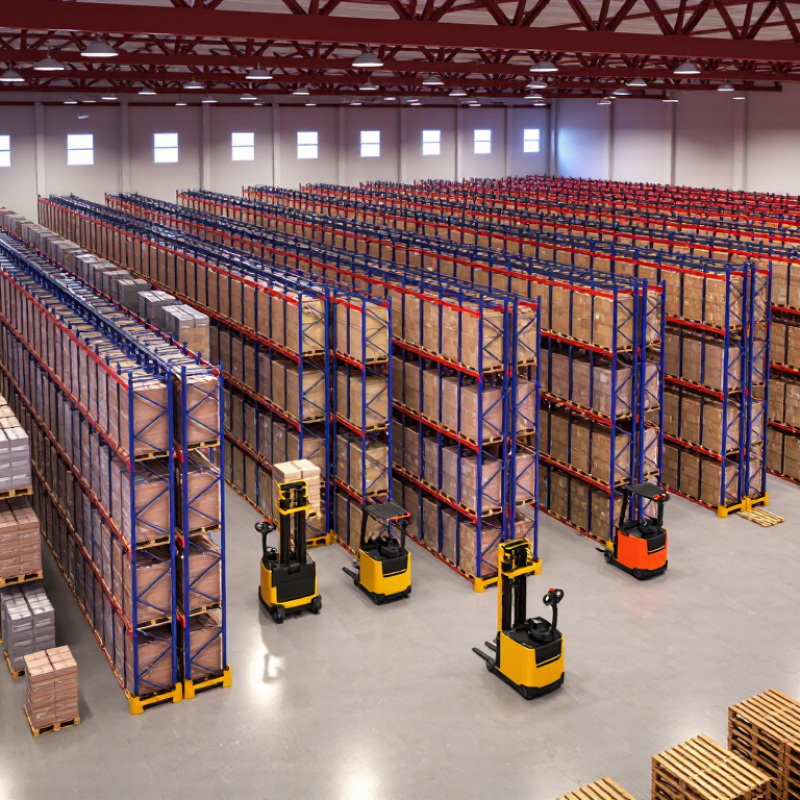
How to Choose the Right Pallet Racking System

Identify Your Inventory, Pallet Sizes, and Storage Goals

How to Choose the Right Pallet Racking System

Start with the inventory, not the rack. Record each pallet’s length, width, height, and loaded weight, including any overhang. Measure a few real pallets; listed dimensions do not always match what arrives at the dock. Note which items are uniform and which vary. Small differences matter.

Next, map storage goals to daily work. Fast-moving goods may need direct access, while slower stock can often sit in denser storage. Ask how many different products must remain accessible at once, and how often staff retrieve them. A system that holds more pallets can still slow picking if access is limited. That trade-off is easy to miss.

Check the building and handling equipment before settling on a layout. Confirm clear height, column locations, floor conditions, and the space needed for forklifts to turn safely. Rack capacity must match the loaded pallet weight and planned beam spacing; have qualified professionals verify the design and installation. Leave room for seasonal inventory, too. We learned this the hard way: a tidy plan can feel cramped once replenishment begins. Review the layout with the people who move the pallets every day, then adjust it against actual operating needs.

How to Choose the Right Pallet Racking System

Identify your inventory, pallet sizes, and storage goals.

How to use this chart: Compare your pallet footprint with these common formats when evaluating rack depth and layout. Areas are calculated from nominal pallet dimensions; also confirm load weight, overhang, and clearance requirements with a qualified rack designer.

Compare Pallet Racking Types and Their Operating Methods

Selective pallet racking gives each pallet a direct aisle-facing position. Forklift operators can retrieve a specific load without moving others, making it practical for varied stock and frequent picking. The trade-off is space: wide aisles and access lanes reduce storage density. A warehouse with steady, predictable product flow may use drive-in or drive-through racks instead. Forklifts enter the rack structure, storing pallets several positions deep. Drive-in usually follows last-in, first-out; drive-through can support first-in, first-out when loading and unloading happen at opposite ends.

Push-back racks store pallets on nested carts. Operators load from the front, and each new pallet pushes the previous one deeper. Pallet-flow racks use inclined rollers: loading at one end moves pallets toward the picking face. Both increase density, but they need compatible pallet condition, careful loading, and maintenance checks. A bent pallet or damaged roller can interrupt flow. Dense storage is not automatically better.

Forklift operation deserves equal attention. OSHA cites estimates of about 85 forklift-related deaths and 34,900 serious injuries each year in the United States. That risk makes aisle width, sightlines, load handling, and operator training part of the rack decision—not afterthoughts. Measure actual turning paths with the intended truck, then test replenishment and picking during a busy shift. The first layout may look efficient on paper. Real traffic can prove otherwise.

Assess Warehouse Space, Equipment, and Building Constraints

Before selecting a pallet racking system, map the warehouse as workers use it, not as the floor plan suggests. Measure clear ceiling height, aisle widths, door openings, column spacing, and areas used for staging or battery charging. A few inches matter. Check sprinkler heads, lights, and heaters; beams need practical clearance from building services. Mark pedestrian routes and turning points, then test them with the forklifts that will handle the loads. A reach truck may work in a narrower aisle than a counterbalance truck, but only if its mast, load, and turning pattern fit safely.

Building conditions can rule out an otherwise efficient layout. Have qualified professionals confirm slab condition and allowable floor loading, especially where loads concentrate at upright bases. Note uneven floors, expansion joints, drains, and wall-mounted services; these can affect anchoring and rack alignment. Measure the heaviest and widest pallets, including overhang, and record actual weights rather than relying on estimates. That assumption deserves a second look. Compare the figures with each forklift’s rated capacity at the required lift height, since capacity can change as the mast rises. Leave room for maintenance access and future changes. It is tempting to fill every available bay, but daily operations may reveal awkward corners or staging needs after installation.

Check Load Capacity, Safety Standards, and Access Requirements

How to Choose the Right Pallet Racking System

Check Load Capacity, Safety Standards, and Access Requirements

Start with the heaviest pallet, not the average one. Record its weight, dimensions, and how evenly it rests on the beams. Then check the rack manufacturer’s capacity tables for the exact beam length and bay configuration. ANSI MH16.1, published by the Rack Manufacturers Institute, provides design criteria for steel storage racks. A capacity figure from a different layout may not apply. A tidy drawing can still miss a real-world detail: pallets vary, and loads shift.

Safety depends on more than rated capacity. OSHA estimates that forklift incidents cause about 85 fatalities and 34,900 serious injuries each year in the United States. That figure makes aisle width, turning clearance, and clear sightlines practical design concerns. Confirm that your chosen truck can safely approach each bay, and keep rack protection from blocking access. Have a qualified rack professional check the design, floor conditions, anchoring, and local requirements. Inspect for bent uprights, loose anchors, and damaged beams; take questionable bays out of service until assessed.

Tips: Label each bay with its capacity. Measure the widest load and truck before setting aisle spacing. Selective racks offer direct access to each pallet; higher-density systems may limit access or require specific equipment. Recheck the layout when pallet weights, vehicles, or inventory change.

Select a Rack Layout, Features, and Installation Plan

Choose the rack layout around real inventory and travel paths, not just maximum pallet count. Selective racks suit varied SKUs and direct access; drive-in or push-back layouts can increase density but reduce access flexibility. Measure pallet loads, forklift turning radii, aisle widths, clear heights, sprinkler clearance, and exit routes before drawing the plan. A layout that looks efficient on paper can still bottleneck at shift change. It is easy to miss.

Plan rack features for the way the building operates: beam levels for changing pallet heights, row spacers where needed, and column guards at exposed corners. OSHA estimates that forklifts are involved in about 85 workplace deaths and 34,900 serious injuries annually, making clear sightlines and protected travel paths practical priorities. Have a qualified rack professional check the design against ANSI MH16.1, the industry specification for steel storage racks, and confirm that the floor can support the intended loads. For installation, document anchor locations, slab conditions, delivery access, and the sequence for erecting and inspecting each row. Keep the aisle plan visible to installers. Then review it against actual forklift movements; a small drawing revision now may prevent a daily operating headache later.

How to Choose the Right Pallet Racking System - Select a Rack Layout, Features, and Installation Plan
Rack System Pallet Access and Stock Rotation Storage Density Best Suited For Layout and Equipment Considerations Design and Installation Checks
Selective pallet racking Direct access to each pallet position; supports flexible picking and stock rotation. Low to moderate; aisles between rack rows use floor space. Many product types, frequent picking, and inventory with varied turnover. Works with standard forklift trucks. Aisle width depends on the truck, load size, and turning requirements. Confirm pallet dimensions, beam levels, maximum load per pallet position, aisle clearances, and required rack protection.
Double-deep racking Two pallet positions deep; rear pallets are less accessible and are generally retrieved after front pallets. Moderate to high; reduces the number of aisles compared with selective layouts. Fewer product types stored in larger quantities, where some loss of immediate access is acceptable. Requires a suitable reach truck or attachment designed to handle double-deep positions. Check equipment reach and capacity at the required lift height, pallet consistency, load stability, and access to rear positions.
Drive-in / drive-through racking Forklifts enter storage lanes. Drive-in commonly operates last-in, first-out (LIFO); drive-through can support first-in, first-out (FIFO) when loaded from one end and unloaded from the other. High; uses fewer aisles and stores pallets in deep lanes. Large quantities of similar products with relatively low SKU variety. Requires compatible forklifts, carefully managed lane entry, and operating procedures that account for reduced selectivity. Verify lane depth, pallet and load uniformity, forklift clearances, guide rails, upright protection, and safe operating practices.
Push-back racking Pallets are loaded and retrieved from the same aisle; the system typically operates LIFO within each lane. High; multiple pallets are stored deep while keeping access from the aisle. Products stored in several-pallet batches where each lane can be dedicated to a SKU or lot. Forklift operation takes place at the aisle face; pallet dimensions and condition need to suit the moving carts or carriers. Confirm pallet compatibility, lane capacity, cart operation, load placement, and any required inspection and maintenance procedures.
Pallet flow racking Gravity rollers or wheels move pallets from the loading side to the picking side; supports FIFO when operated as designed. High; deep storage lanes can reduce aisle requirements. High-throughput goods, date-sensitive inventory, and operations needing controlled stock rotation. Usually requires separate loading and picking aisles. Pallets must be compatible with the flow track. Check pallet quality and dimensions, lane slope and braking provisions, load limits, and safe access for loading and replenishment.
Mobile pallet racking Rack rows move on floor-mounted rails to open an access aisle where needed; pallets remain individually accessible when the aisle is open. High; reduces the number of permanently open aisles. Cold storage or other areas where floor space is valuable and access can be scheduled. Requires a suitable floor and power or control arrangements for moving rack rows; access is available to fewer aisles at one time. Assess slab condition and capacity, rail installation, moving-system safeguards, emergency access, and operating procedures.
Shuttle racking A powered shuttle moves pallets within deep lanes. Stock rotation depends on the system layout and loading and retrieval method. Very high; designed for deep-lane storage with fewer operating aisles. Large, consistent product batches and operations seeking to reduce forklift travel inside storage lanes. Requires compatible pallets, shuttle equipment, charging or power arrangements, and trained operators. Verify lane and pallet compatibility, equipment capacity, control and safety features, maintenance access, and recovery procedures.

Planning note: Before selecting a layout, document pallet and load dimensions and weights, SKU count, inventory turnover, target storage capacity, forklift type, and required stock rotation. Have a qualified rack designer verify the system, floor and slab requirements, clearances, anchoring, and applicable local building and seismic requirements. Follow the rack and equipment manufacturers’ rated-load limits and installation instructions.

FAQS

When is selective pallet racking a practical choice?

It gives forklifts direct access to each pallet. It suits varied stock and frequent picking, though wide aisles use valuable floor space.

How do drive-in and drive-through racks differ?

Both store pallets several positions deep, with forklifts entering the rack. Drive-in usually follows last-in, first-out; drive-through can support first-in, first-out.

How do push-back racks move pallets?

Each new pallet pushes earlier pallets deeper on nested carts. Loading and retrieval happen from the front. Cart condition matters.

What makes pallet-flow racks different?

Inclined rollers move pallets toward the picking face. A damaged roller or bent pallet can interrupt the flow.

Does denser storage always improve a warehouse?

No. Dense layouts can limit access and require compatible pallets, careful loading, and regular checks. I may be giving density too much credit here.

What should be measured before choosing a rack layout?

Check pallet loads, forklift turning paths, aisle widths, clear heights, sprinkler clearance, and exit routes. Test the plan during a busy shift.

Which rack features can support safer daily operation?

Clear sightlines, protected travel paths, column guards, and suitable beam levels help address practical operating needs. Small details count.

What should an installation plan include?

Document anchor locations, floor conditions, delivery access, and the installation sequence. Keep the aisle plan visible, then compare it with actual forklift movements.

Conclusion

Choosing the right Pallet Racking system starts with understanding what you store. Review your inventory, pallet dimensions, product weight, and how often items need to be accessed. These details help clarify whether your priority is high-density storage, quick picking, flexible access, or a balance of several goals. Compare rack types by how they store and retrieve pallets, since operating methods can affect workflow, equipment needs, and storage capacity.

Next, consider the warehouse itself. Measure available floor space and ceiling height, and account for aisles, columns, doors, floor conditions, and the equipment used to move loads. Check that the planned system suits the required load capacity and includes appropriate safety features and access. Finally, choose a practical layout, specify useful features such as guards or signage, and plan professional installation and inspection. A well-matched system can make better use of space while supporting efficient, safe daily operations.

Clara

Clara

Clara is a professional marketing specialist with a deep understanding of the company’s products, their features, and the practical needs they are designed to address. She regularly contributes expert articles to the company website, turning product knowledge and industry insights into clear,......